The Ford by Claude Lorrain
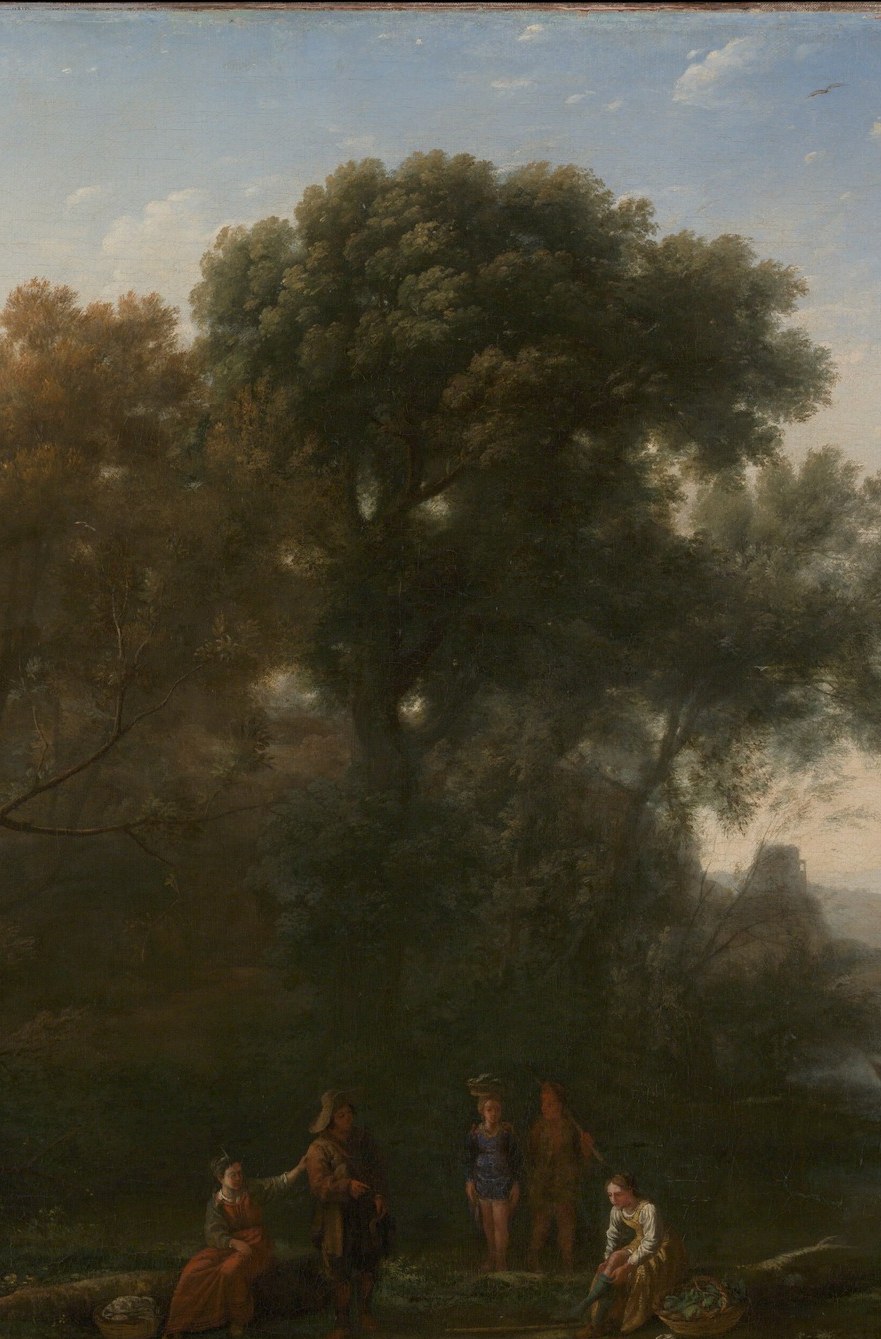
Claude Lorrain's 'The Ford' (1648) hangs in The Metropolitan Museum of Art, and beneath its golden light lies a buried secret. The painting, commissioned by Pope Innocent X, was one of the most expensive landscapes of its era. The Pope paid handsomely for the work of an artist who had risen from a penniless pastry cook to the most sought-after landscapist in Baroque Rome.
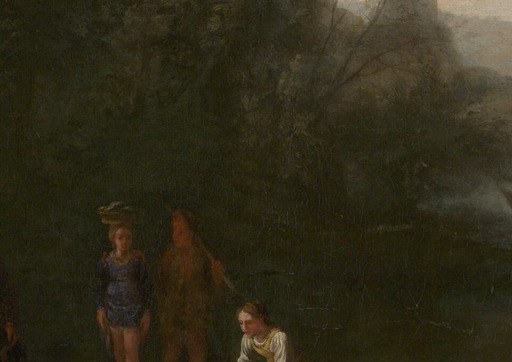
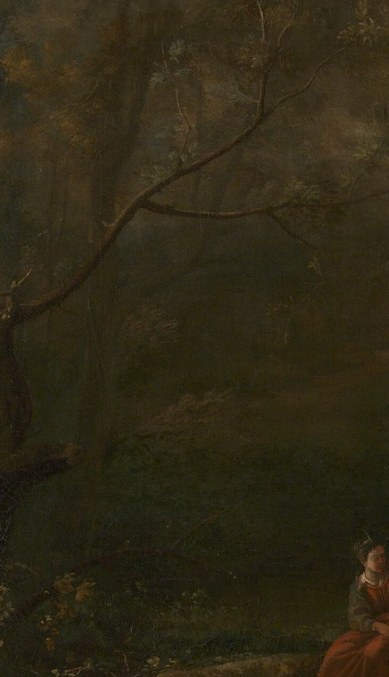
Look at the group of figures beneath the massive central tree. Notice the standing figure in vivid red-orange drapery, the warmest, most coloristically aggressive element in the foreground. X-radiography has revealed that beneath this painted drapery lies an entirely different figure, fully executed and then deliberately concealed. Lorrain erased someone from this pastoral scene and dressed another in their place.
We know the Pope commissioned the work, but the identity of the original figure remains unknown. What changed between Lorrain's first vision and the final canvas? Was the revision aesthetic, political, or personal? The x-rays tell us the painter stopped, reconsidered, and covered his tracks with that luminous red drape.
The next time you stand before the painting, look at that red cloth knowing it is a lid. One of the most serene landscapes in the collection is also one of its quietest acts of obliteration, a secret that sat undisturbed for nearly four hundred years.
Details
Transcript
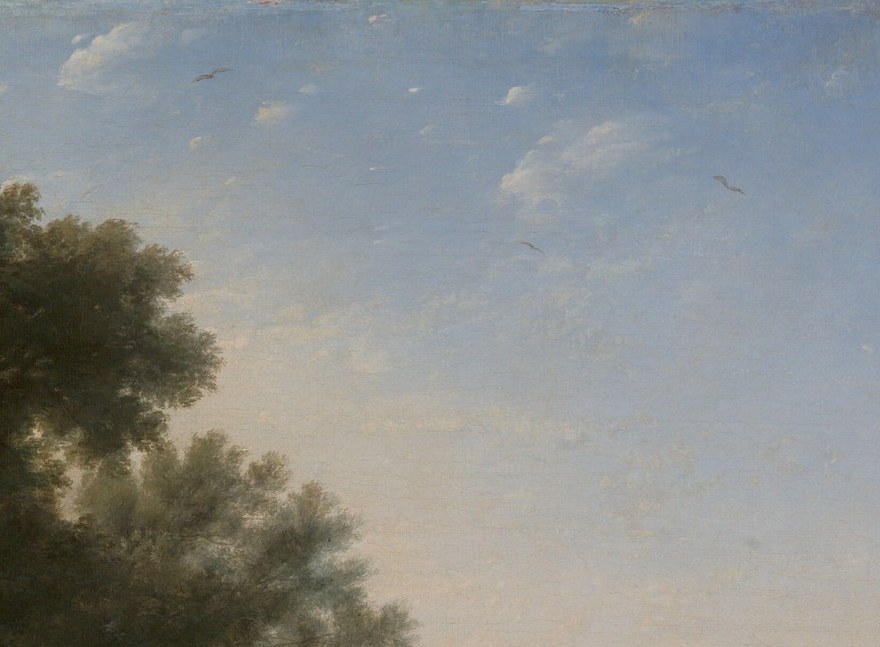
This begins with the sky. A light no painter had ever put on canvas before. The artist charged enormous sums, and the Pope himself paid. Now look at the figures under the tree. The red drapery is hiding something the painter never wanted you to see. Beneath it: a figure he painted over. Erased from the story. A secret buried for four centuries, until x-rays found it.