Uvedale Tomkyns Price (1685–1764) and Members of His Family by Bartholomew Dandridge
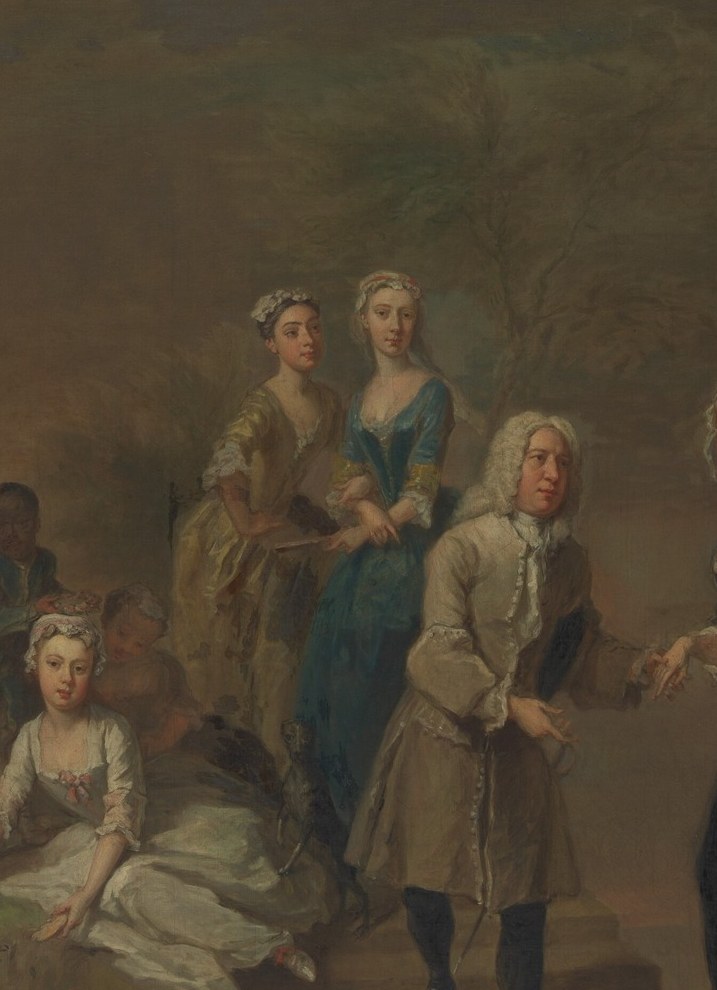
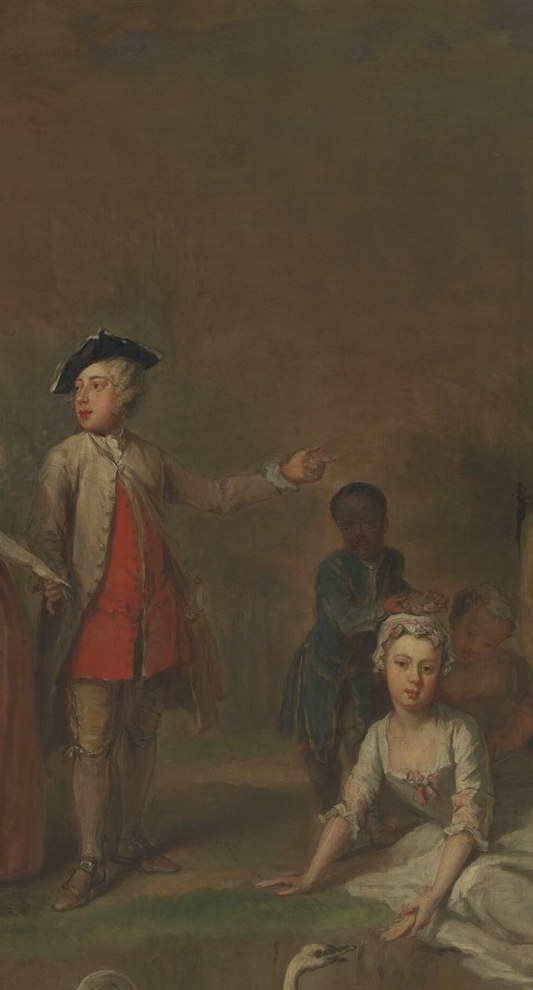
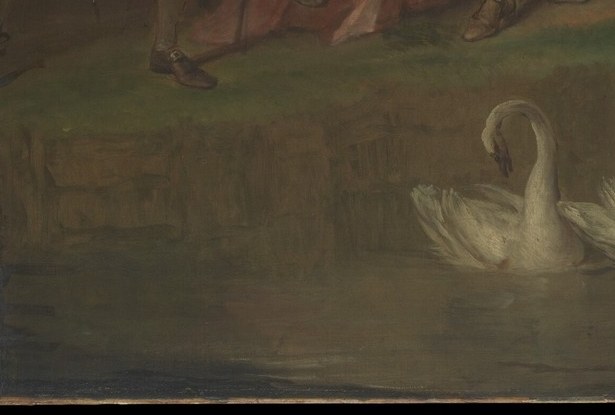
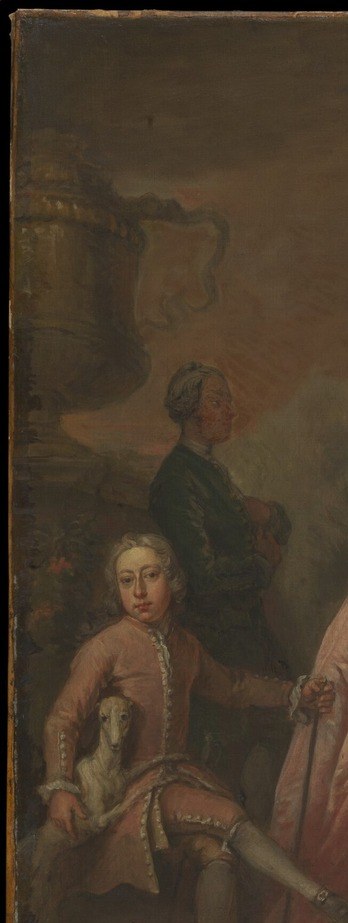
At first glance, Bartholomew Dandridge's 1731 painting "Uvedale Tomkyns Price (1685-1764) and Members of His Family" is a study in 18th-century affluence: silk dresses, a bold red coat, and a pair of white swans, a living symbol of marital fidelity, on the pond. The sitters and their parkland are painted with the soft light of a tranquil afternoon. The scene, now in the collection of the Yale Center for British Art, is a classic English conversation piece.
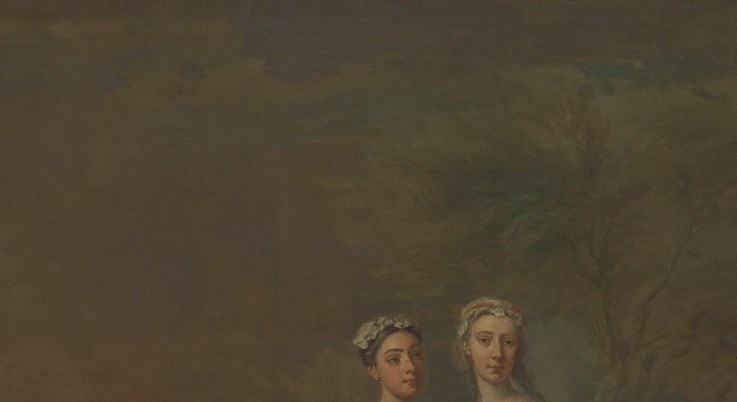
But Dandridge left a specific detail for the careful viewer. Look through the gaps between the standing figures, into the distant treeline at the center of the composition. A light-colored house is visible there, small and partly obscured by foliage. It is an architectural ghost, placed precisely where the patriarch's gesture directs the family grouping.
For art historians, a detail like this is a crucial key. When the name of a sitter's estate has been lost to time, a painted house in the far background can provide the evidence needed to pin down the location and date of the work. The house is a deliberate inclusion, a statement of dynastic place.
This painting is less a casual family moment and more a permanent deed of identity, a record of a specific family, on a specific piece of land, during a specific year, signed in oil paint. Next time you see a family portrait with a landscape view, take a closer look at the horizon.
Details
Transcript
An 18th-century family gathers on their country estate. Their wealth is clear: silk, swans, and a confident red coat. But look past the figures, into the trees in the distance. A house is hidden there. Art historians use such hidden structures to identify lost estates. Dandridge painted it to confirm not just who they were, but where.