Roses and Lilies by Henri Fantin-Latour (French, 1836–1904)
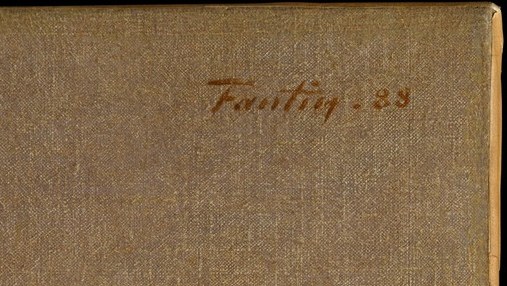
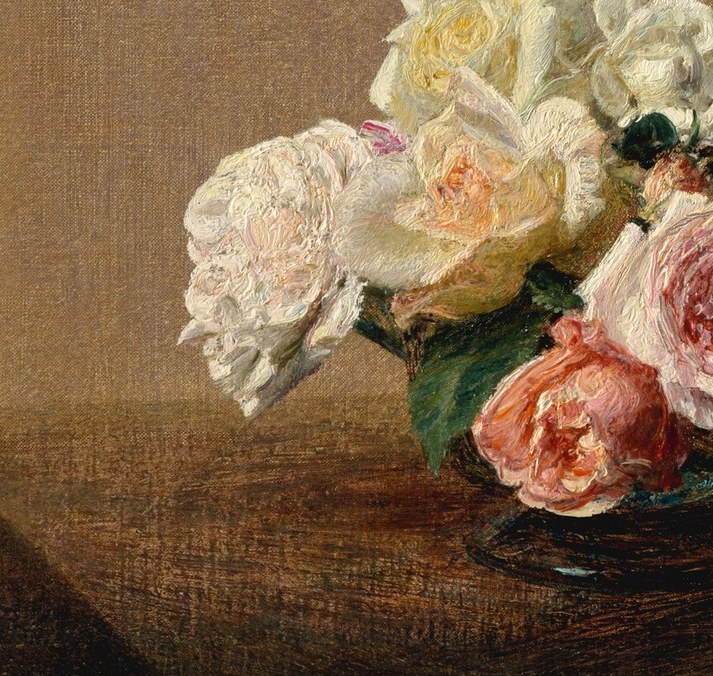
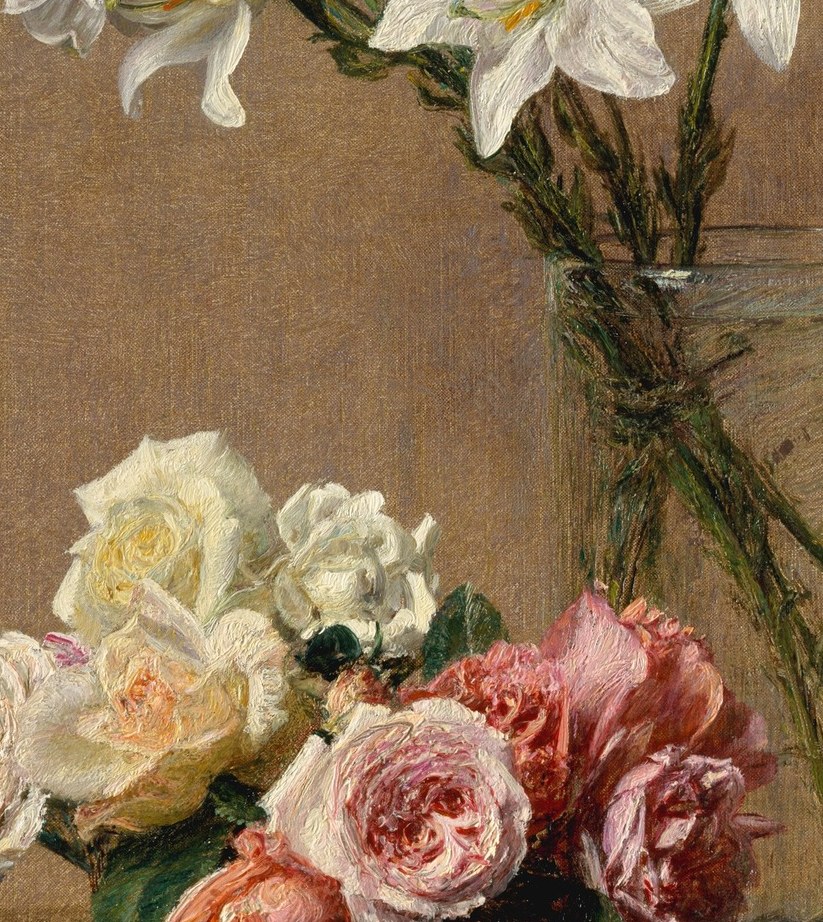
Henri Fantin-Latour's 'Roses and Lilies' (1888) is a study in pure painterly precision, now in a private collection. The French artist had a singular ambition: to be remembered for his portraits and imaginative group compositions. He befriended Manet, painted Baudelaire, and labored over large-scale allegories. The art world respected him for it, but respect did not pay the bills.
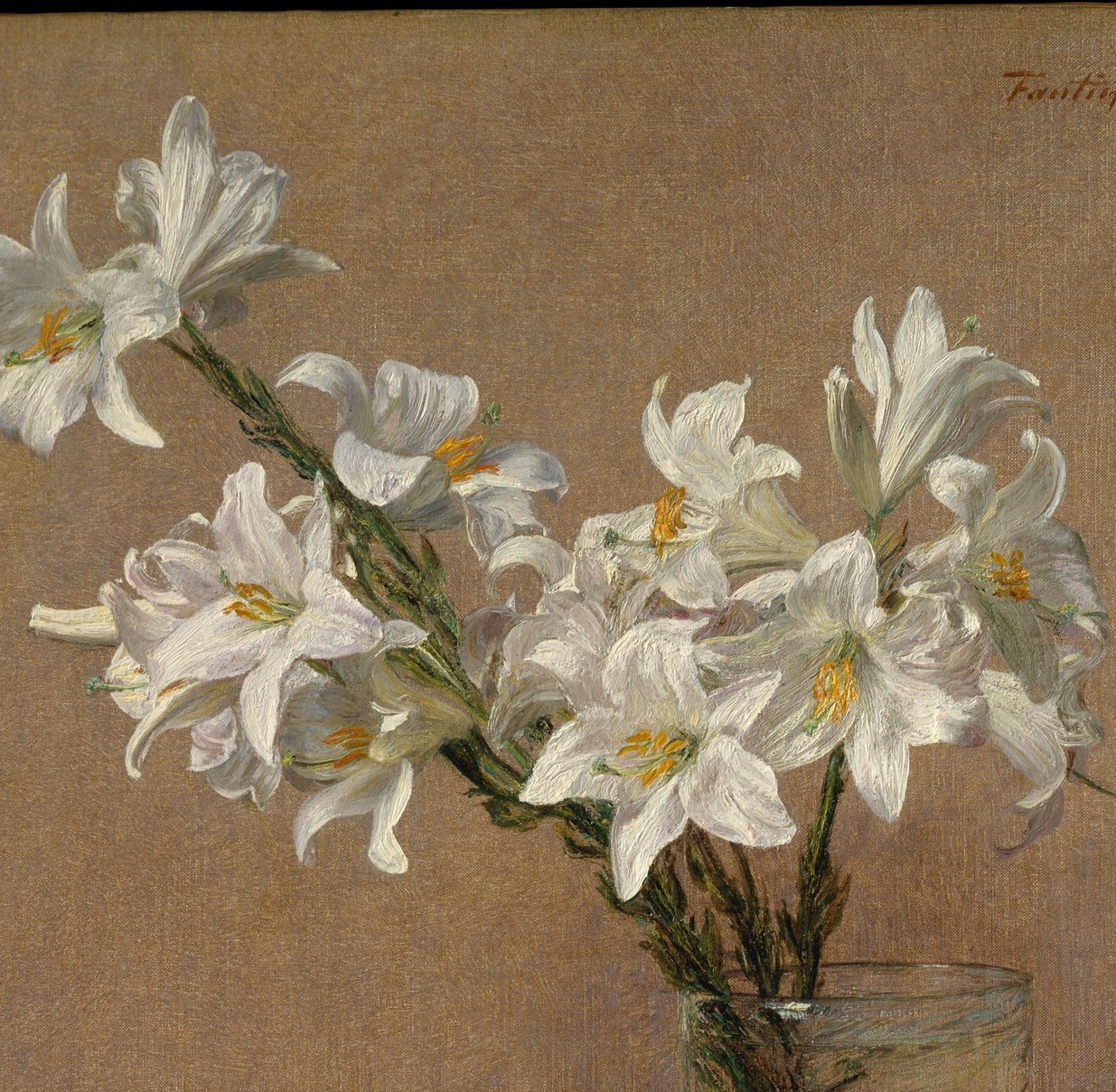
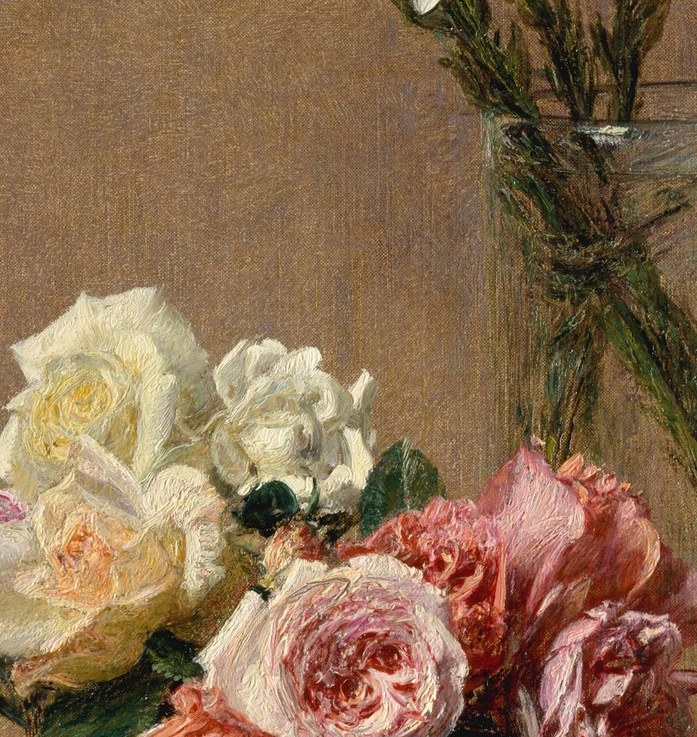
This canvas shows you why his still lifes did. Look closely at the glass vase. The distorted green stems seen through water and glass are not merely a botanical record; they are a quiet piece of technical theater. Fantin-Latour is showing you he can paint refraction, a trick that rewards a slow look far more than any photograph of the same subject ever could.
In the late 19th century, English industrialists and middle-class collectors had an insatiable appetite for these flower paintings. A work like this could sell through his London dealer for several thousand francs, a dependable income that freed him to return to the portraiture no one was buying. He called the flower paintings his 'pot-boilers.' A later market agreed on their value: a single Fantin-Latour floral work reached £1.1 million at auction.
His most ambitious canvases live in the Musee d'Orsay. But the flowers that quietly financed his entire career are what circulate through the world's collections today, making his name far more visible than any of the sitters he preferred.
Details
Transcript
Henri Fantin-Latour wanted to be remembered for his portraits. Critics praised them. Collectors walked right past. These flowers paid his rent. Look at the light passing through the glass into the water. A canvas this size, in 1888, could sell to an English collector for several thousand francs. A single flower painting reached £1.1 million at auction in our time. His major portraits are in the Musee d'Orsay. But the flowers he called 'pot-boilers' keep his name alive.