Salome with the Head of John the Baptist by Jan Adam Kruseman
Jan Adam Kruseman, a Dutch painter known primarily for his portraits, created "Salome with the Head of John the Baptist" in 1861. This oil painting at the Rijksmuseum is a rare venture into dramatic religious narrative for the artist.
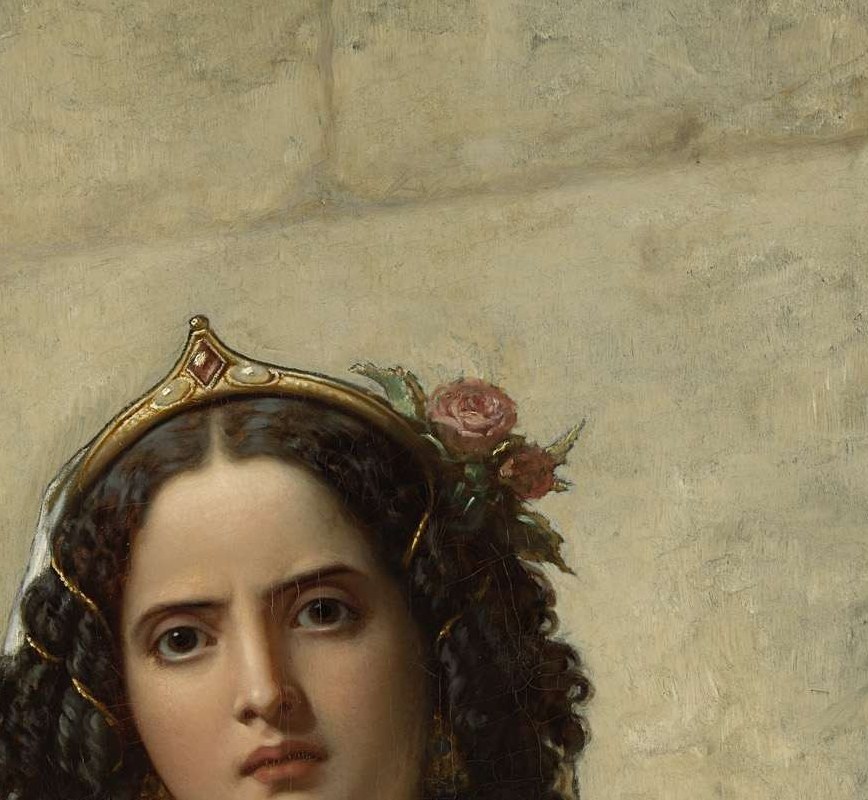
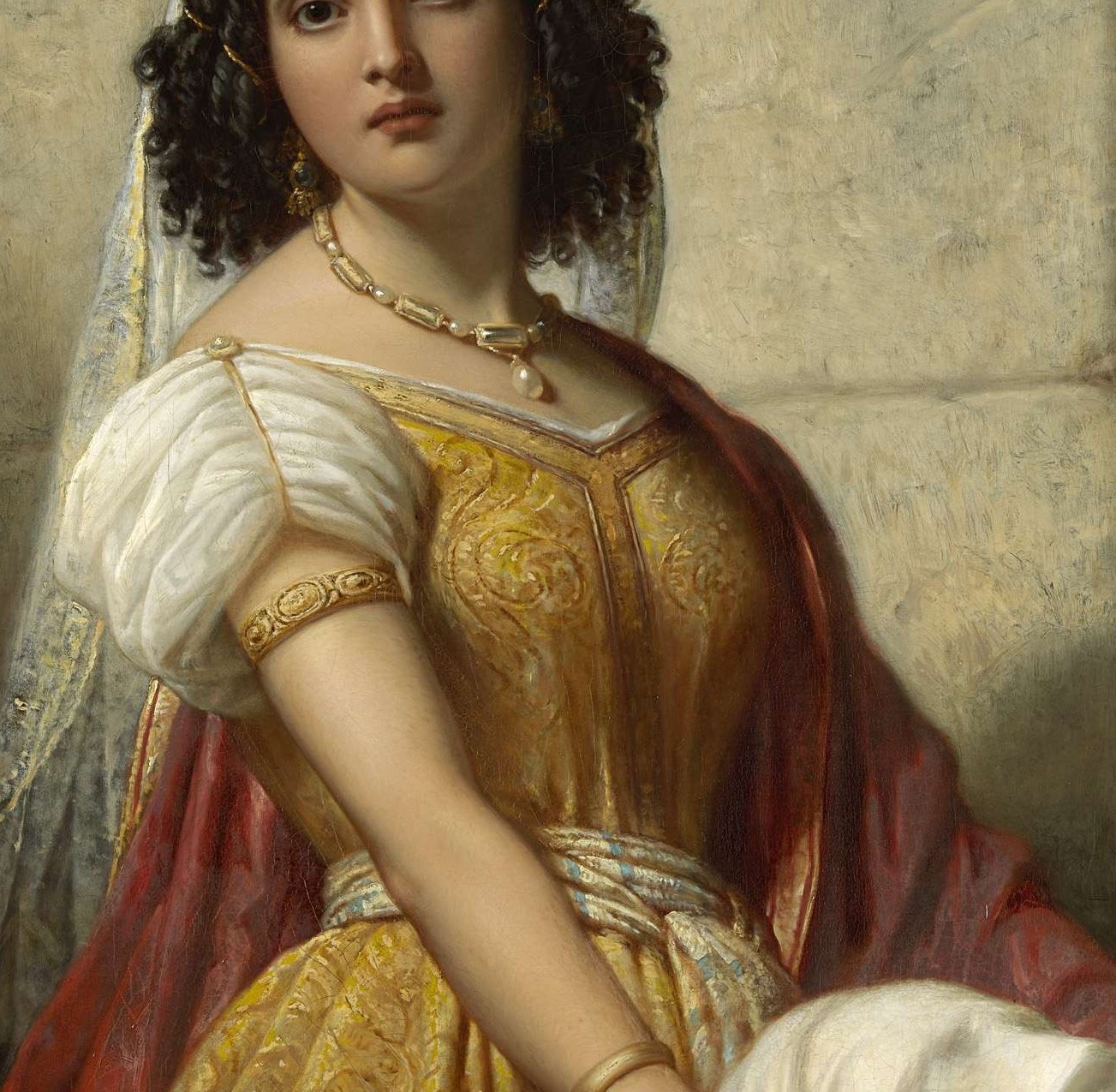
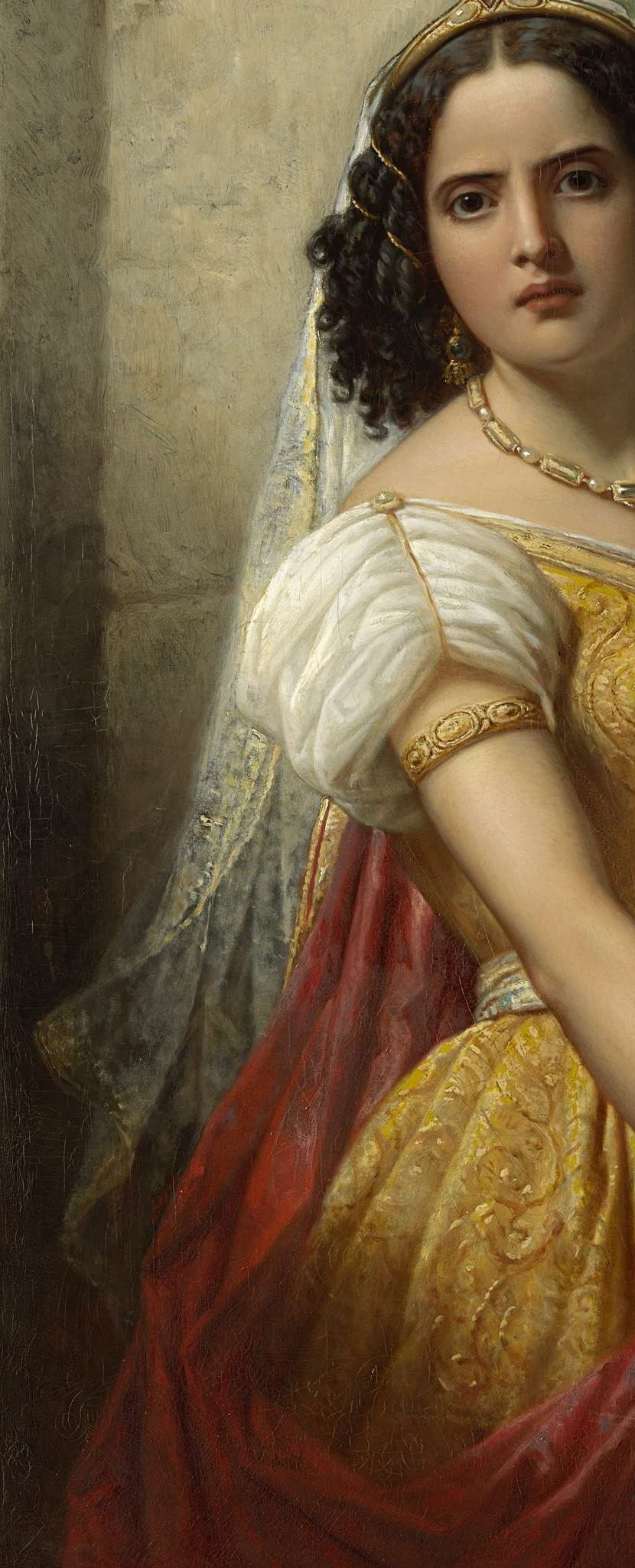
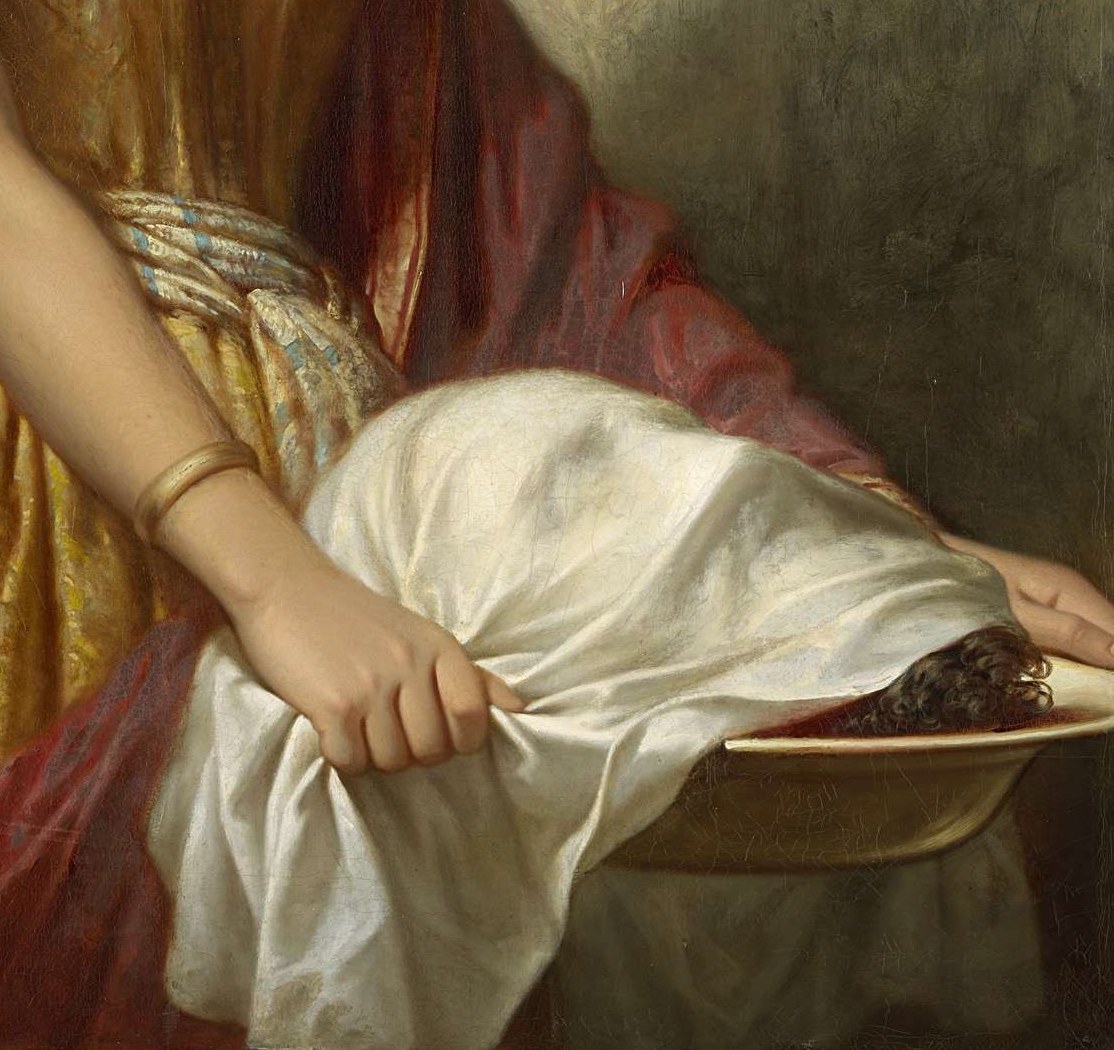
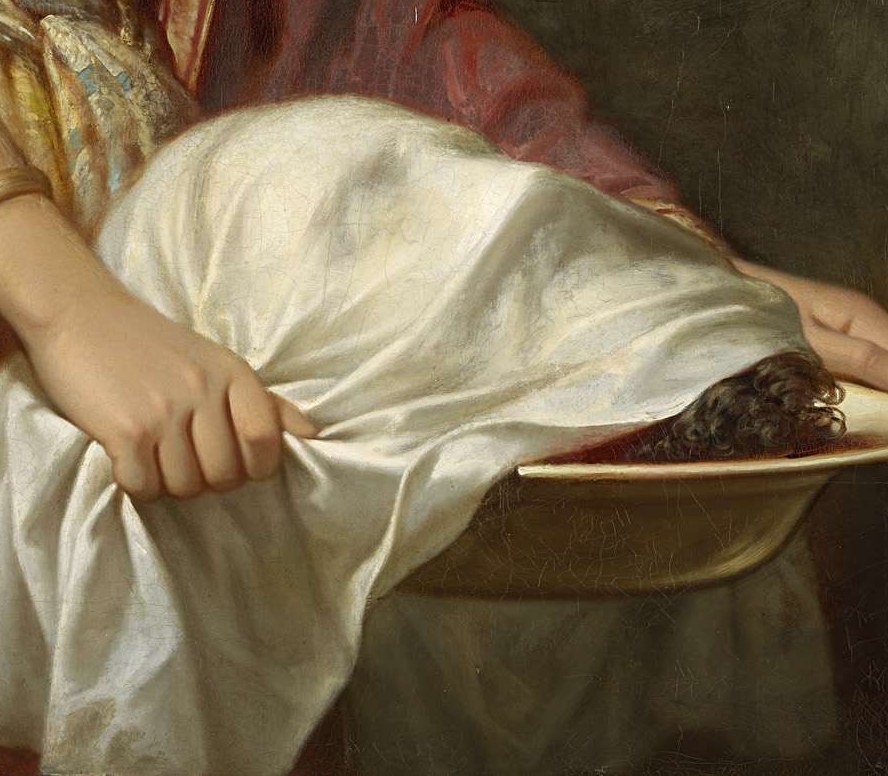
Notice how Kruseman portrays Salome in opulent attire, including a gold brocade dress and a crimson cape. Her expression remains unnervingly serene, neither triumphant nor remorseful, which adds to the painting's unsettling quality. The true horror of the scene is subtly presented: the severed head of John the Baptist is barely visible, half-hidden on a platter at the painting's edge.
Kruseman's decision to show such restraint, rather than a graphic depiction, intensifies the dramatic impact and emotional resonance of the work. This choice forces the viewer to mentally complete the horror, making it more disturbing.
What do you think of this approach to a gruesome story?
Details
Transcript
This painter was famous for portraits, not drama. But he took on a biblical story of temptation and death. Her costly gown shows Herod's court, where a life was bought. Her crimson cape is the only hint of violence. But the real horror is barely visible, at the edge. The head of John the Baptist, half-hidden beneath a cloth. This restraint makes the scene more disturbing than graphic.