The Visit by Pieter de Hooch
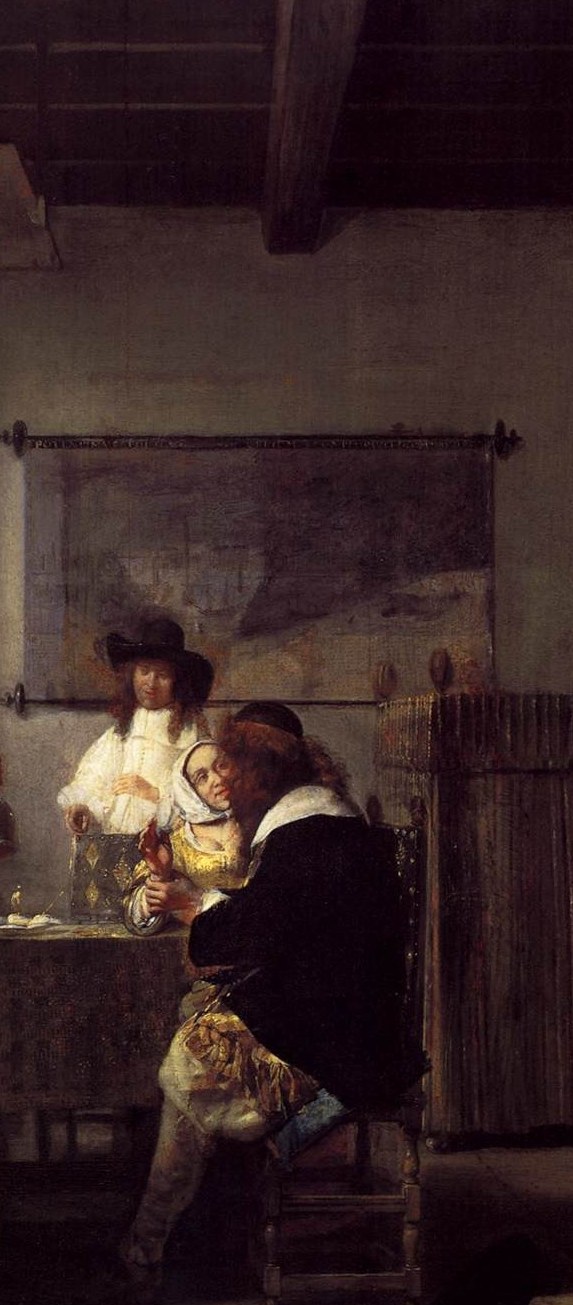
Pieter de Hooch painted The Visit around 1657, and it lives at the Metropolitan Museum of Art in New York. The scene belongs to a Dutch Golden Age genre called a Merry Company: not portraits of real people, but types enjoying each other's company in a well-appointed room.
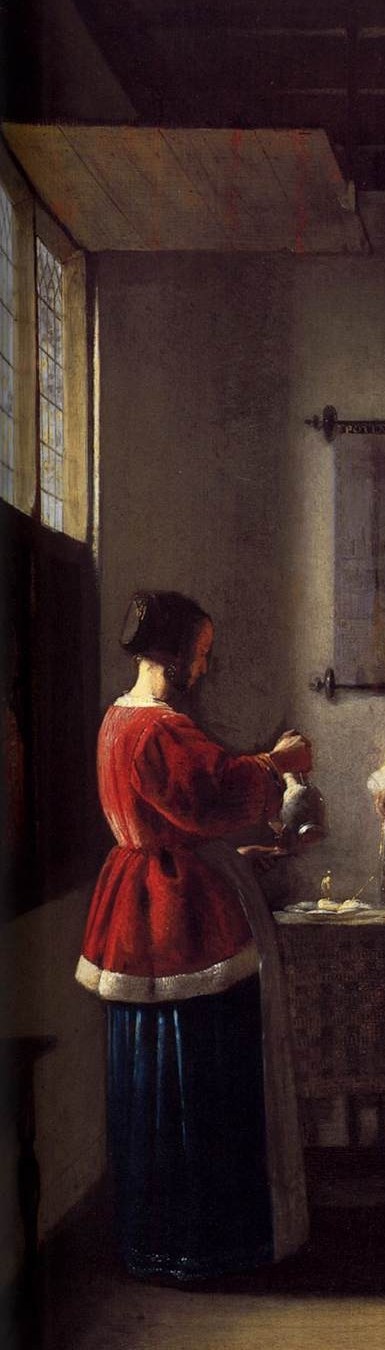
The obvious action plays out across the center: a man bows to a seated woman, a second woman stands in red at the left, and bright daylight floods in from an open doorway at the back. That glowing second space is classic de Hooch, he builds depth by showing you a world beyond the foreground.
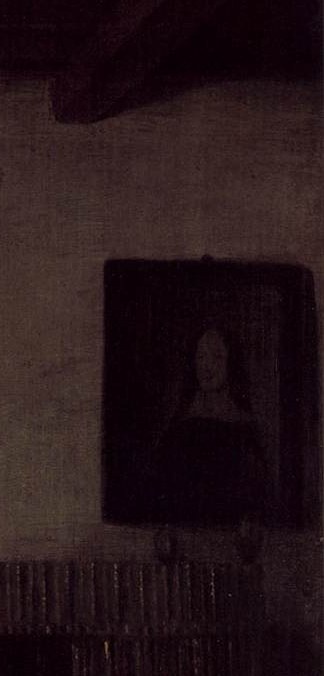
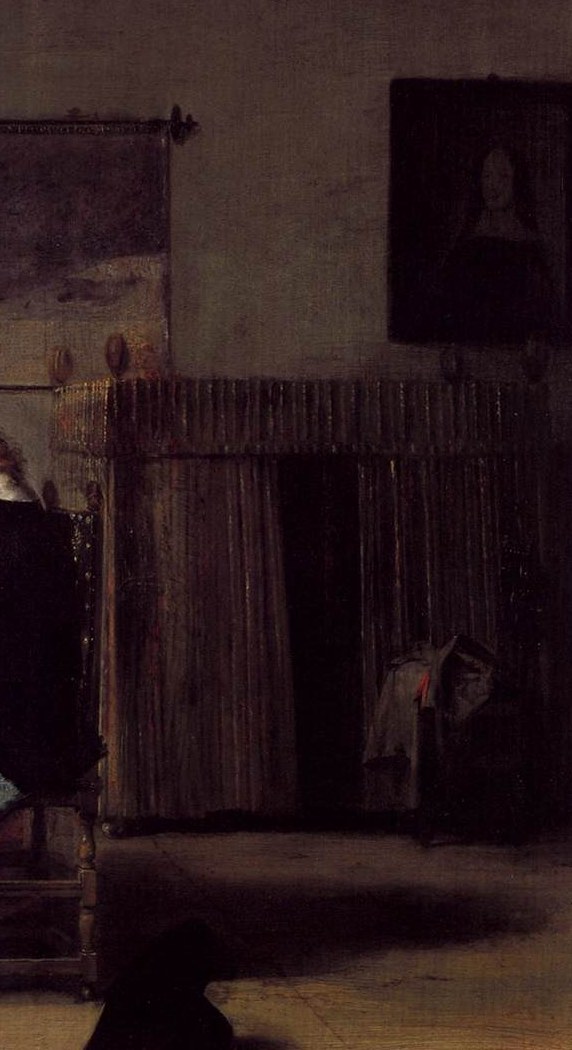
But the painting's full title includes two men and two women, and the second man is easy to scroll past. He stands almost entirely inside the dark wall at the right edge of the canvas, a shadowed figure who could be a servant, a chaperone, or simply the fourth member of the group. De Hooch tucked him there without a spotlight, letting the composition hide him in plain sight.
Dutch interiors of this period are full of these quiet games: what you see first is only part of what's there. Next time you look at a de Hooch, check the edges.
Details
Transcript
The light pulls you straight through. Past the bowing man, past the seated woman. De Hooch lets a second room breathe behind the first. But now look at the darkness on the right. A fourth figure is standing there, nearly absorbed by the wall. Two men, two women. The title told us, but we almost missed him.