Washington Crossing the Delaware by Emanuel Leutze
View the artwork: Washington Crossing the Delaware →
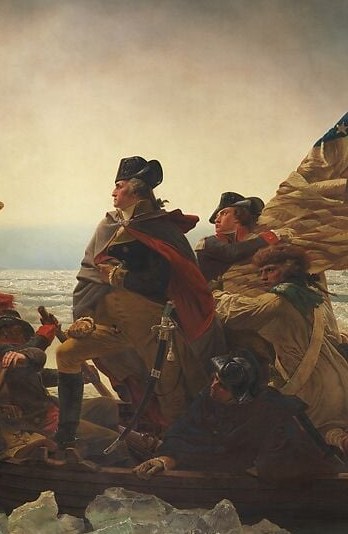
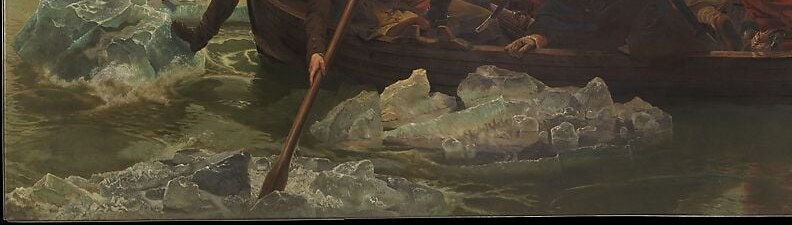
Emanuel Leutze painted the most famous image of the American Revolution in a Düsseldorf studio, using the Rhine River as his model for the Delaware. Completed in 1851, Washington Crossing the Delaware is not a documentary record of December 1776. It is a carefully constructed political argument, painted for a nation tearing itself apart over slavery.
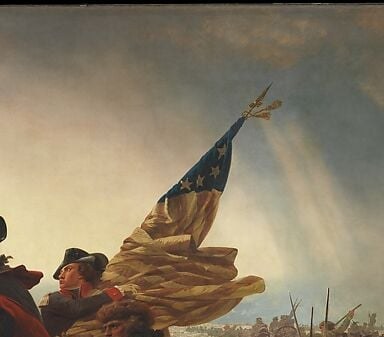
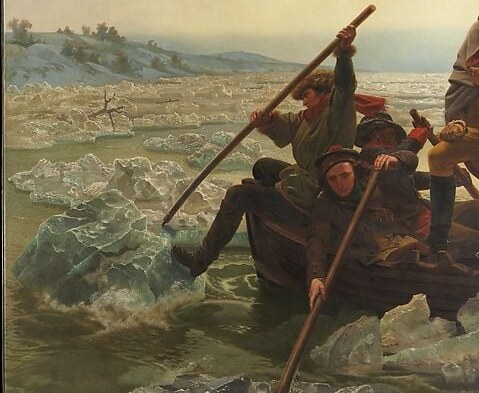
Look for two details that prove Leutze was painting his own moment, not history. The Stars and Stripes unfurling above Washington did not exist on Christmas night in 1776. It is a deliberate anachronism, a symbol of the Union Leutze believed was worth saving. And in the center of the boat, an African American oarsman pulls alongside white soldiers with equal urgency. At a time when the Fugitive Slave Act was law, Leutze, a committed abolitionist, painted a free Black man into the founding myth.
On its arrival in New York, tens of thousands paid admission to see the painting. It was a spectacle of scale and drama, but also of ideology. The version now at the Metropolitan Museum of Art was gifted in 1897, and it has anchored American history classrooms ever since. Leutze himself had grown up in America but spent his adult life in Germany, painting American stories for a European audience fascinated by the young republic.
A painting can be a time capsule and a wish at the same time. What do you think a nation's founding paintings should show?
#arthistory #americanart #emanuelleutze
Details

Transcript
It is the most famous image of the American Revolution. But look at the flag. That flag did not exist in 1776. Now look at the center of the boat. A Black oarsman fights the ice with everyone else. Leutze was a German abolitionist painting in 1851. He put a free Black man in a founding myth. The river in the painting is not even the Delaware. It is the Rhine.