Artwork
Washington Crossing the Delaware
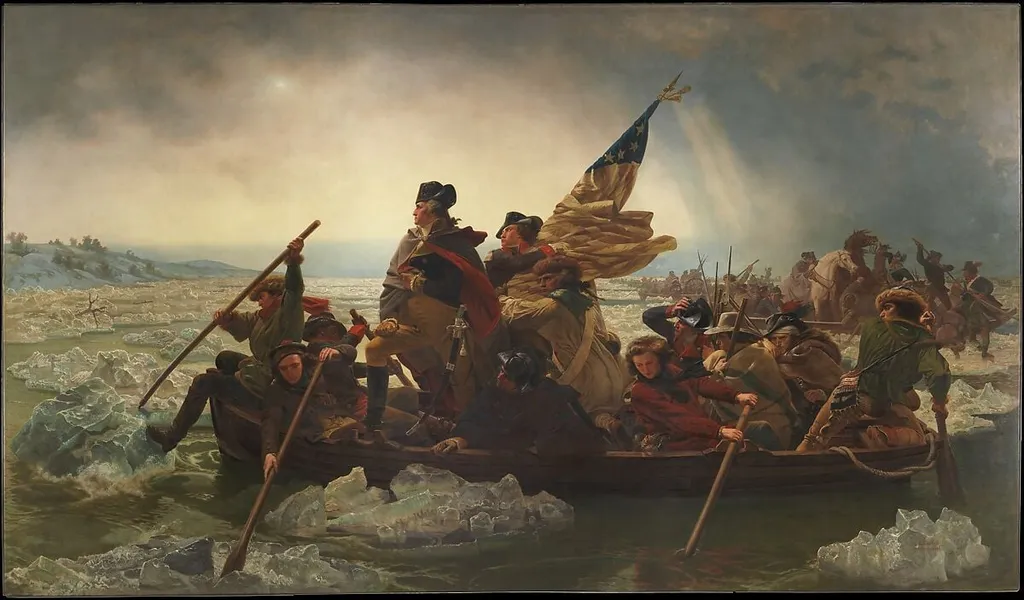
Washington Crossing the Delaware is an oil painting by the Düsseldorf school of painting artist Emanuel Gottlieb Leutze. It dates from 1851 and is held in the collection of the Metropolitan Museum of Art.
About this work
Emanuel Leutze painted this scene in his Düsseldorf studio in 1851, setting George Washington upright in a rocking boat beneath a dawn star over the Delaware.
Emanuel Leutze painted this scene in his Düsseldorf studio in 1851, setting George Washington upright in a rocking boat beneath a dawn star over the Delaware. The canvas runs more than twelve by twenty-one feet, with American art students posed in period costume. An African American oarsman reflects Leutze's abolitionist convictions. John Stewart Kennedy gave the work to the Metropolitan Museum of Art in 1897.
Subject & Meaning
The painting depicts the pivotal December 1776 crossing of the Delaware River by General George Washington and the Continental Army, a prelude to the surprise attack on Hessian forces at Trenton. Leutze employed deliberate iconography: Washington stands heroically in a ruler-like pose, illuminated by the rising sun as if sanctified, while the anachronistic Stars and Stripes is held by future president James Monroe. The boat's occupants represent a cross-section of colonial society, a Scottish bonnet, an African American, a western rifleman, farmers, and a figure in Native American clothing, symbolizing national unity in the fight for freedom.
The composition alludes to Roman history: the river crossing evokes Julius Caesar crossing the Rubicon and the mythological Styx, imbuing the event with destiny and sacrifice. Conceived during the 1848 revolutions, the painting also aimed to encourage European liberal reformers through the example of the American Revolution.
Technique & Style
Executed in oil on canvas (378.5 × 647.7 cm) in 1851, the painting exemplifies the Düsseldorf School's detailed realism and theatrical composition. Washington dominates the scene, his face illuminated by an unnaturally bright dawn sky, a strategic light source that glorifies him. The palette is predominantly dark, punctuated by red highlights echoing the American flag.
Leutze employed foreshortening and receding boats to create deep spatial recession; Andreas Achenbach added the morning star. The painting remains in good condition despite a 2002 defacement that caused no major damage; the original frame was replaced by a replica based on an 1864 photograph.
History & Provenance
Emanuel Leutze painted the first version of Washington Crossing the Delaware in 1850 in Düsseldorf. After being damaged by fire, it was restored and acquired by the Kunsthalle Bremen, but was destroyed in a 1942 bombing. The second, full-size version was commissioned by art dealer Adolphe Goupil and completed in 1851.
Exhibited in New York that October, it was purchased by Marshall O. Roberts for $10,000. After several ownership changes, it was donated to the Metropolitan Museum of Art by John Stewart Kennedy in 1897. A smaller version, executed under Leutze's supervision by Eastman Johnson in 1851, hung in the White House from 1979 to 2014, then moved to the Minnesota Marine Art Museum; it sold at Christie's in May 2022 for $45 million.
The full-scale 1851 version is held in the permanent collection of the Metropolitan Museum of Art in New York City, a gift of John Stewart Kennedy in 1897. It was lent to an exhibition in Dallas, Texas in the early 1950s and subsequently exhibited at the United Methodist Church in Washington Crossing, Pennsylvania for several years beginning in 1952. In January 2002, the painting was defaced when a former museum guard glued a photograph to it, but it sustained no major damage.
Its frame, replaced in 2007, was recreated from an 1864 Mathew Brady photograph found at the New-York Historical Society. A smaller version of the painting, which hung in the White House reception area from 1979 to 2014, was acquired by the Minnesota Marine Art Museum in Winona, Minnesota in 2015 and sold at Christie's in May 2022 for $45 million.
Context
Upon its 1851 New York debut, the painting drew massive crowds (over 50,000 viewers), quickly becoming an American icon. Art historians situate it within the Düsseldorf School, linking Leutze's heroic composition to the German history painting tradition, particularly Carl Friedrich Lessing's works. The painting's deliberate historical inaccuracies, such as the anachronistic flag and idealized stance, have fueled scholarly debate about national mythmaking versus historical accuracy.
Leutze conceived the work during the Revolutions of 1848, aiming to inspire European reformers with the American Revolution. Its iconic status is underscored by its frequent reproduction and parody, including Grant Wood's 'Daughters of Revolution.' Today, it remains a touchstone in American art history.
Legacy
Washington Crossing the Delaware has become one of the most iconic images in American art, widely reproduced and frequently referenced in popular culture. Its composition was directly echoed in Grant Wood's 1932 painting 'Daughters of Revolution', and the work inspired composer George Antheil's piece 'McKonkey's Ferry'. The painting is included in countless histories of the United States.
Its continuing resonance is evident in modern incidents: in 2002 a former guard defaced the Met version by affixing an image of the September 11 attacks, and in 2022 a smaller studio version sold at auction for $45 million, a record for a work depicting an American historical subject.
Overview
Emanuel Leutze's 1851 oil on canvas, Washington Crossing the Delaware, depicts a pivotal moment from the American Revolutionary War. It captures General George Washington leading the Continental Army across the icy Delaware River on the night of December 25–26, 1776. This dramatic scene foreshadowed a crucial victory against Hessian forces at the Battle of Trenton, marking a turning point in the conflict. Leutze, a German-American artist, created three versions of this significant historical painting.
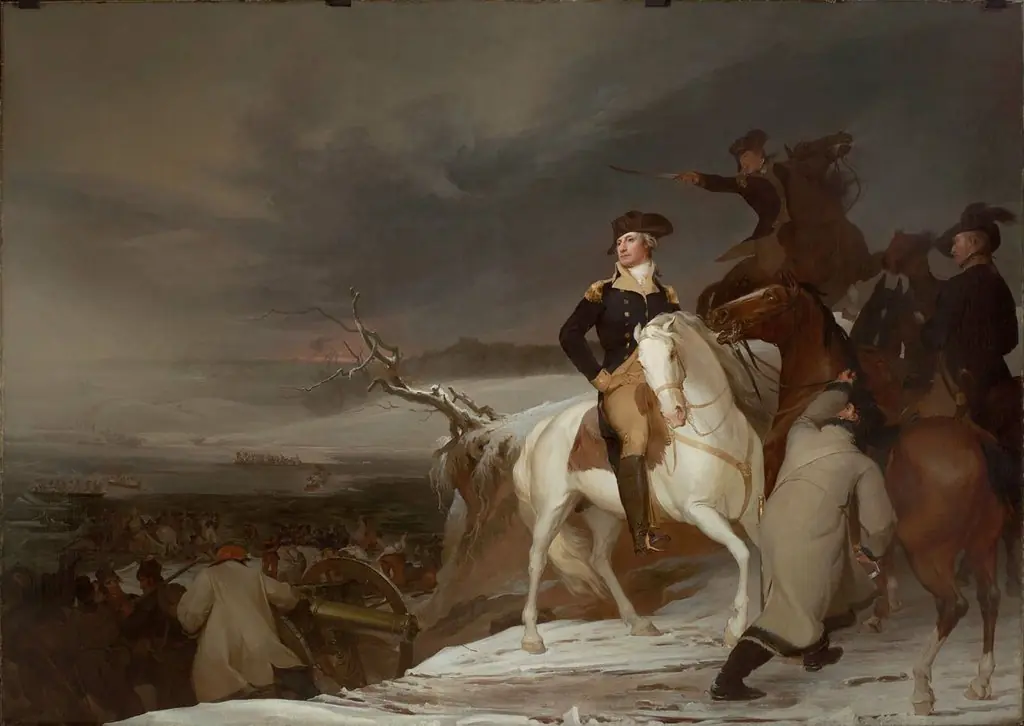
Artist & collection
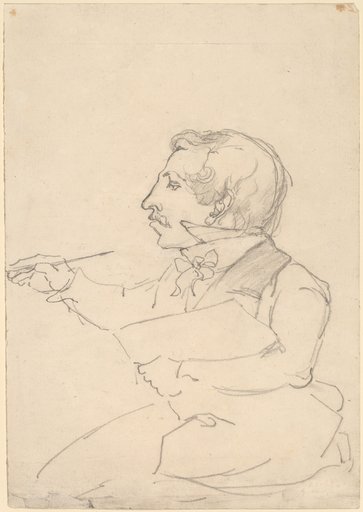
Artist
Emanuel Gottlieb Leutze (May 24, 1816 – July 18, 1868) was a German-born American history painter, best known for his 1851 painting Washington Crossing the Delaware. He is associated with the Düsseldorf school of painting.

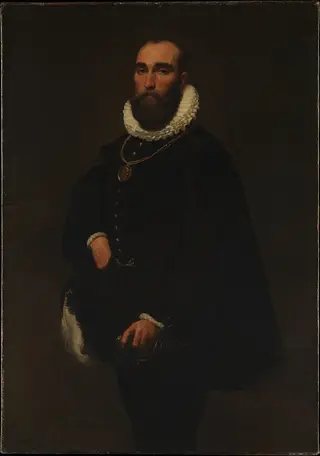
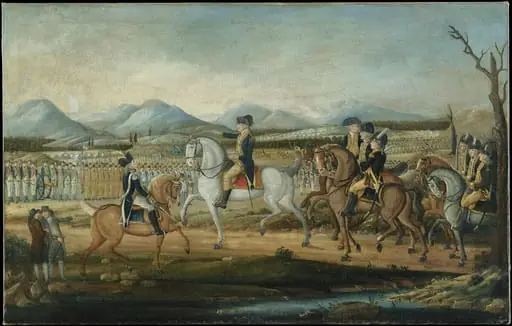 Washington Reviewing the Western Army at Fort Cumberland, Maryland
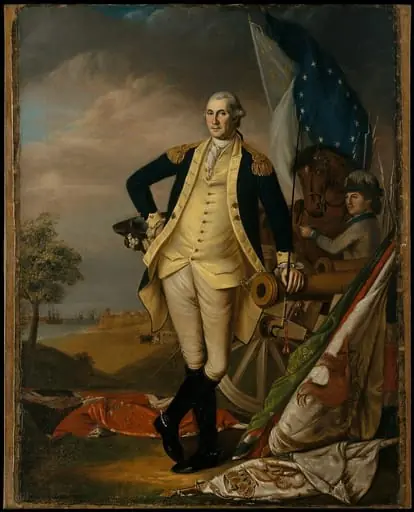 George Washington
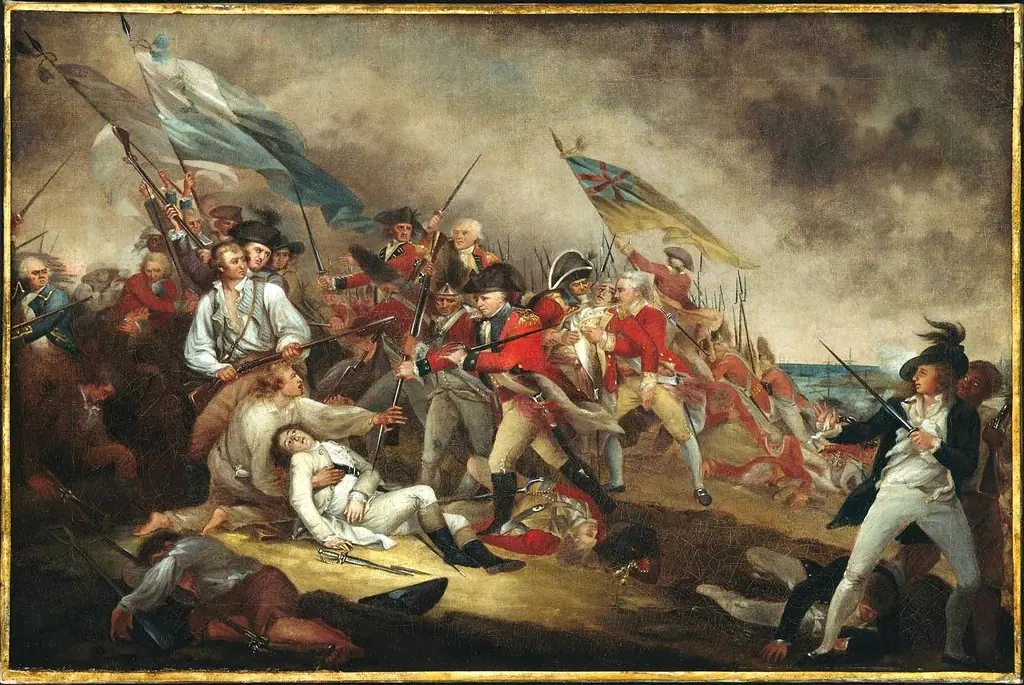 The Death of General Warren at the Battle of Bunker's Hill, 17 June, 1775
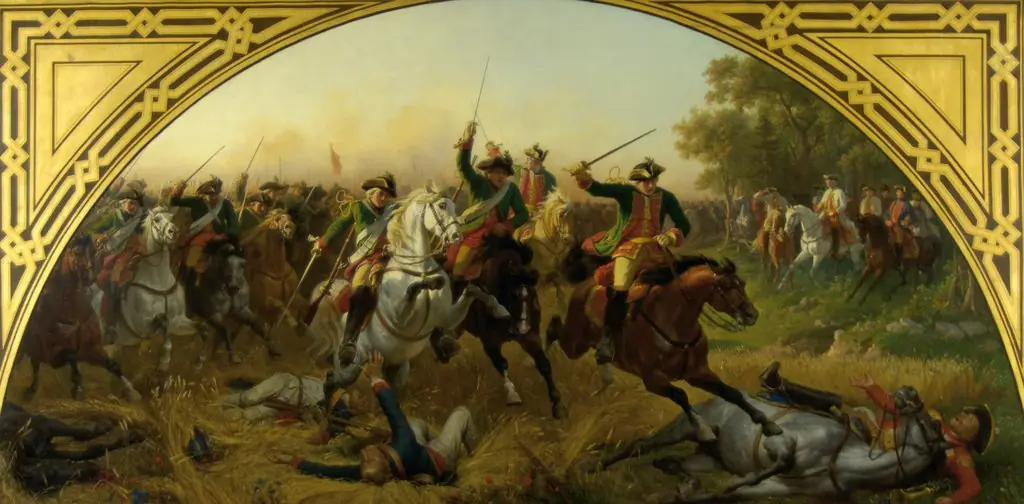 The Battle of Kolin 1757
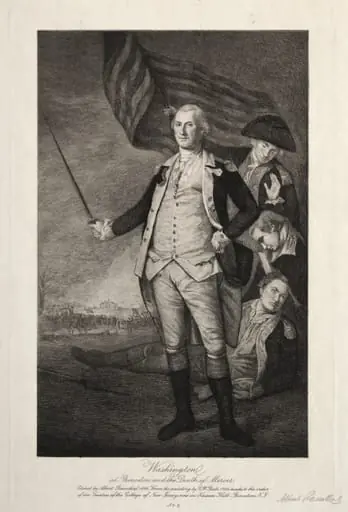 George Washington at Princeton
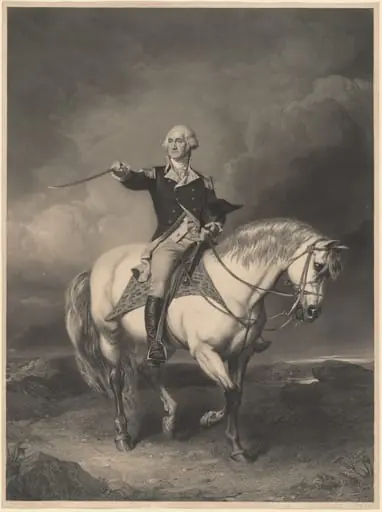 George Washington on Horseback
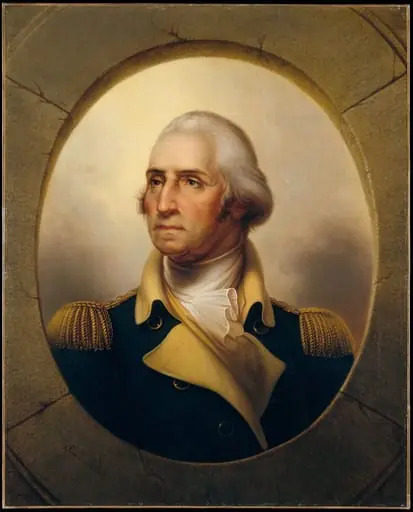 George Washington
 The Algeciras at the Battle of Trafalgar
 The First Sight of Moscow