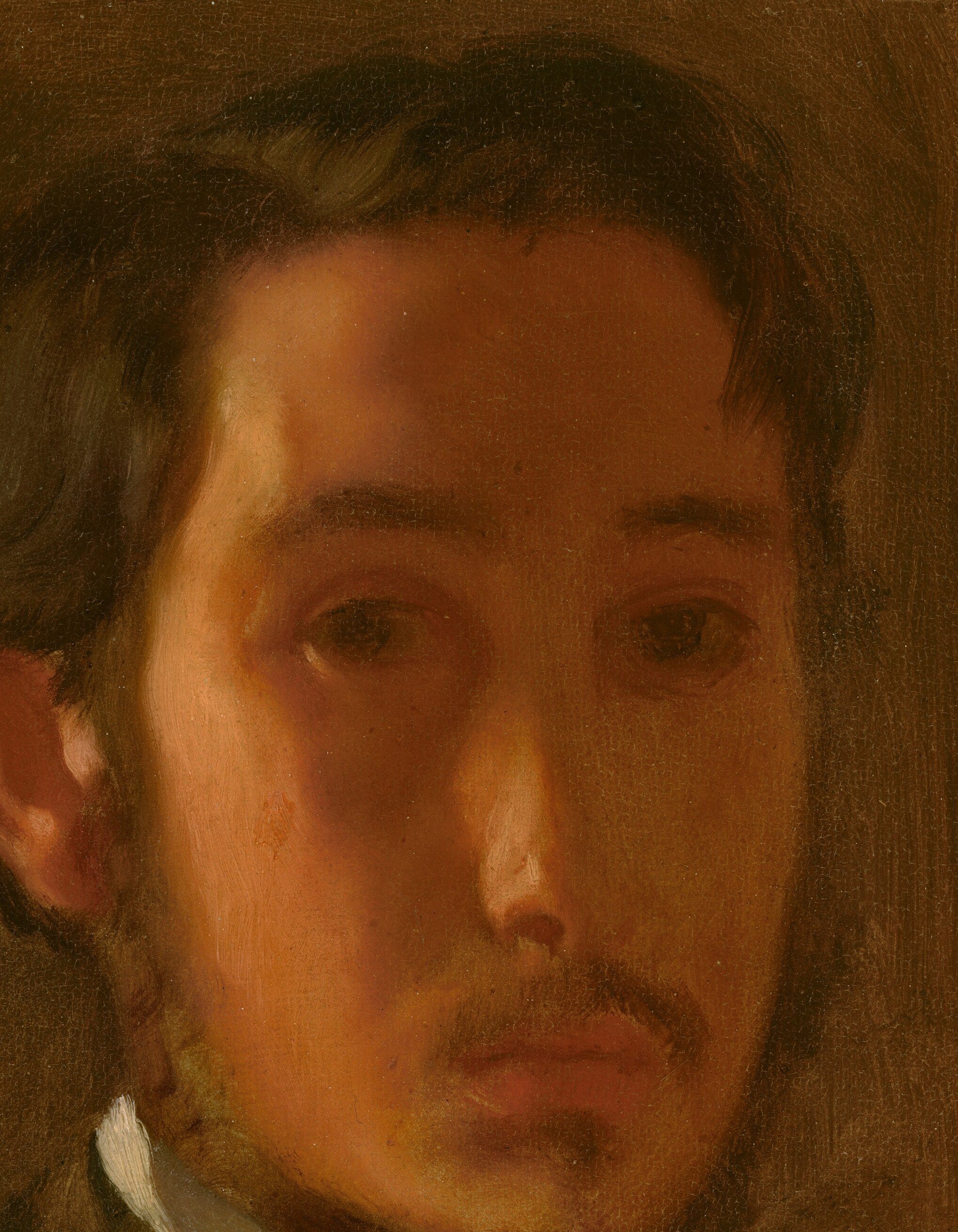
Self-Portrait with White Collar by Degas, Edgar
This is Edgar Degas around 1857, at twenty-three, in a self-portrait that was never meant to stand alone.
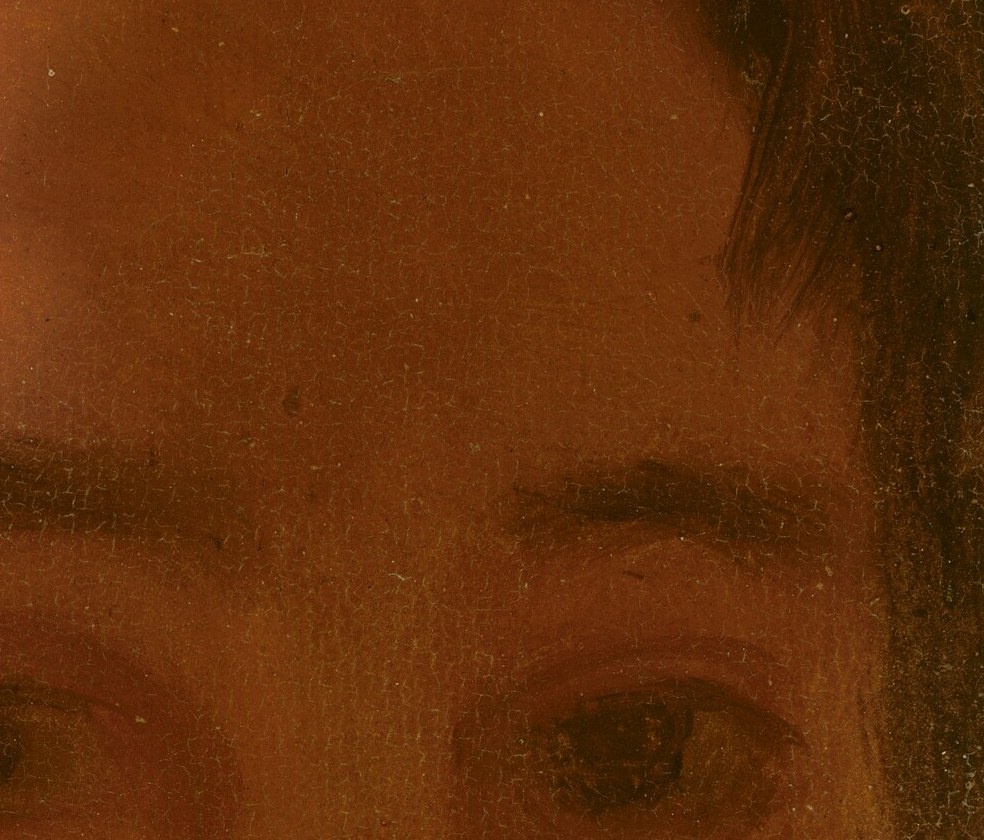
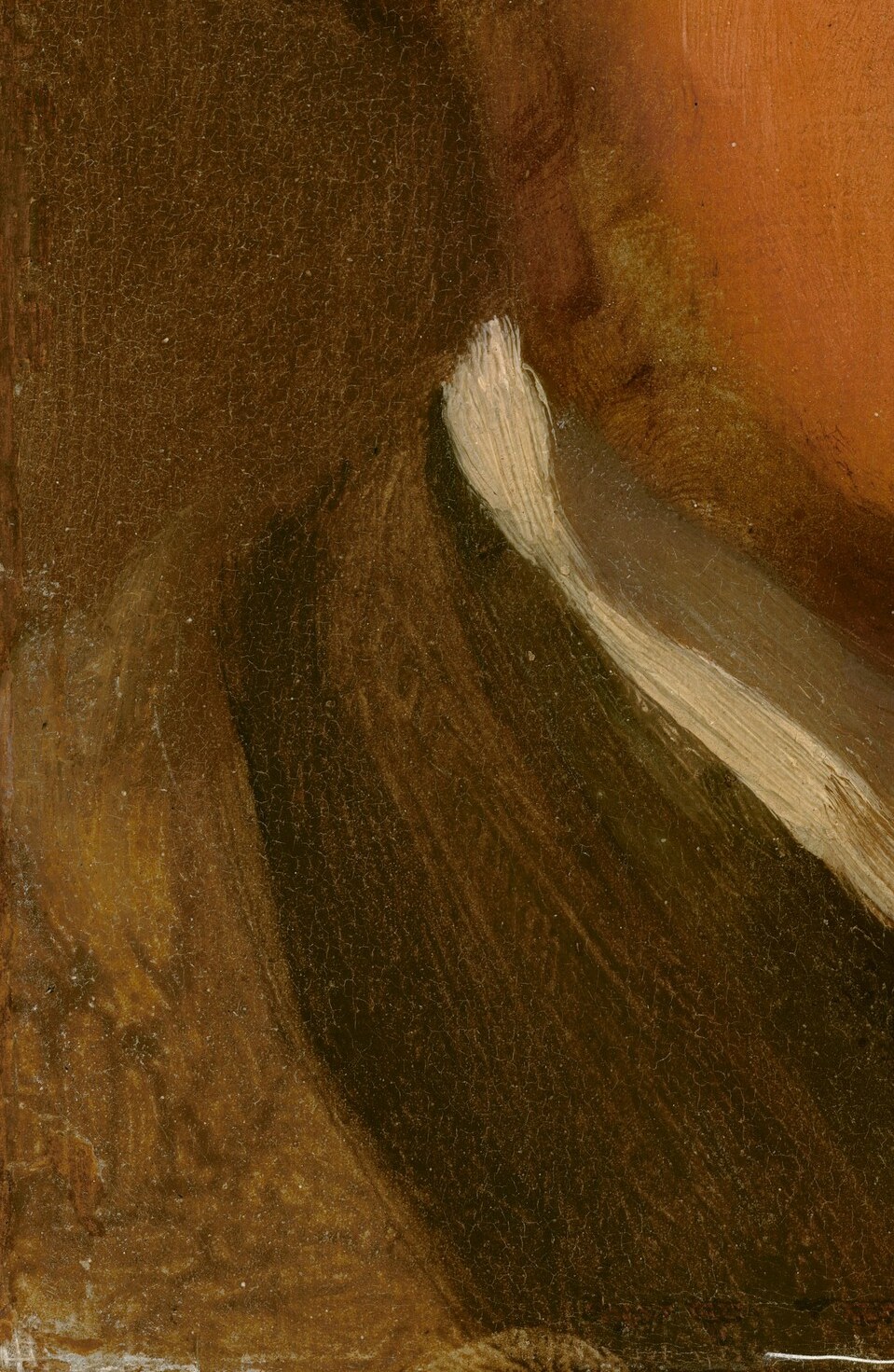
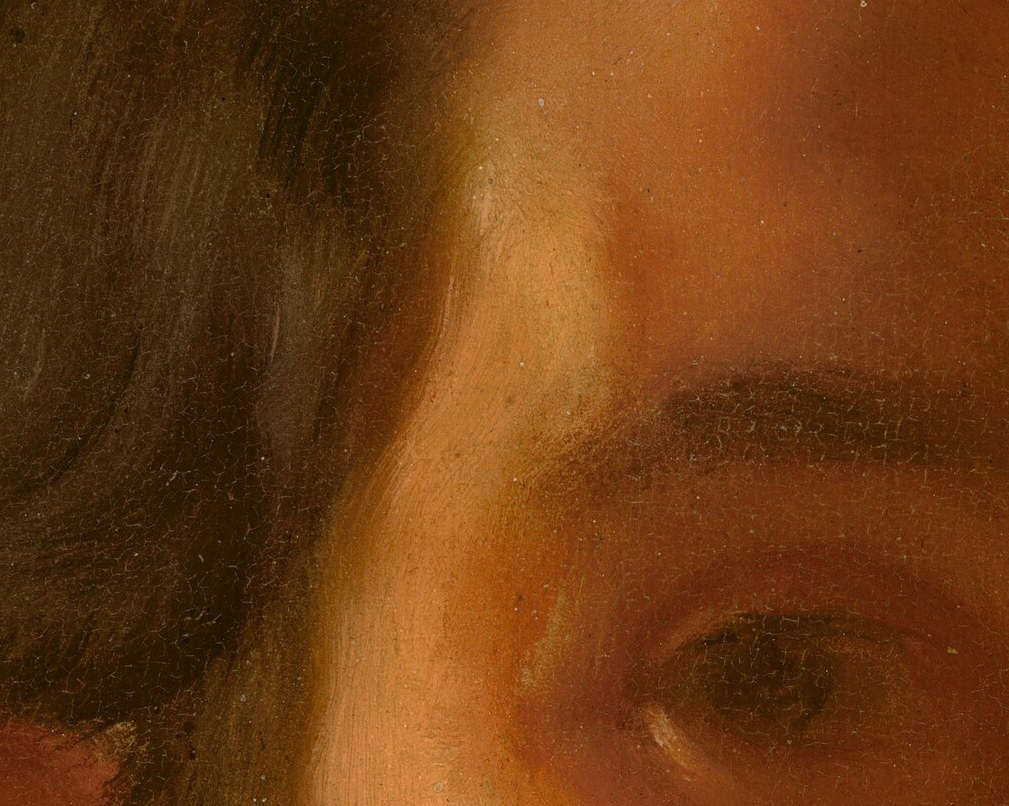
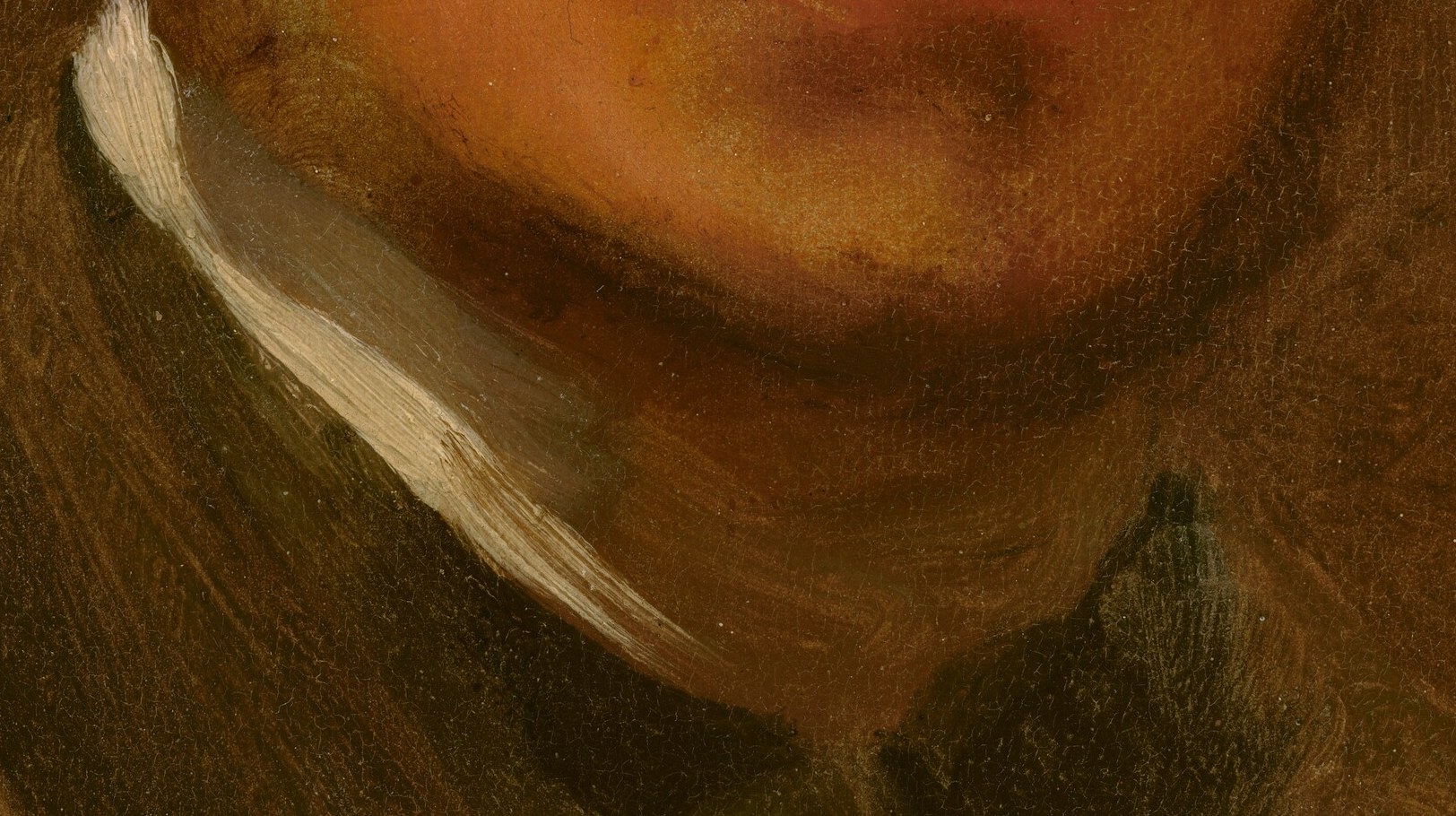
Look at the young man's composed face. The eyes are rendered with real care, one slightly more in shadow than the other, giving the gaze an unsettled, alive quality. The crisp white collar is the painting's only bright accent, cutting against the loosely blocked dark coat. Degas lavished attention on the face and let the hair and shoulder dissolve into near-abstraction, showing exactly where his priorities lay.
What makes this painting quietly dramatic is what it used to be. The canvas was originally a double portrait: Degas painted himself alongside another artist he admired. Later, for reasons he never explained, Degas took a blade and cut himself out of the larger work, leaving only this fragment. The other half is lost or destroyed.
The result is an image of a young man isolating himself from his own history. Degas would go on to become one of the great portraitists of his century, but here he is at the start, already editing.
Details
Transcript
This is Degas around 1857. He painted himself staring out with a guarded calm. But this canvas was once much larger. Originally, Degas stood beside another artist he admired. Years later, Degas cut himself out of that double portrait. The other half is lost. Only Degas remains.