Father Hennepin and Two Companions Made Prisoners by the Sioux. April 1680 by Catlin, George
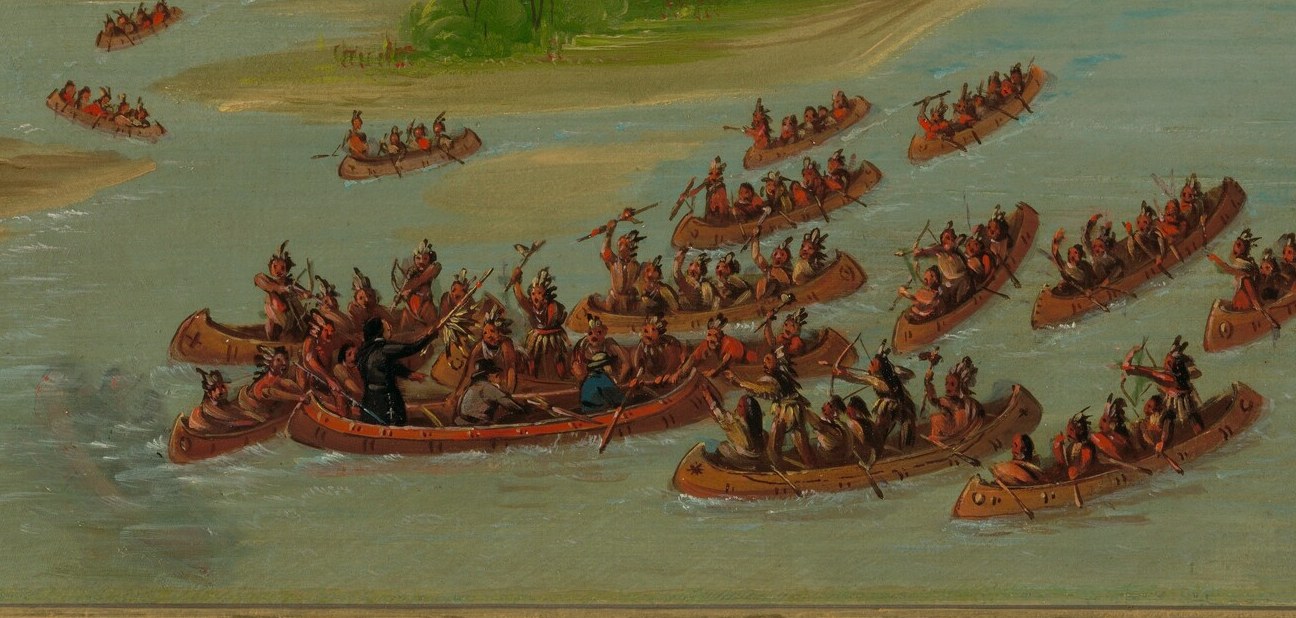
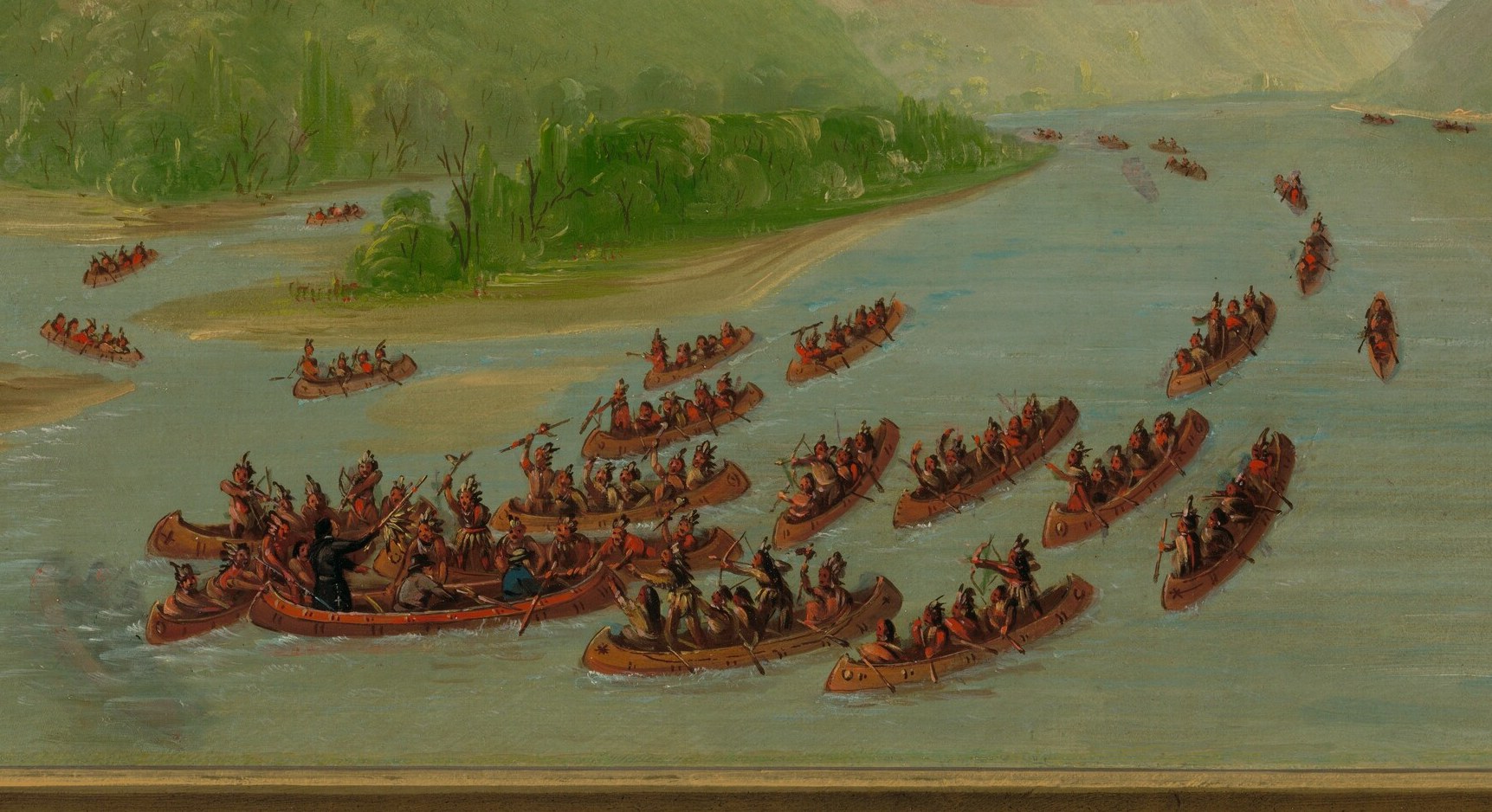
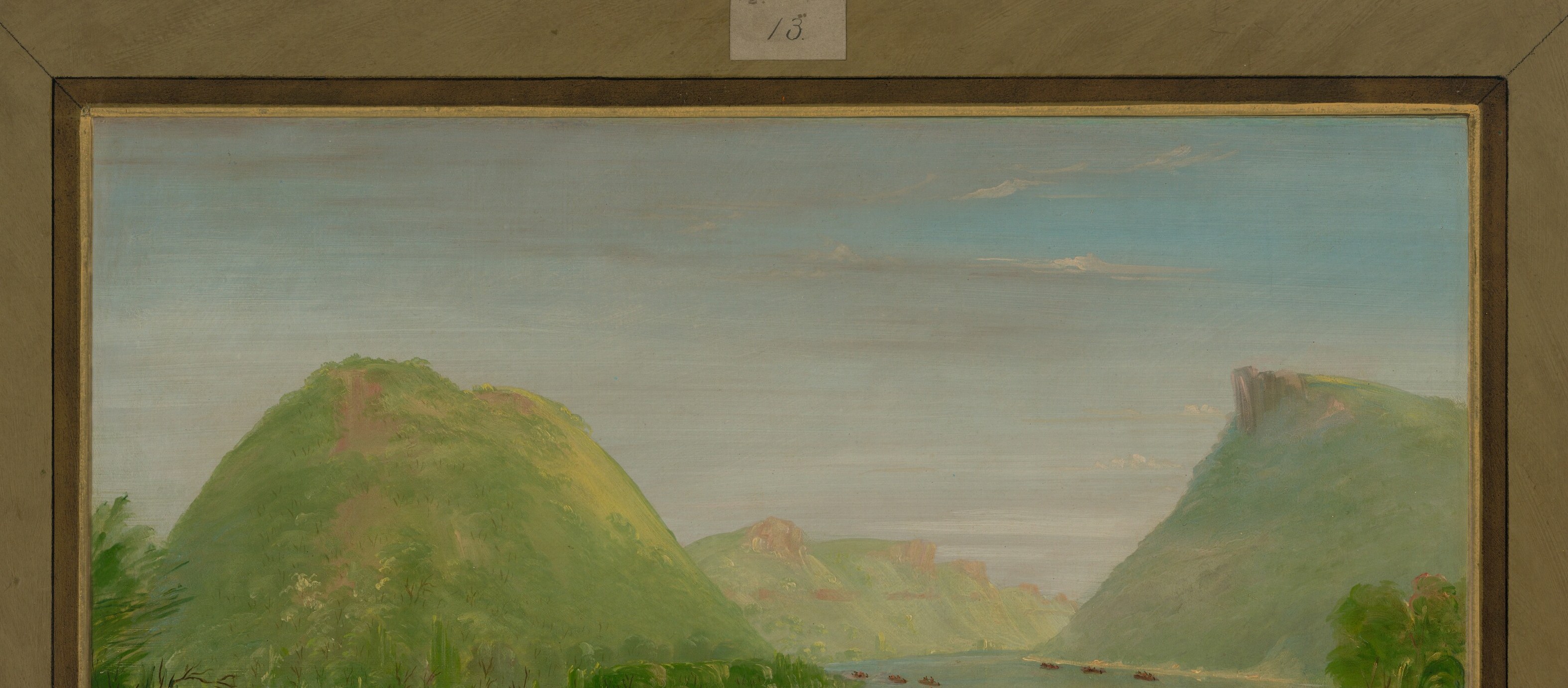
George Catlin's "Father Hennepin and Two Companions Made Prisoners by the Sioux, April 1680," painted in 1847/1848, captures a dramatic moment from early French colonial history. Currently housed in a prominent museum collection, this oil on canvas work is a testament to 19th-century American interest in frontier narratives.
While the painting's central drama unfolds around the captured Father Hennepin and his companions, a closer look reveals intriguing details. The turbulent sky and dynamic figures emphasize the tension, but a small campfire burning on the distant riverbank hints at earlier human presence, grounding the scene in a wider landscape of interaction.
Catlin, a lawyer turned painter, spent the 1830s traveling the American West, documenting Native American life and historical events. This painting, however, was created from historical accounts rather than direct observation, reflecting the prevalent romanticization of encounters between European settlers and Indigenous peoples during his time.
Catlin's work continues to offer a window into 19th-century perspectives on American history. What other hidden details might you spot?
Details
Transcript
This dramatic scene was painted in 1848. It depicts Father Hennepin and companions captured by Sioux warriors. The painter, George Catlin, traveled the American West. He documented Native American life and historical events. He based this scene on written accounts, not direct observation. But look closely at the riverbank on the far left. A small campfire burns, suggesting a human presence.