Hilly Landscape near Wageningen by Abraham Johannes Couwenberg
Abraham Johannes Couwenberg's "Hilly Landscape near Wageningen," painted in 1838, offers a tranquil view of the Dutch countryside, held at the Rijksmuseum.
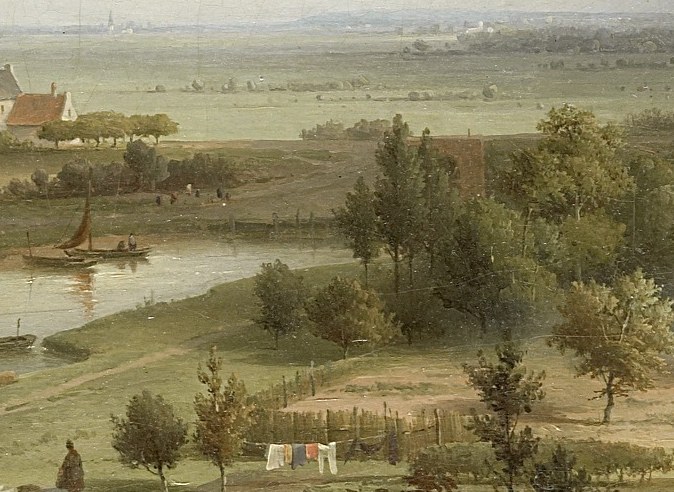
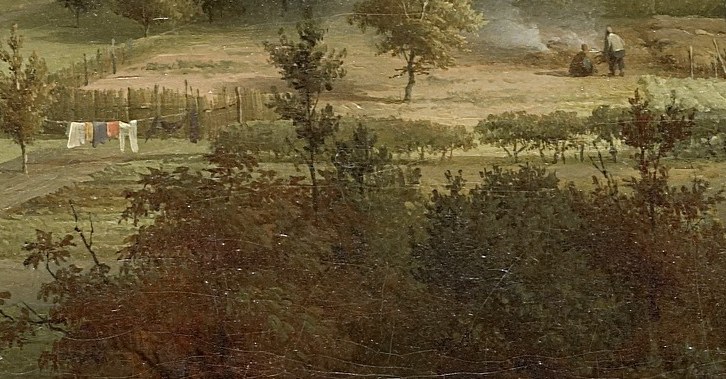
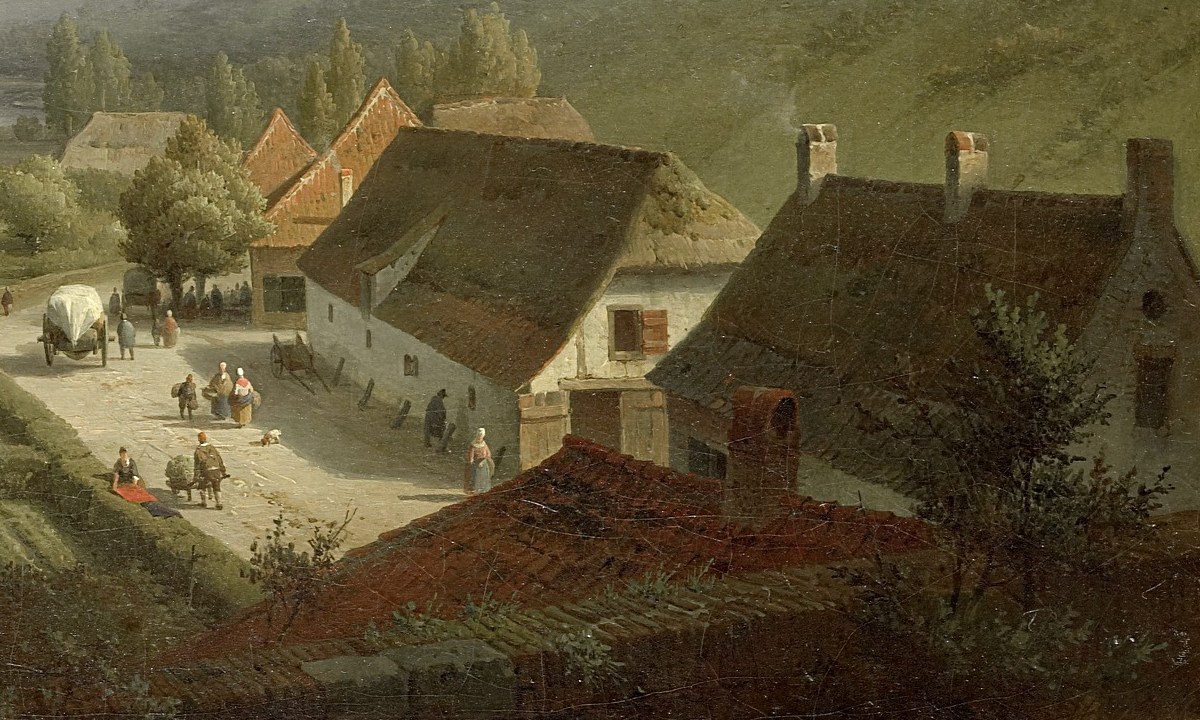
More than just a scenic view, this painting is rich with the subtle symbols of 19th-century Dutch rural life. Look closely at the winding river, essential for trade, and the distant church spire, representing community. The cultivated garden plots suggest prosperity and order, while the wisp of smoke from a chimney evokes warmth and daily routines.
Couwenberg, born in Delft, created this oil painting to capture the modest rhythms of agrarian society. Its acquisition by the Rijksmuseum highlights the museum's dedication to preserving works that document the Netherlands' rural heritage through the eyes of lesser-known 19th-century painters.
The painting invites us to appreciate the quiet beauty and interconnectedness of life in the Dutch countryside.
Details
Transcript
This serene landscape from 1838 shows the Dutch countryside. The winding river was a vital artery for trade and transport. Beyond the fields, a distant church spire signifies community life. These cultivated garden plots are a symbol of prosperity and order. Smoke from a chimney suggests a home, warmth, and daily life. It's a quiet celebration of rural Dutch heritage.