The nativity by Master of the Brunswick Diptych
The Nativity, painted around 1495 by the Master of the Brunswick Diptych, now in the Rijksmuseum, offers a tender, intimate portrayal of Christ's birth.
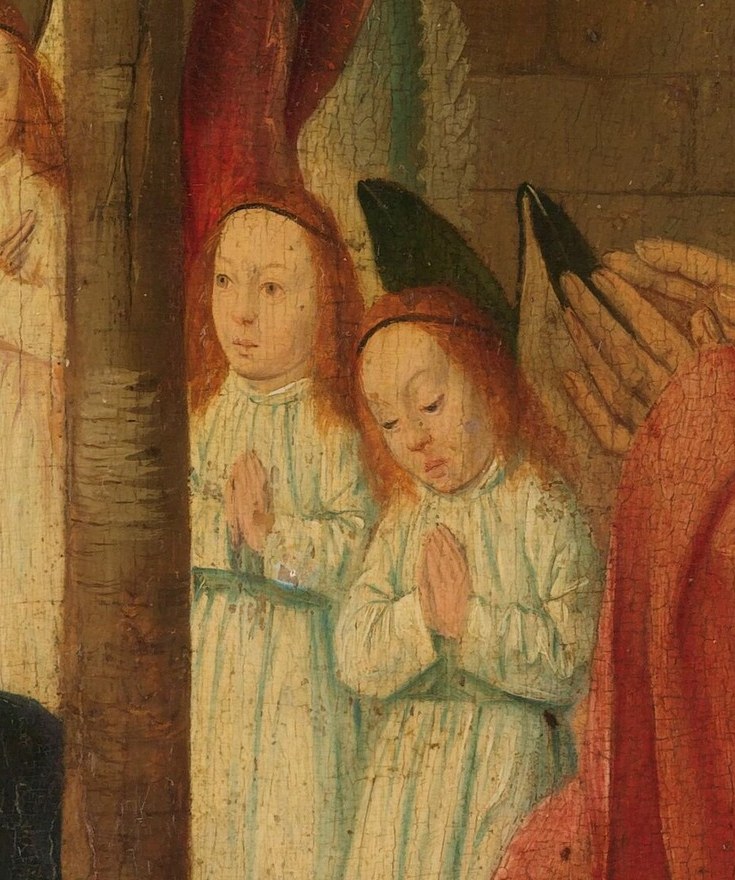
Notice the youthful depiction of the Virgin Mary, with her loose blond hair, and Joseph, who is usually shown as an older man. Both figures are shown with hands folded in prayer, reflecting a deep reverence for the infant Jesus. Three angels lean forward, mirroring the human awe in this divine moment, while even an ox peeks from the stable.
This painting’s iconography, including Mary's youthful features and the emphasis on a miraculously clean birth, closely follows the popular revelations of Saint Bridget of Sweden. It was donated to the Rijksmuseum in 1912 and was reattributed to the Master of the Brunswick Diptych in 1927.
What details in this quiet scene draw your eye the most?
Details
Transcript
This painter shows the Nativity, but not as you expect. Mary’s loose, blond hair was part of a popular vision. She kneels to her child, her hands folded in humble prayer. Joseph, usually old, is here shown young and deeply devout. His clasped hands show his piety and his protective love. Three angels lean forward, awestruck by the tiny child. Even the ox peers in from the stable, a quiet witness. This is a quiet, human moment of profound reverence.