A Fishwife by Carl Bloch
Carl Bloch's 'A Fishwife', painted in 1875, captures a moment of quiet pride and contentment in daily work. This genre scene, held at the Statens Museum for Kunst, elevates the dignity of labor through its intimate portrayal.
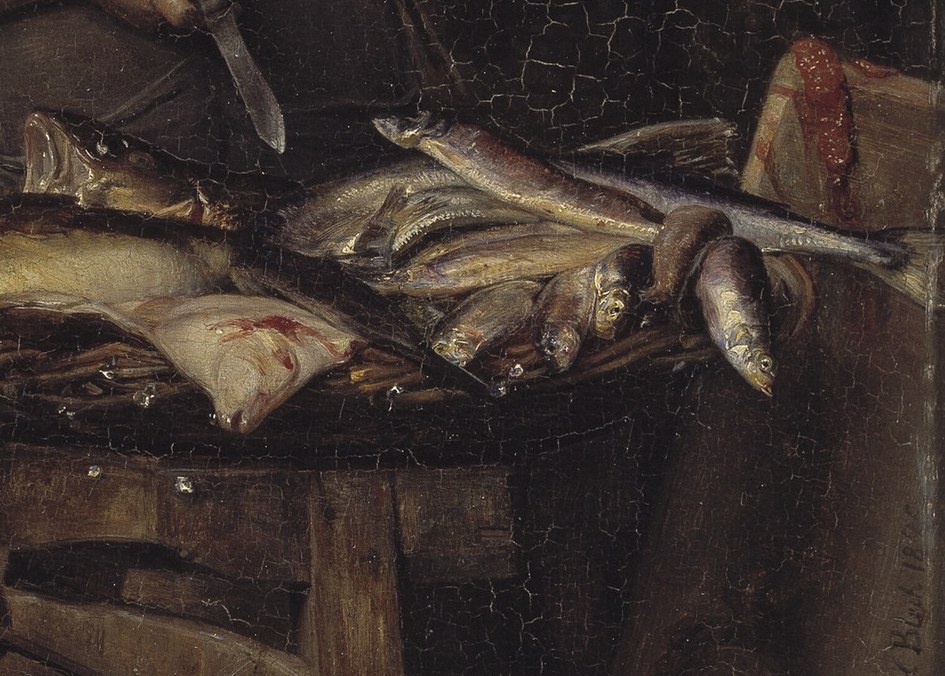
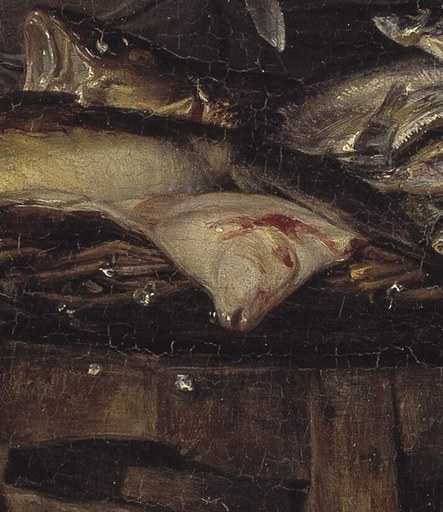
Look closely at her face: her direct gaze and gentle smile convey a sense of self-possession and satisfaction. The details of her trade, from the varied fish on the table to the weighing scales and the knife held in her hand, are rendered with care, underscoring the authenticity of her livelihood.
Bloch, a Danish artist, was known for his genre scenes and religious paintings. Here, he uses a dark, contrasting background to make the figure and her wares stand out, a technique that imbues the scene with a timeless quality, suggesting the enduring nature of such work.
This painting invites us to pause and appreciate the quiet strength and contentment found in an honest day's work. What do you see in her expression?
Details


Transcript
This fishwife, painted in 1875, shows true contentment. Her direct gaze and smile tell a story of quiet pride. She handles her knife with skilled, practiced ease. Every detail, from the fish to the scales, shows her trade. The artist, Carl Bloch, made ordinary work feel significant. She looks out, inviting us to see her life, and her joy.