Untitled by After Li Gonglin
This is an untitled handscroll from 1639, painted in ink on silk after the style of the great Song dynasty master Li Gonglin. It is over eight centuries old and has no signature. Most ancient Chinese scrolls came from a tradition that valued collective mastery over individual fame, and this one lives in that lineage.
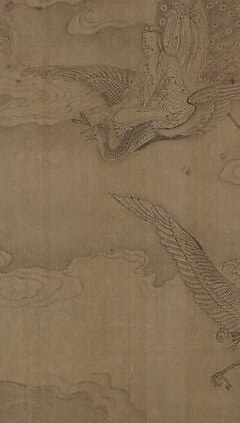
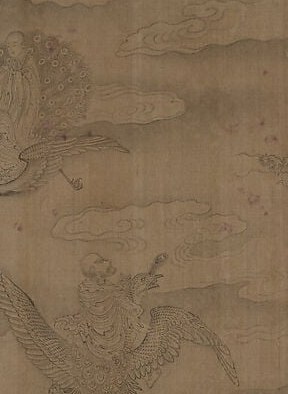
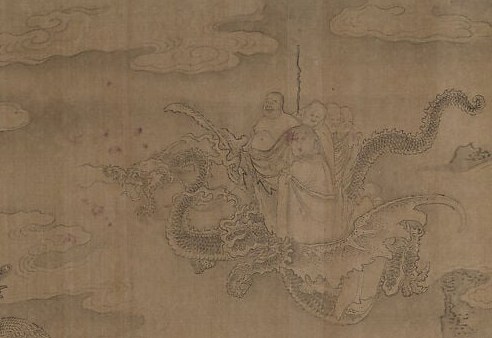
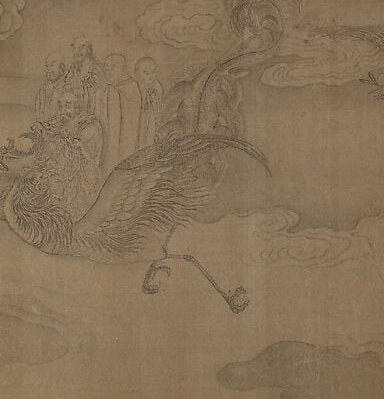
The visual structure walks you through it like a story being unrolled. A procession of robed figures moves across the lower register, led by a tall solitary figure who commands the entire composition from its center. Then the eye travels upward through a deliberate void of empty silk (a device called liubai, or "leaving blankness"), where the absence of ink becomes a held breath between the earthly and the mythic.
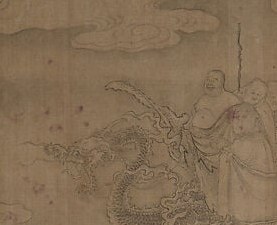
At the top, a dragon pushes through billowing cloud masses rendered in graded washes, one of the few tonal passages in an otherwise line-dominant work. And here is the hidden detail that flips the meaning of the whole scroll: the dragon is not menacing. Its expression, best seen up close, is curved with playfulness. In a tradition where dragons more often signify imperial power or cosmic ferocity, a smiling dragon reframes the encounter from awe to quiet wonder.
The artist remains unknown, which is exactly how many Song-to-Ming era scrolls passed through history. A handscroll was not a fixed frame on a wall. It was unrolled arm's length at a time, each section a moment of private discovery. If you stood close enough, you saw the dragon wink at you. What do you imagine it was thinking?
Details
Transcript
At first glance, a dignified procession of robed figures. The lead figure stands tall, commanding the silk ground. This scroll was painted over 800 years ago, in ink on silk. Now look up, through the empty space into the clouds. The negative space is a breath of suspense between worlds. And emerging from the mist: a dragon. But this is no fearsome creature. Look at its face. The dragon is smiling. It was painted with unusual playfulness.