The carrying of the cross by http://www.wikidata.org/.well-known/genid/24800ca5ad7eb6e1a3209c9f261506ba
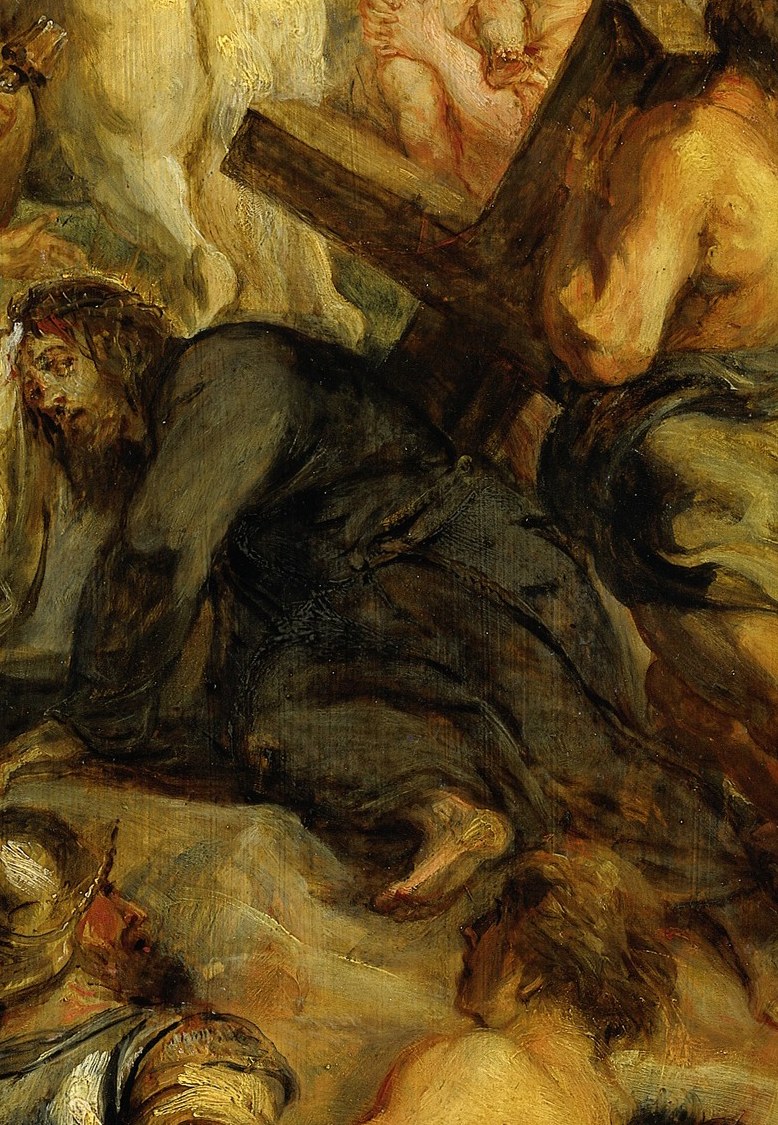
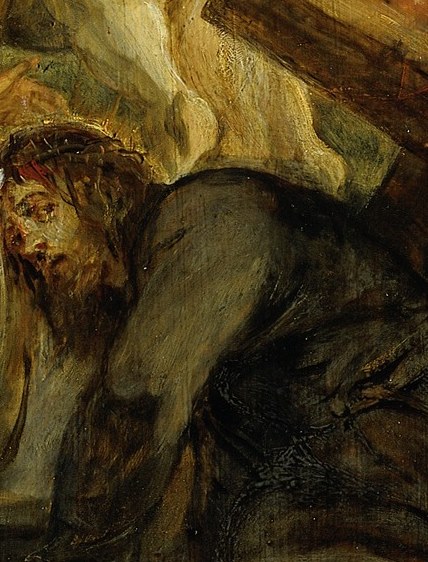
This painting, "The Carrying of the Cross" (c. 1650), is a powerful depiction of a pivotal moment. What is most striking is the artist's ability to convey the immense physical and emotional weight of the scene, not just through the central figure, but through the collective presence of the onlookers.
Observe the immense wooden cross, the focal point of the composition, and the compassionate gesture of the woman supporting the central figure's head. Then, let your eye wander to the edges of the crowd, where faces are more obscured, hinting at the vast, anonymous public witnessing this profound event.
Painted around 1650, this work is characteristic of religious narrative art from the period, employing strong chiaroscuro to heighten the drama and emotion. The artist masterfully uses light and shadow to guide the viewer's attention, emphasizing the central suffering while also capturing the varied reactions of those present.
The artist remains unknown, yet their skill in capturing such a charged moment, with both clear focus and subtle suggestion, makes this painting a compelling study of shared human experience.
Details

Transcript
This is the story of a heavy burden. The central figure carries the weight of sacrifice. A woman offers comfort amid the struggle. Notice the faces in the surrounding crowd. One face is barely visible on the left. He watches with a shadowed, dark expression. This painting was made in 1650.