風外慧薫筆 指月布袋図|Hotei Pointing at the Moon by Fūgai Ekun
This is 'Hotei Pointing at the Moon,' a hanging scroll by the Japanese monk-painter Fūgai Ekun, created around 1650 and held in a private collection. The painting is a visual koan, it enacts one of Zen Buddhism's most famous paradoxes without ever stating it.
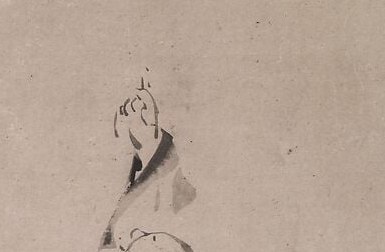
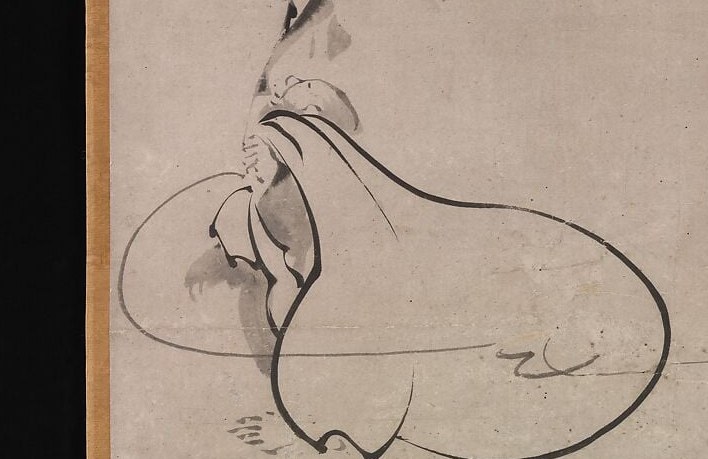
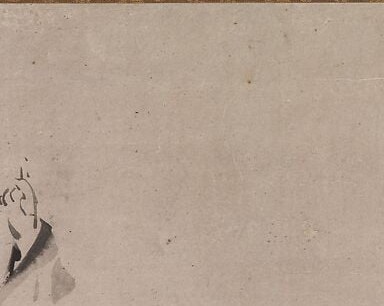
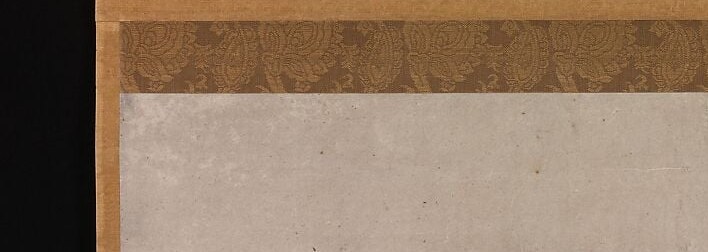
The central figure is Hotei (Budai), the folkloric embodiment of contentment, shown with an enormous belly and a wide laugh. His raised finger points directly at something absent from the scroll. The moon, the object of his gesture, is deliberately missing, left as empty paper. That absence is not a mistake; it is the entire teaching. A classic Zen proverb warns that the finger pointing at the moon is not the moon itself: fixating on the teacher's words means missing the truth they indicate.
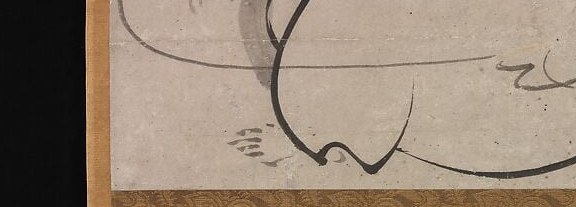
Fūgai Ekun (1568-1654) was an eccentric Zen monk whose mature style favored rapid, almost wild brushwork over meticulous detail. In this scroll, the robe hem dissolves into barely controlled ink washes, a haboku, or flung-ink, technique that values spontaneous energy over careful representation. The painting does not attempt to record a physical body but to transmit a state of mind.
The composition forces you to notice the void where the moon should be. The painting's real subject is the act of perception: what completes this image is not on the paper, but in your own awareness. Can you look past the instruction to see the thing itself?
Details
Transcript
He looks like a jolly fat monk. But this is Hotei, Zen's prankster saint of abundance. He points at something we cannot see. The missing moon is the whole point. A Zen proverb says the finger pointing at the moon is not the moon. If you stare at the finger, you miss the heavenly light. Fūgai Ekun painted this with just a few reckless strokes of ink. The message: truth can only be shown, not told.