Self-Portrait at Spurveskjul by Vilhelm Hammershøi
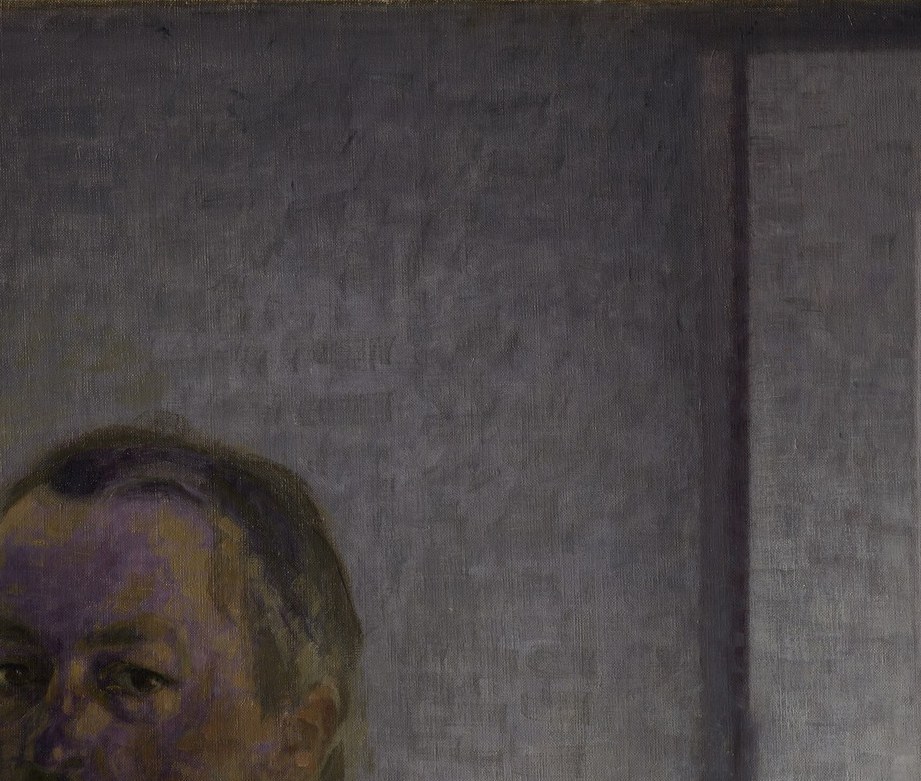
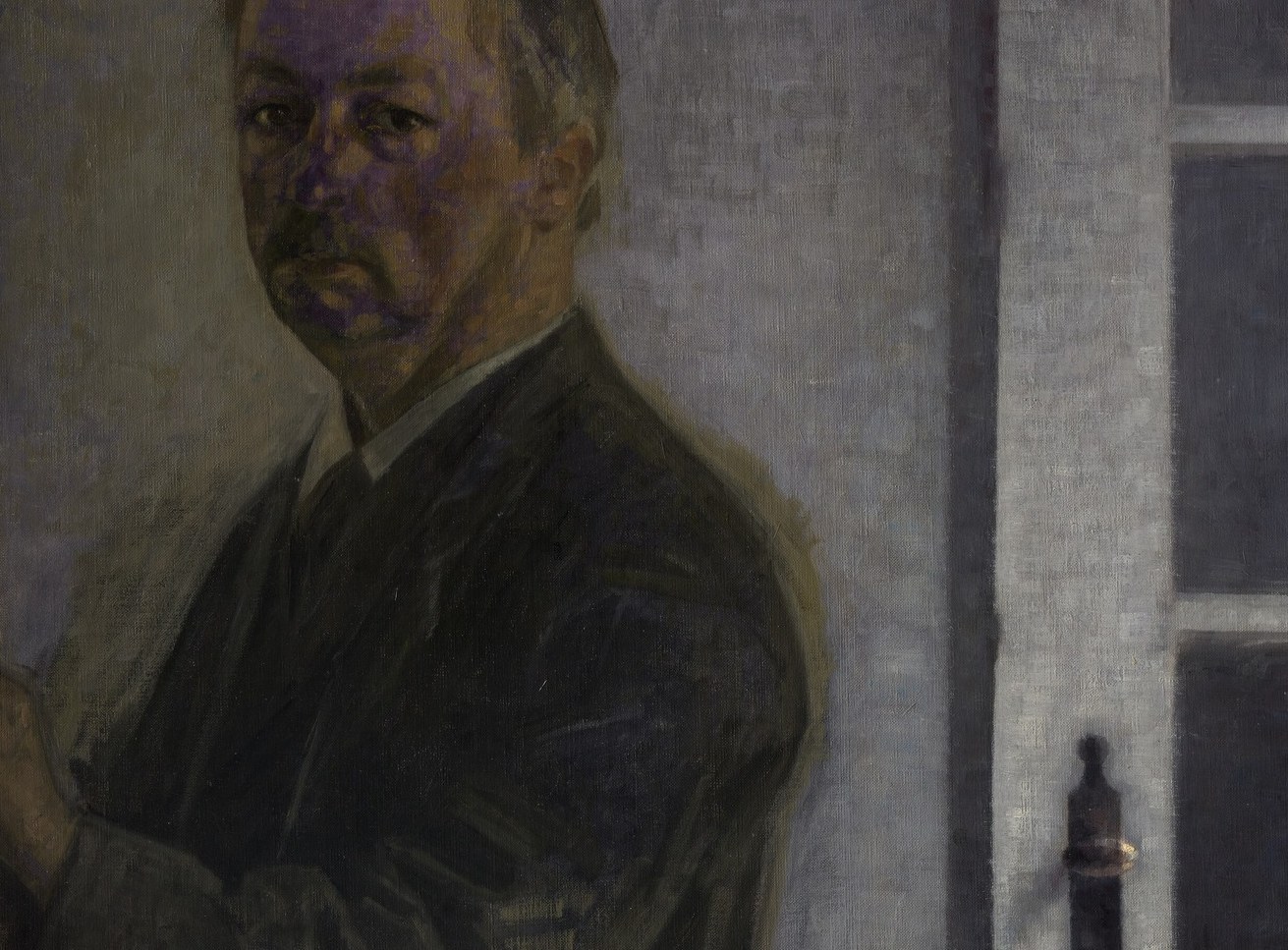
This is Vilhelm Hammershøi's Self-Portrait at Spurveskjul, painted in 1911 at his country house and now in the Metropolitan Museum of Art. Hammershøi was forty-seven, already celebrated across Europe, and he spent his days painting the silent rooms and empty hallways of his Copenhagen apartment. Here he turns that same forensic stillness on himself.
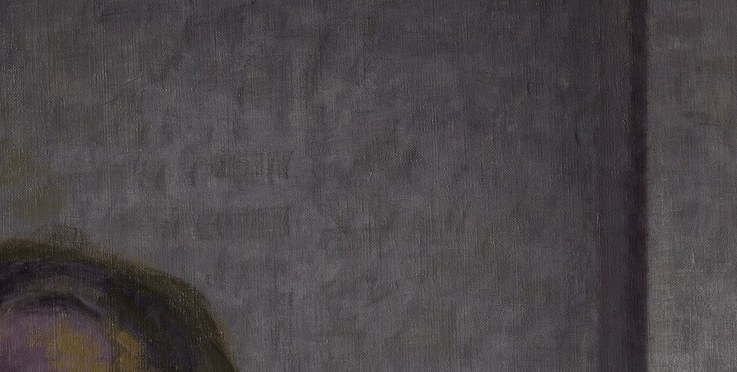
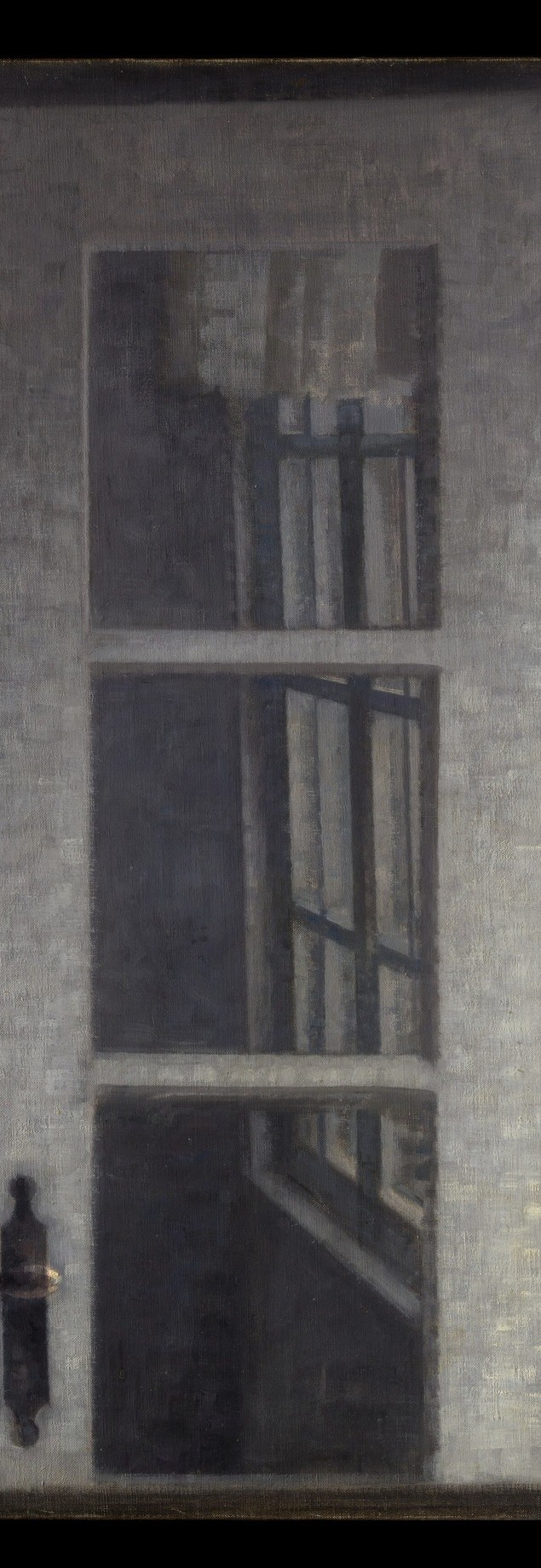
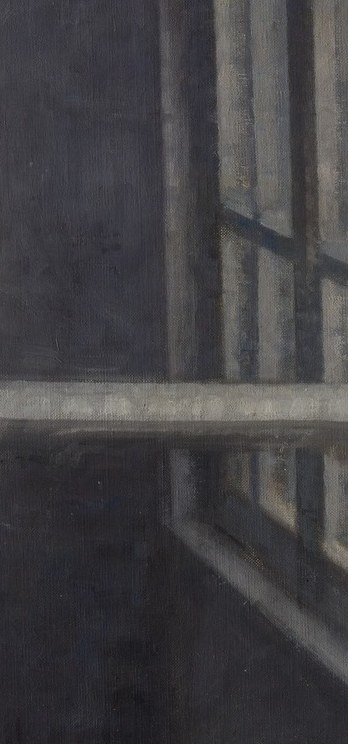
The camera moves across a face half lost in shadow, glasses glinting, one hand barely emerging from the dark. But the real discovery is in the window pane on the right. Look closely and a dark figure stands in the glass, perhaps a person outside, perhaps a reflection layered across the room. Hammershøi framed this as a study of solitude, yet the glass refuses to let him be alone.
Hammershøi died five years after this portrait, in 1916, from throat cancer. He was fifty-one. The poet Rainer Maria Rilke wrote of him: "Hammershøi is not one of those about whom one can speak quickly." His domestic labyrinths, interiors glimpsed through bookcases and half-open doors, slow the eye down until emptiness itself feels like a subject.
A painter who wore spectacles had to decide, every day, whether to paint them on. He chose to show us how he saw.
Details
Transcript
Copenhagen, 1911. A renowned painter at his country house. His name is Vilhelm Hammershøi. He is forty-seven. Look at the spectacles. He painted his own vision aids. Now look closely at the window pane behind him. A shadow stands in the glass. A figure outside or a reflection. He paints himself in perfect solitude. But the window betrays a presence. Hammershøi died five years later. His quiet rooms outlived him.