Village street by Cornelis Droochsloot
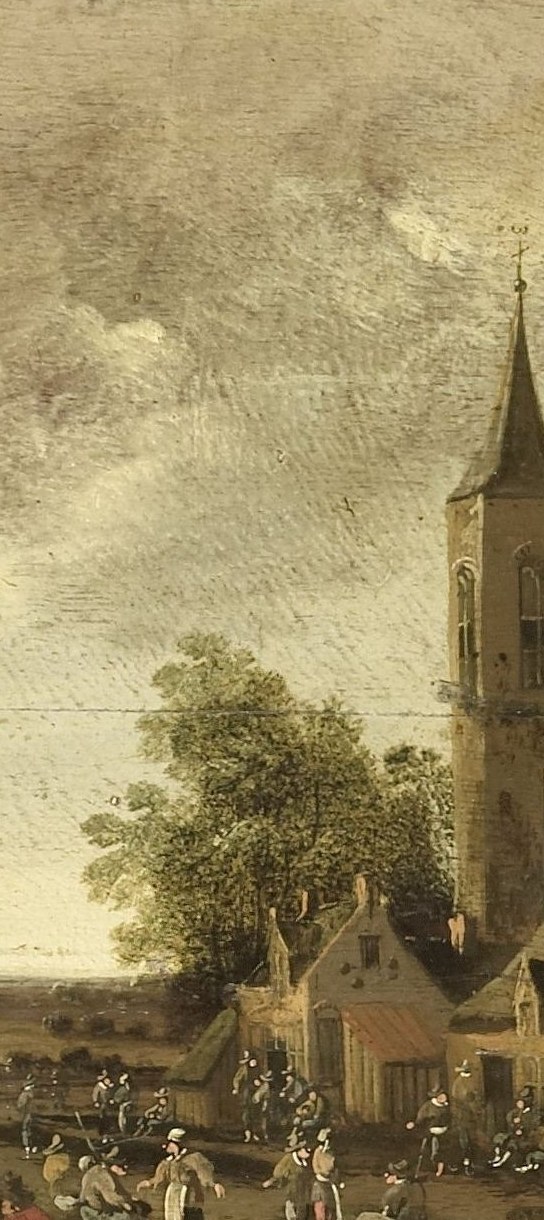
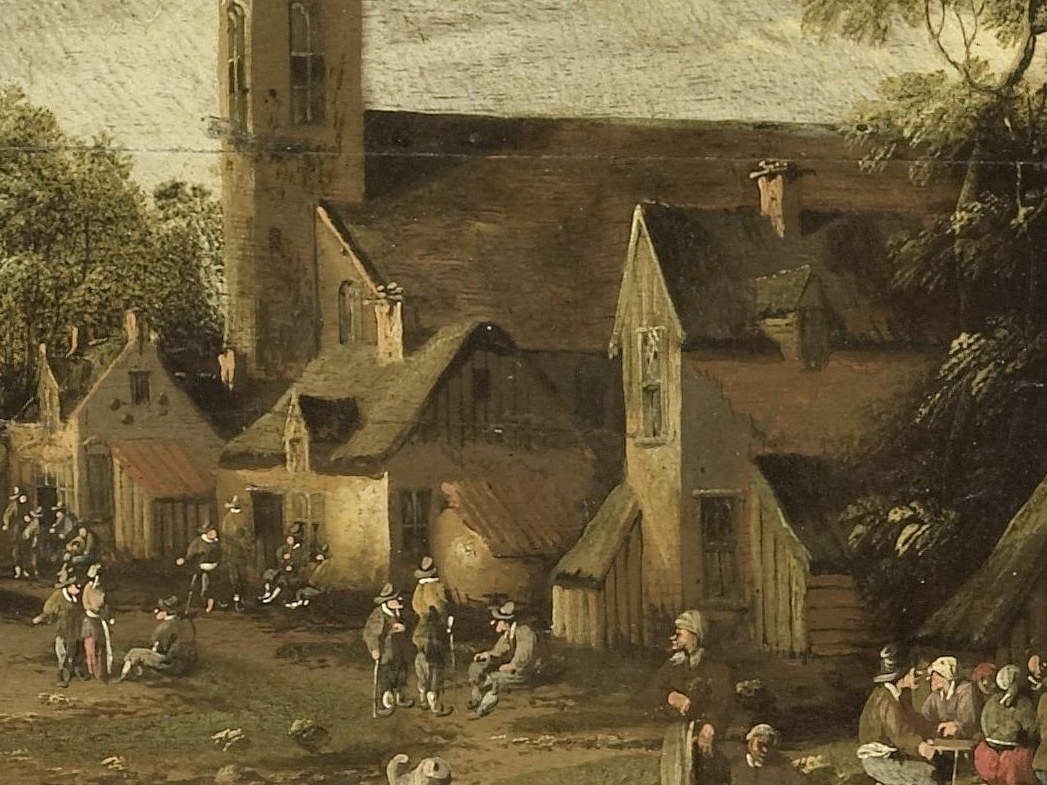
Cornelis Droochsloot's 'Village Street,' painted in 1664 and now at the Rijksmuseum, captures the lively rhythms of everyday life in a 17th-century Dutch town. This oil painting is a wonderful example of Dutch Golden Age genre scenes.
Look closely at the various groups of villagers, from those gathered at tables to the children playing in the foreground. The central church tower stands as a visual anchor, symbolizing the community's spiritual and social heart.
Droochsloot, the son and pupil of Joost Cornelisz Droochsloot, specialized in these detailed rural landscapes and farm scenes. His work provides a fascinating window into the architecture and daily interactions of the period.
What details do you notice that speak to the continuity of village life, then and now?
Details
Transcript
This painting from 1664 shows everyday life in a Dutch village. Notice the central church tower, a symbol of community and faith. The thatched-roof houses line the cobbled street. This painter was known for such detailed rural scenes. In the foreground, a man in red draws your eye. Children play, adding innocence to the village’s continuity.