Virgin and Child with Saints by Berlinghiero Berlinghieri
Virgin and Child with Saints, painted around 1230 by Berlinghiero Berlinghieri, is a rare survivor from the moment just before Italian painting turned toward naturalism. It hangs now in the Cleveland Museum of Art.
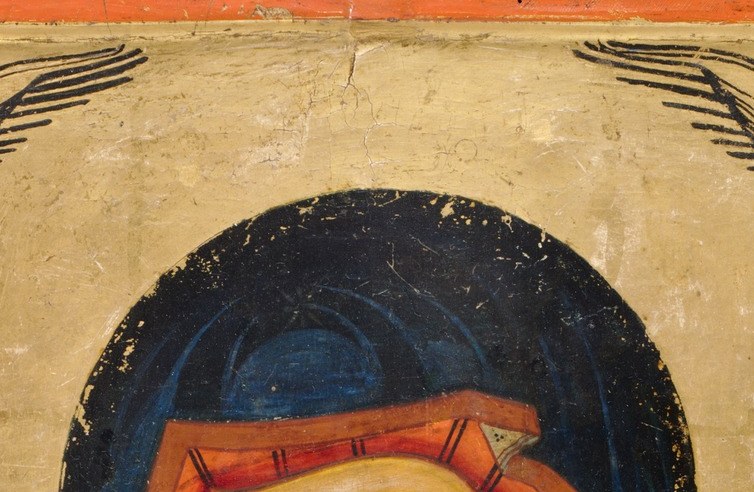
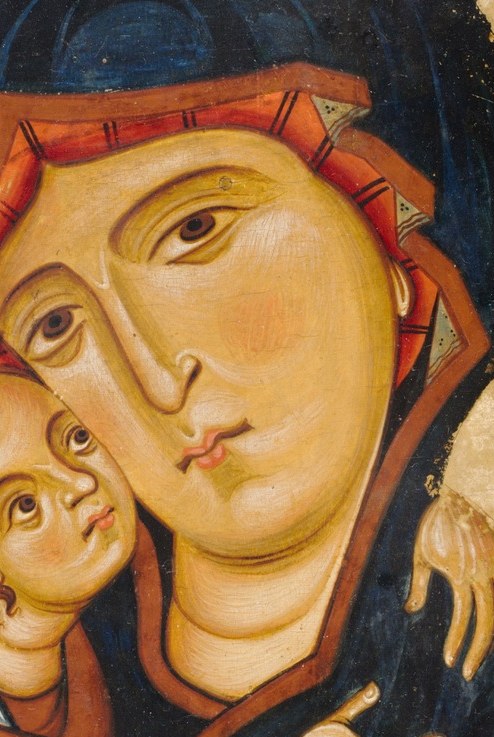
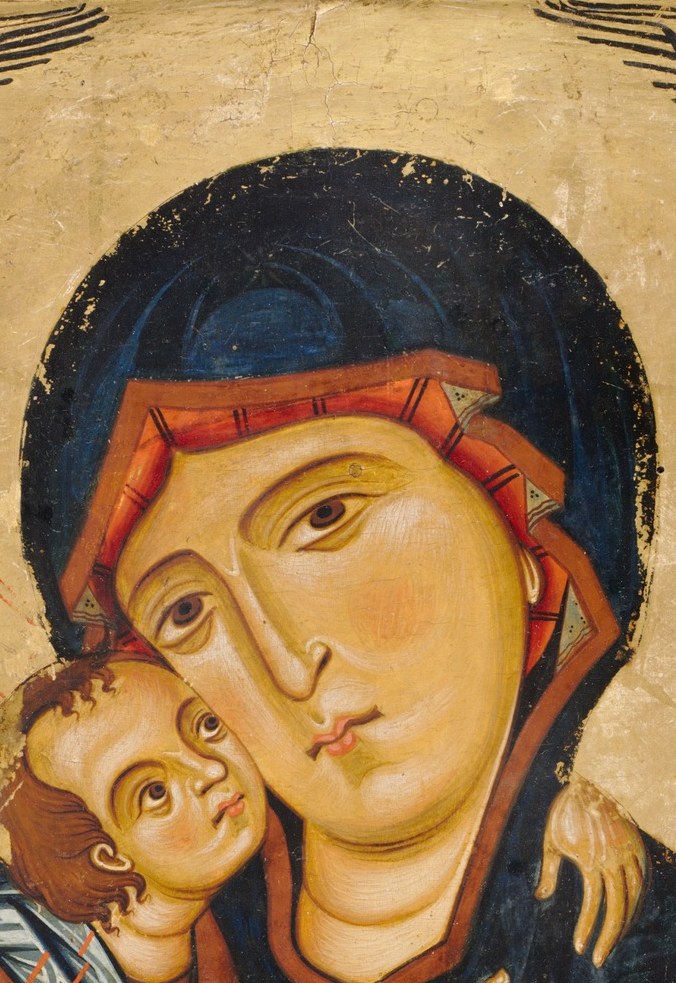
The Virgin pulls the Christ Child close, cheek to cheek, in a pose known as the Glykophilousa, or Sweet-Kissing Madonna. Her dark blue mantle, the gold striations on the drapery, the Child's rust-red robe: every color and gesture here is theology, not decoration. The flat gold ground behind them is not a wall or a sky. It is heaven itself, timeless and unmeasured.
Berlinghiero worked in Lucca in the early thirteenth century, when Byzantine models still governed what a sacred image could be. His actual name is uncertain. The inscription "Berlingerius me pinxit" on a crucifix in Lucca is how we know him at all. A 1228 peace oath between Lucca and Pisa mentions him alongside his two adult sons, both painters themselves. That document puts him somewhere between thirty-five and forty years old at the time of this panel.
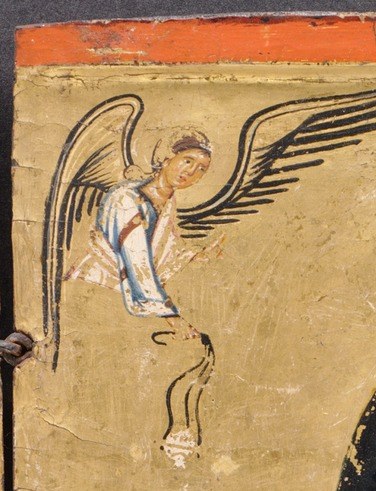
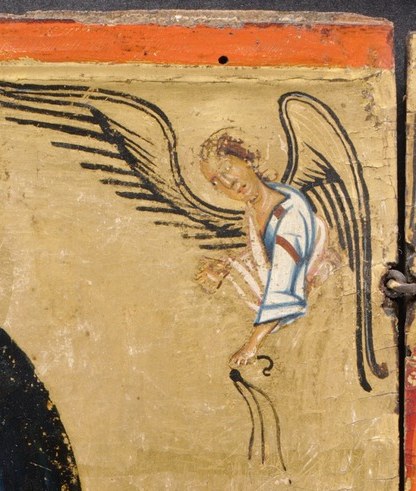
But the detail that rewards a second look sits at the edges. Two winged angels, tiny enough to miss at a glance, appear in the upper corners. They are celestial witnesses, framing the Virgin and Child inside a register the ordinary eye cannot see. The painting teaches you how to look at it. Start at the center. End at the edges.
Details
Transcript
First glance: the Virgin and Child, close as a whisper. Her dark veil frames a face built for devotion, not portraiture. The Child presses his cheek to hers, one eye fixed on you. This is the Glykophilousa: the Sweet-Kissing Madonna. Painted around 1230, when Byzantine formality still ruled Italian art. Now look to the margins. Two tiny figures frame the scene. Angels, feathered and solemn, smaller than Mary's hand. They bracket the holy pair inside a heavenly space the eye alone can enter.