Still Life with Flowers and Prickly Pears by Pierre-Auguste Renoir
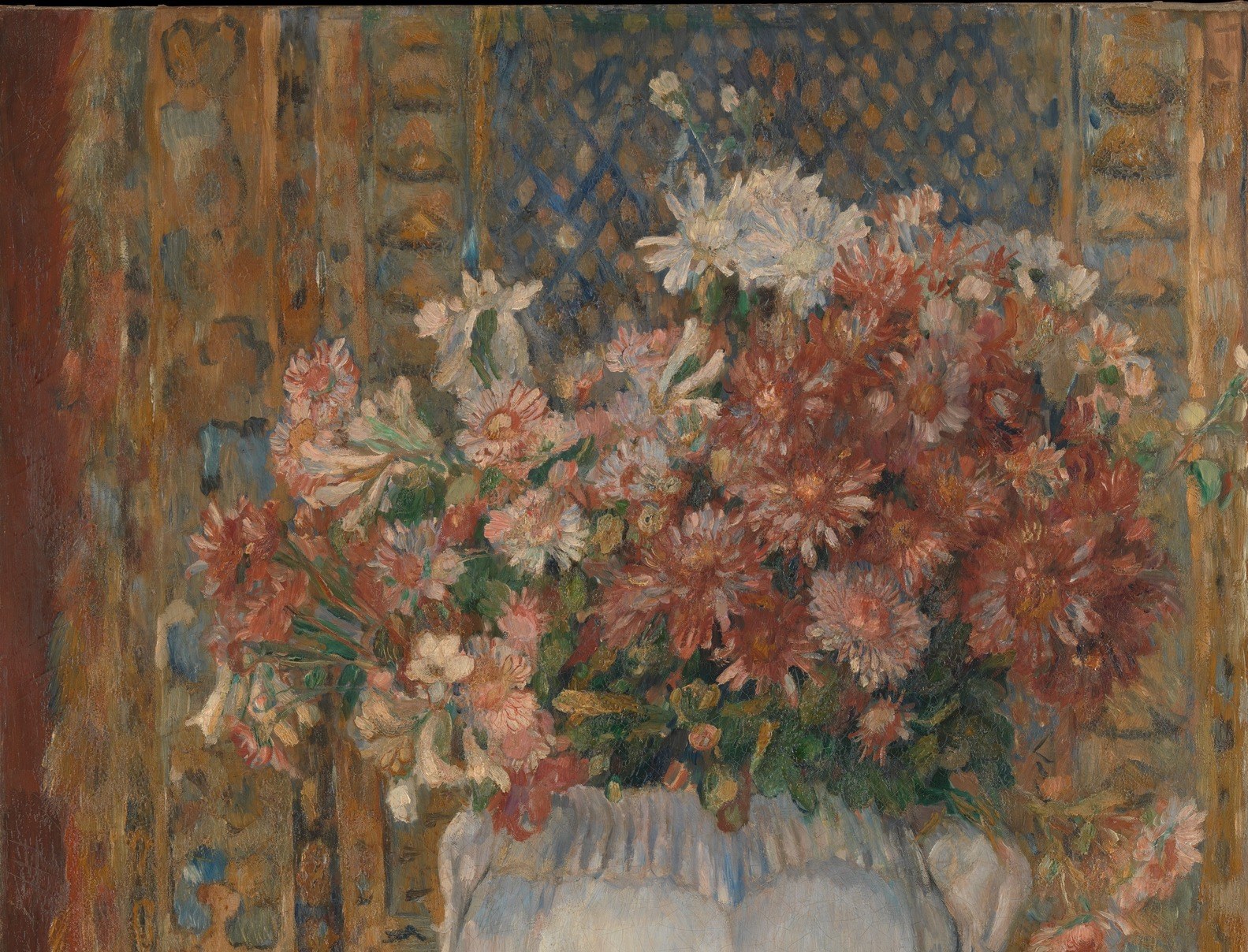
Pierre-Auguste Renoir painted Still Life with Flowers and Prickly Pears in 1893, and it is now in the collection of the Metropolitan Museum of Art. The painting appears at first like a straightforward domestic arrangement, but Renoir built it around an optical trick he learned from 17th-century Dutch still lifes: placing luminous objects against a dark, recessive background to make them generate their own light.
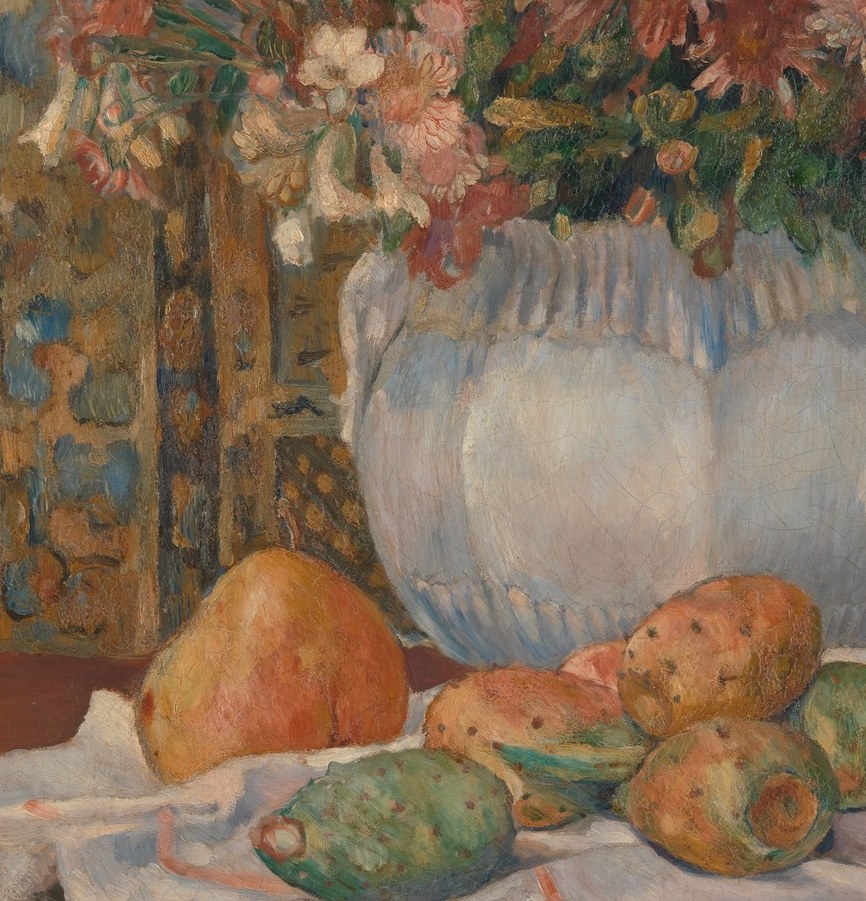
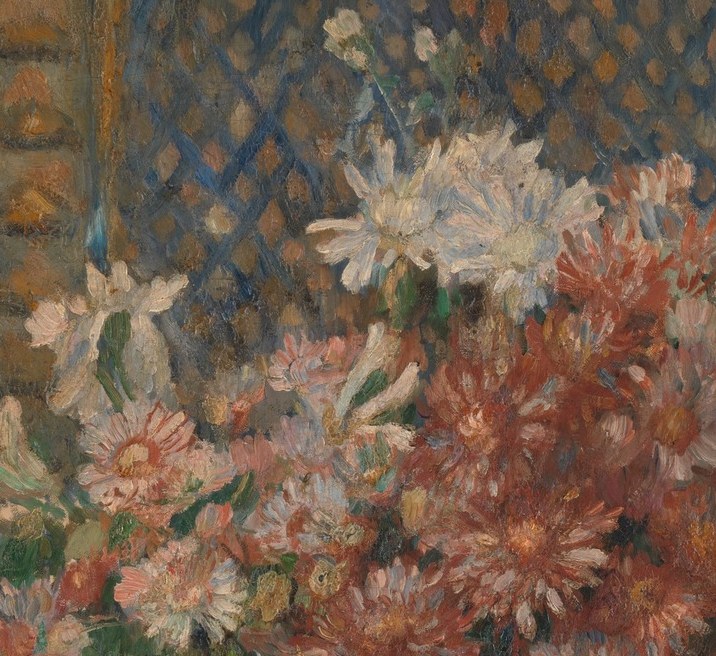
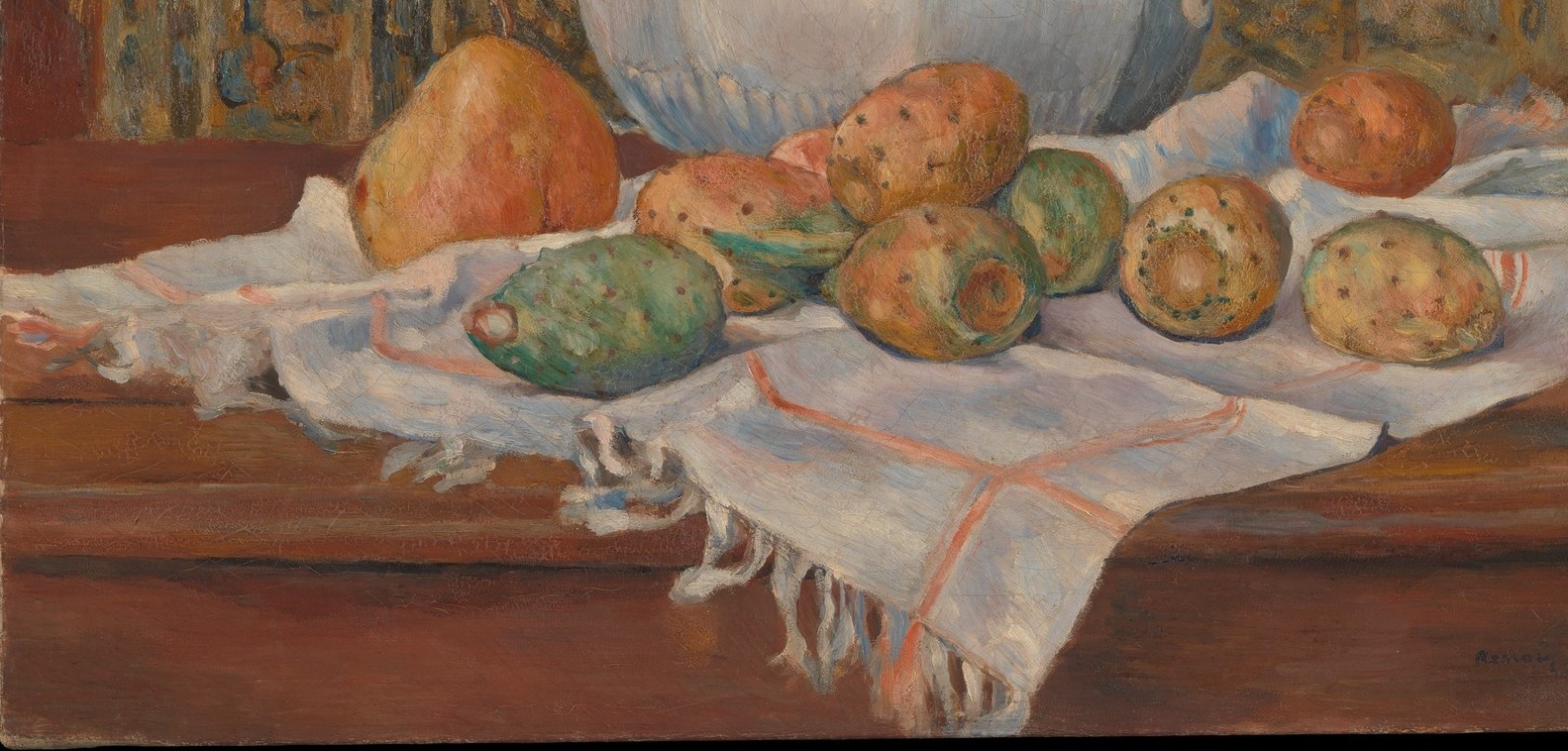
The real action happens at the surface. Look at the central white-pink flowers and you can see thick ridges of paint, applied with such physical confidence that they catch actual light and cast microscopic shadows across the canvas. Renoir makes almost no distinction between how he paints ceramic, fruit skin, flower petals, and striped cloth. Everything dissolves into the same broken, directional strokes, and the material world recomposes in your eye rather than on the table.
By 1893, Renoir had been through years of rethinking Impressionism and was returning to still life as a laboratory. Without a portrait sitter's demands, he could push pure color relationships: the cool green melon vibrating against the warm cloth, the muted orange prickly pears anchoring the bouquet's riot of pink. The prickly pears themselves were a fashionable import in 1890s Paris, a small note of worldly curiosity on an otherwise quiet kitchen table.
You do not need to step back for this one. The closer you look, the more the painting dismantles itself, then rebuilds.
Details

Transcript
The flowers seem to glow against this dark curtain. A trick borrowed from Dutch still-life painters, two centuries earlier. The bouquet dissolves the closer you look. Renoir painted this in 1893, returning to still life for pure color study. No outlines, only strokes. The vase holds its shape by tone alone. Now look at the thickest white highlight. That ridge is paint, piled so high it catches real light.