Christ Crowned with Thorns (Ecce Homo), and the Mourning Virgin by Adriaen Isenbrandt
View the artwork: Christ Crowned with Thorns (Ecce Homo), and the Mourning Virgin →
A sacred scene of suffering hides a whole world in plain sight.
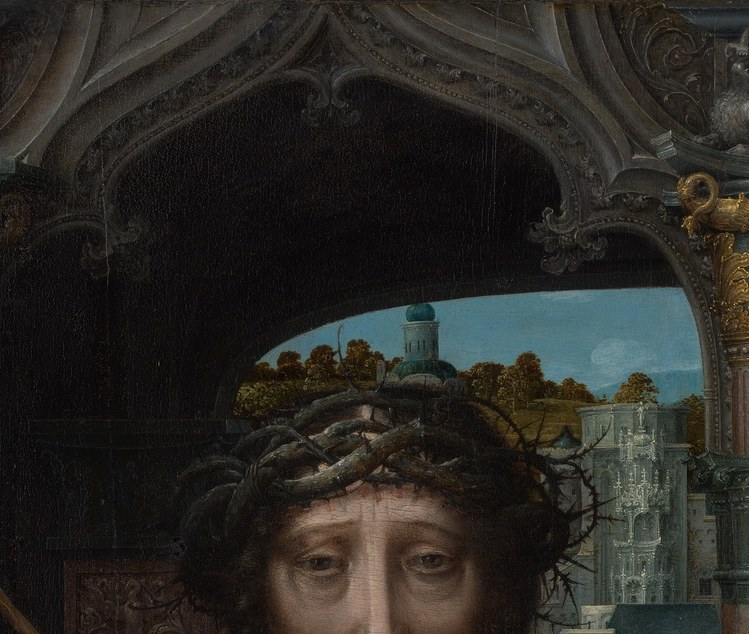
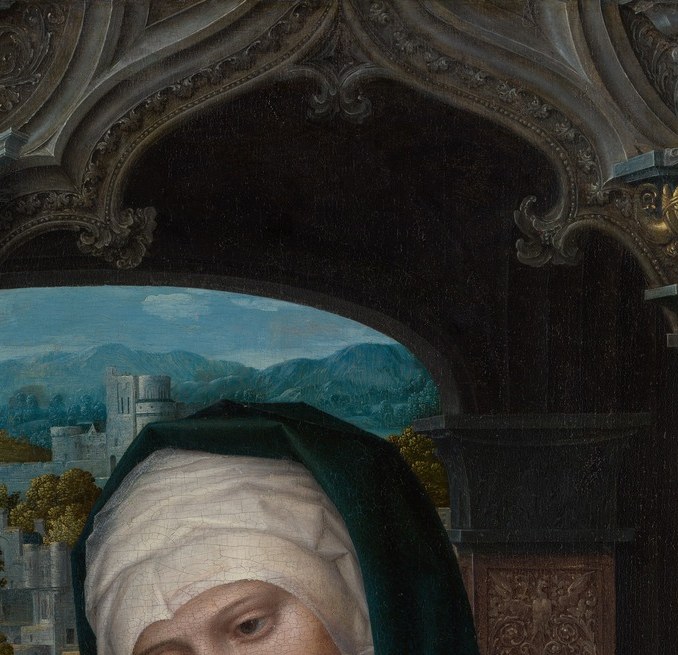
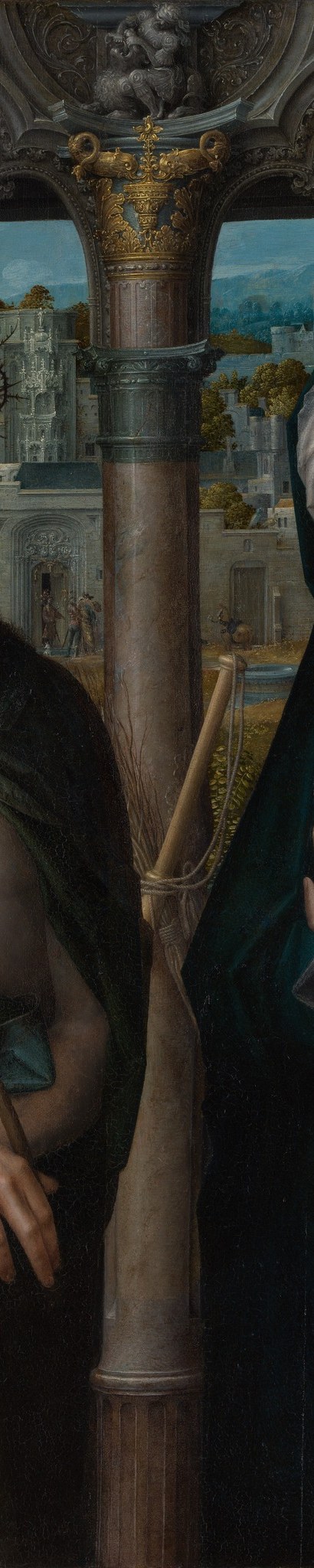
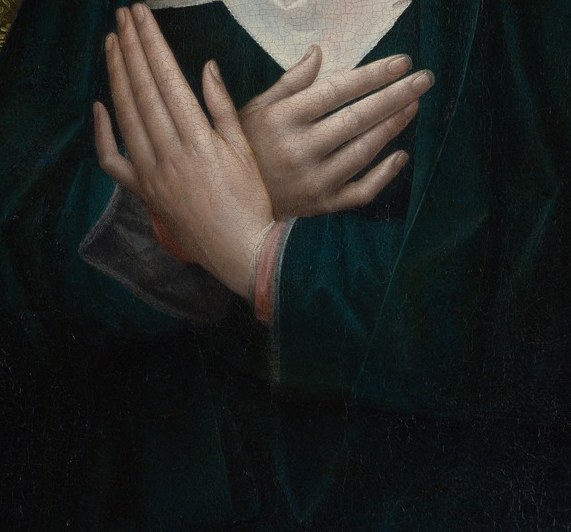
This is Adriaen Isenbrandt's "Christ Crowned with Thorns (Ecce Homo), and the Mourning Virgin," painted in Bruges around 1530. The two figures stand in matching green robes on either side of a carved Gothic column: Christ bears the reed scepter and the crown of thorns, and the Virgin clasps her hands in a posture of quiet acceptance. All of it is rendered with the meticulous oil technique that made Early Netherlandish painting famous.
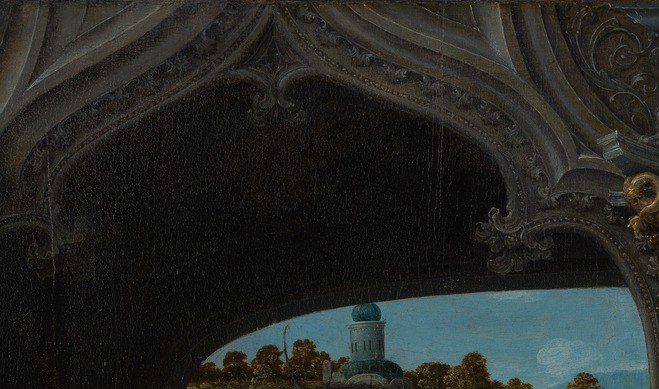
The detail most people never find is tucked into the arch above them. A Flemish city skyline, complete with towers and stepped gables, rises behind the sacred figures. It is easy to scroll past because the eye stays low, where the human grief is. But the town is right there in the apex, visible if you look up.
Isenbrandt ran a large workshop in Bruges producing devotional pictures for private homes. Even as the art market shifted to Antwerp, Bruges still carried prestige, and a painting like this would have hung in a merchant's house, a reminder of the Passion sitting in the same room where the business of the day was done. The city above the pain might be the painter's quiet nod to that reality: the temporal world goes on, and the sacred sits inside it.
Next time you stand in front of an altarpiece or a devotional panel, look up. There is often a sky, a city, or a detail you were never meant to notice first, but were always meant to find.
#arthistory #northernrenaissance #earlynetherlandish
Details
Transcript
He is crowned with thorns. She is crowned with grief. Green robes, not purple. A quiet choice. The reed scepter: a prop of mockery, held in surrender. The Gothic column divides them. Their shared green connects them. But look up, into the arch. A whole Netherlandish city sits above the suffering. Isenbrandt painted this for private prayer in a busy mercantile town.