Artwork
Christ Crowned with Thorns (Ecce Homo), and the Mourning Virgin
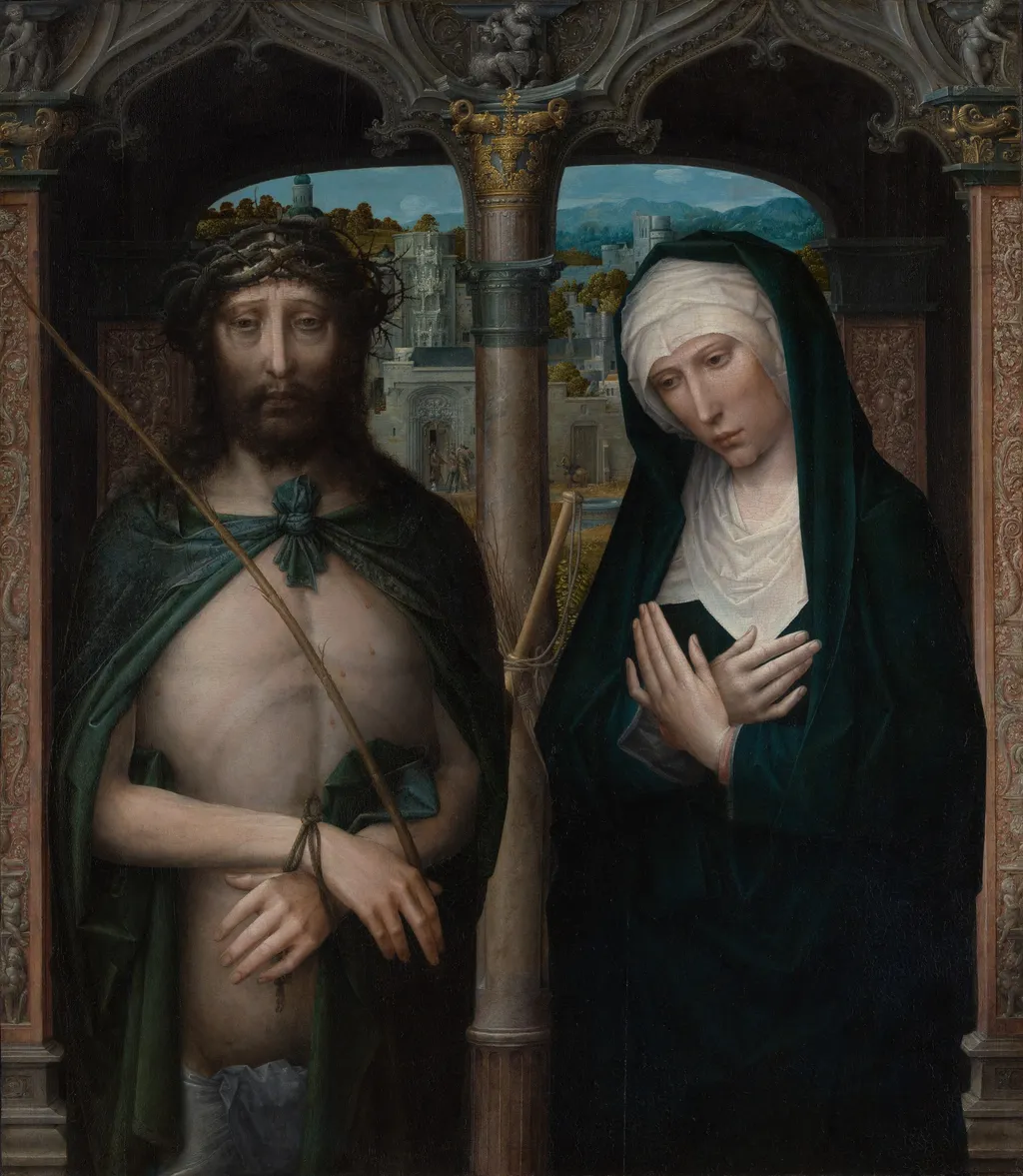
Christ Crowned with Thorns (Ecce Homo), and the Mourning Virgin is an oil painting by the Northern Renaissance artist Adriaen Isenbrandt. It dates from 1530 and is held in the collection of the Metropolitan Museum of Art.
About this work
Subject & Meaning
The crown of thorns symbolizes the mockery Christ endured, while the Virgin’s sorrowful pose reflects her role as a compassionate intercessor.
The work shows Christ crowned with thorns, identified as Ecce Homo, alongside the Mourning Virgin, also called Our Lady of Sorrows. This iconography combines the moment of Christ’s condemnation with the Virgin Mary’s lamentation, a common theme in late medieval religious art that emphasizes the suffering and compassion of the Passion. The crown of thorns symbolizes the mockery Christ endured, while the Virgin’s sorrowful pose reflects her role as a compassionate intercessor.
Together the figures convey a theological focus on redemption through sacrifice, inviting viewers to contemplate both the agony of Christ and the shared grief of his mother.
Technique & Style
The work is executed in oil paint on canvas and measures approximately 105.4 by 92.7 centimeters, indicating a substantial devotional image. The composition unites the Ecce Homo subject with the Mourning Virgin, a dual devotional format typical of the period. Stylistically, the handling reflects the Bruges tradition associated with Adriaen Isenbrandt, characterized by a smooth oil technique and devotional restraint.
The sources do not provide details regarding the painting’s current condition or further stylistic analysis beyond these material and compositional facts.
Overview
Adriaen Isenbrandt's oil painting, "Christ Crowned with Thorns (Ecce Homo), and the Mourning Virgin," captures a poignant moment from the Passion narrative. The composition features Christ on the left, bearing the instruments of his suffering, while the Virgin Mary stands opposite him, expressing profound grief. This detailed work, characteristic of the period, places these figures against a distant urban landscape under a clear sky, inviting viewers to contemplate their sacrifice.
Own this work as a print
Artist & collection
Artist
Adriaen Isenbrandt or Adriaen Ysenbrandt (between 1480 and 1490 – July 1551) was a painter in Bruges, in the final years of Early Netherlandish painting, and the first of the Dutch and Flemish Renaissance painting of the Northern…

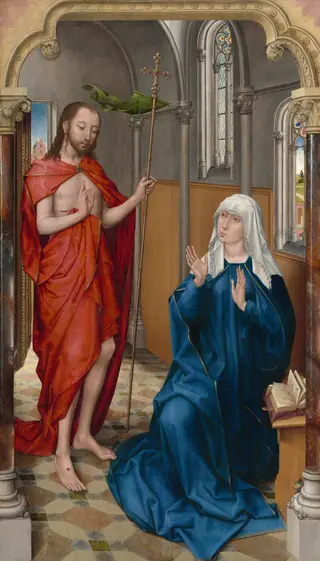
- Christ Appearing to the Virgin
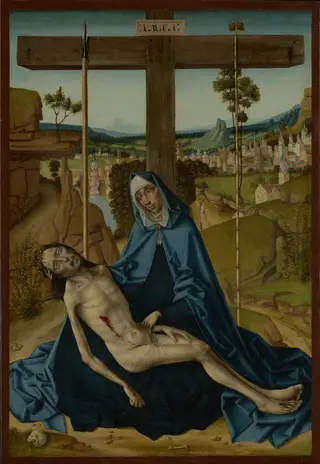 Pietà
Pietà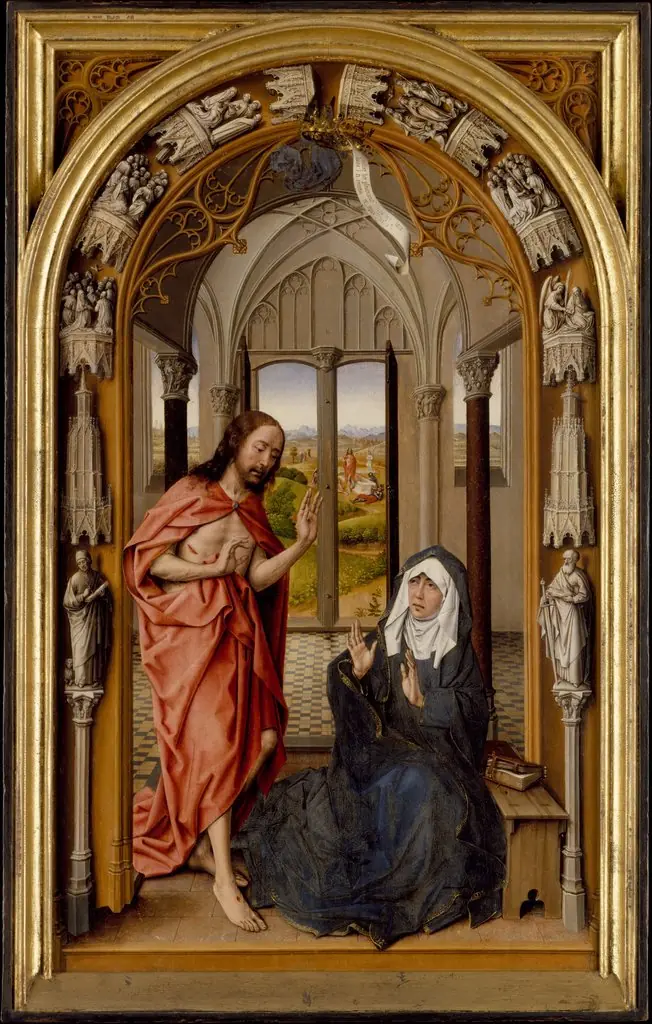 Christ Appearing to His Mother
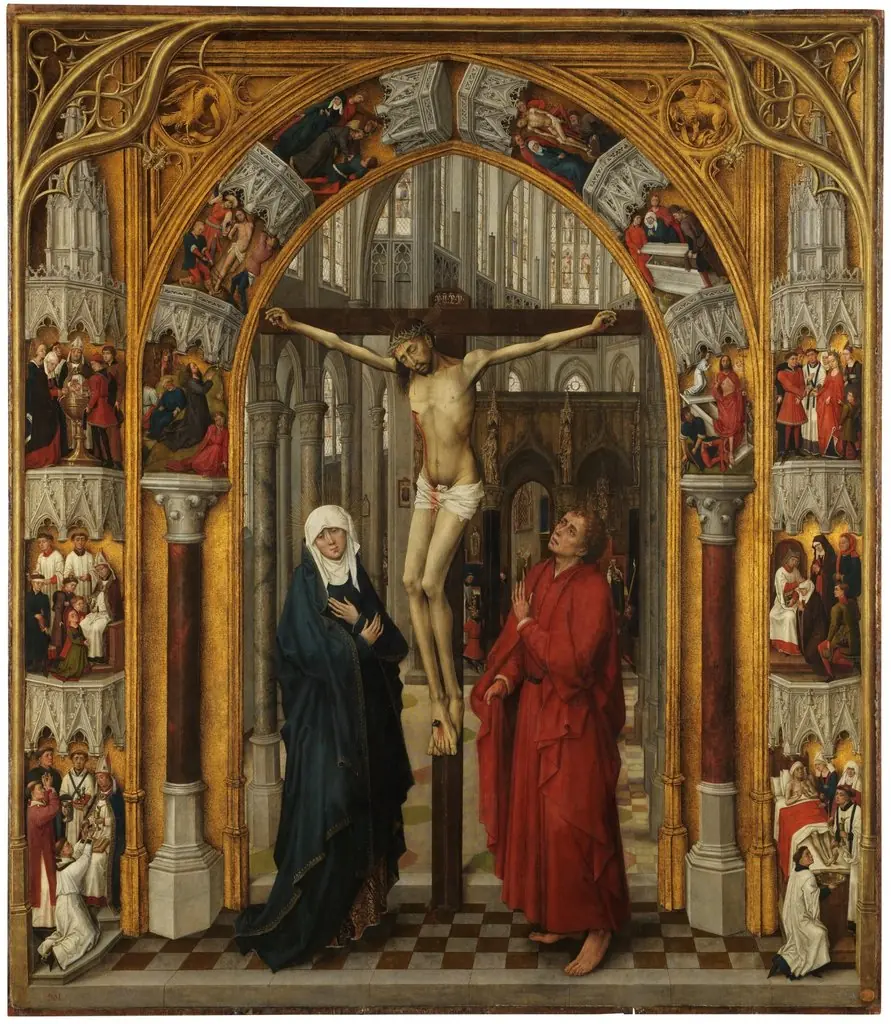 Redemption Triptych: The Crucifixion
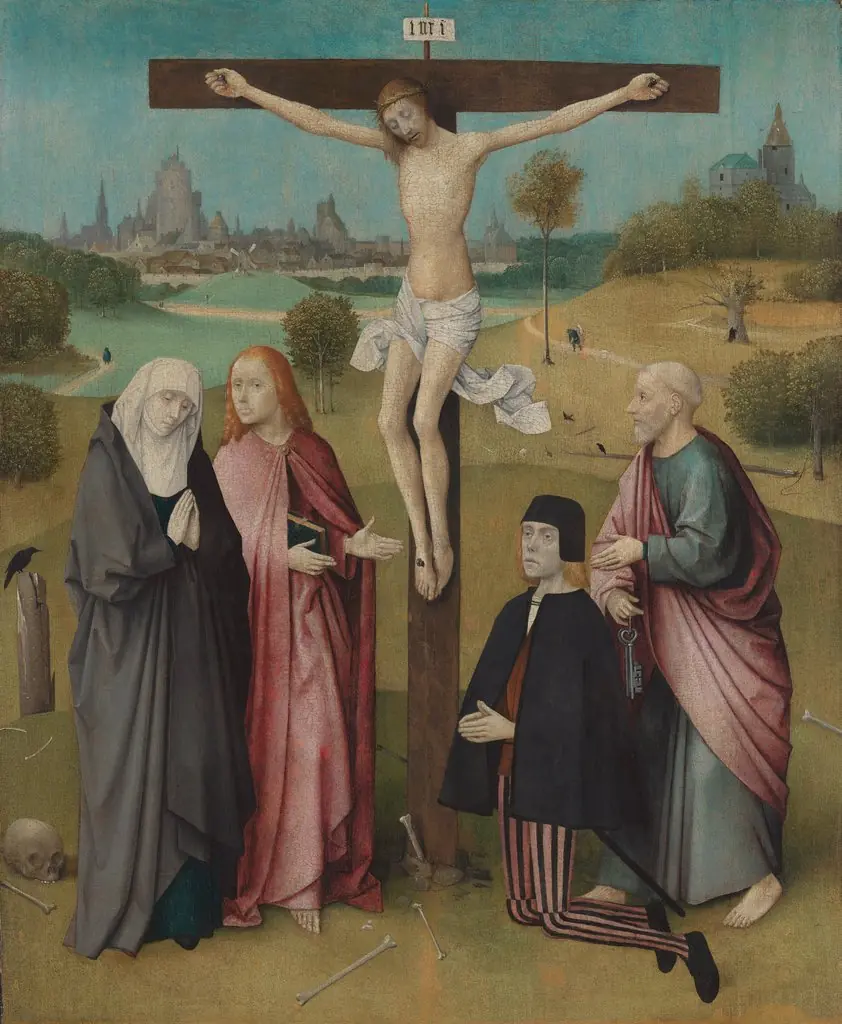 Crucifixion with a Donor
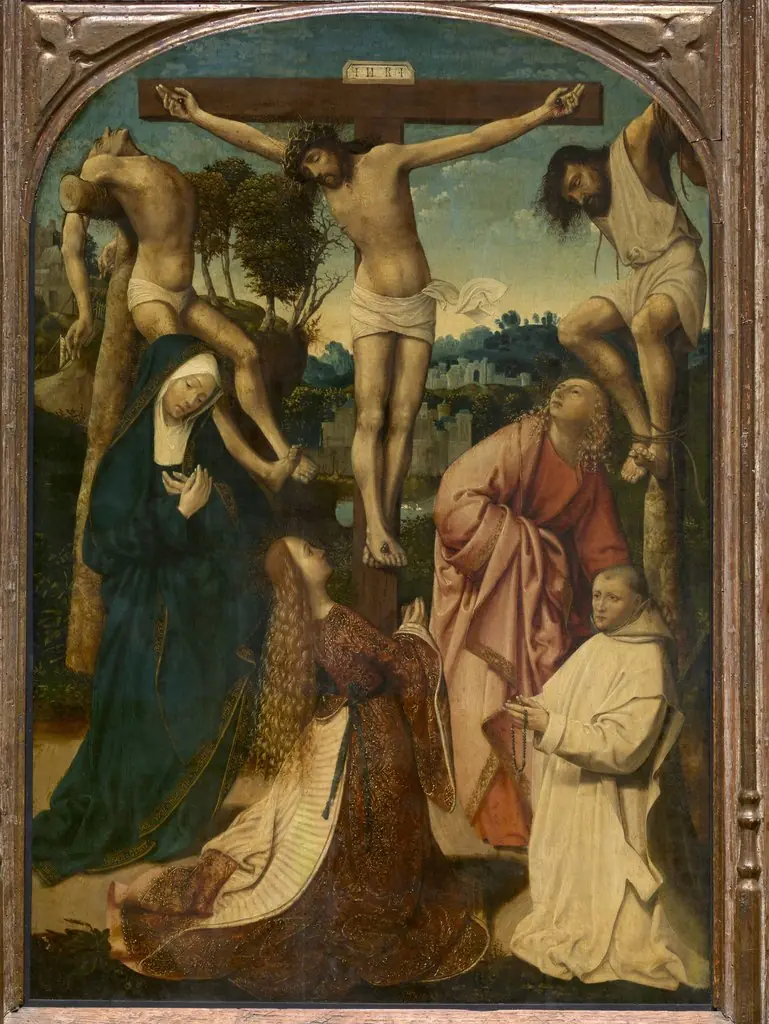 Crucifixion
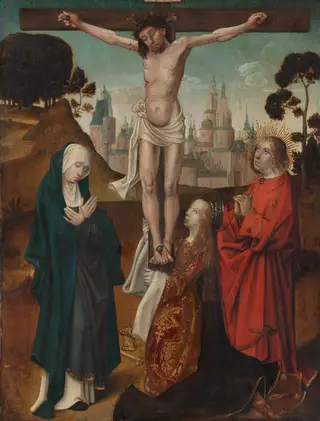 Crucifixion
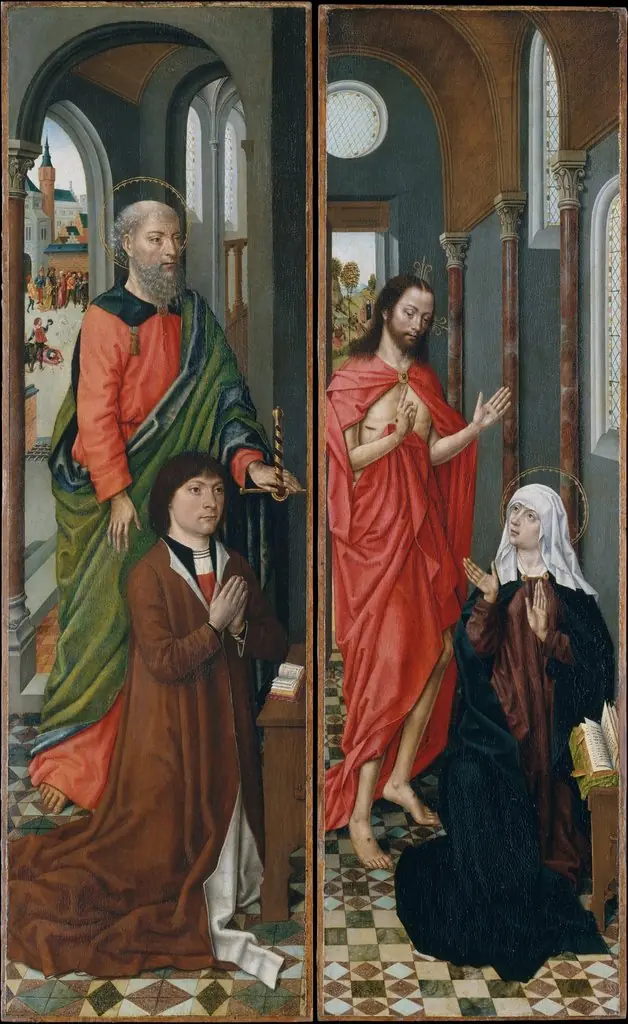 Saint Paul with Paolo Pagagnotti; Christ Appearing to His Mother
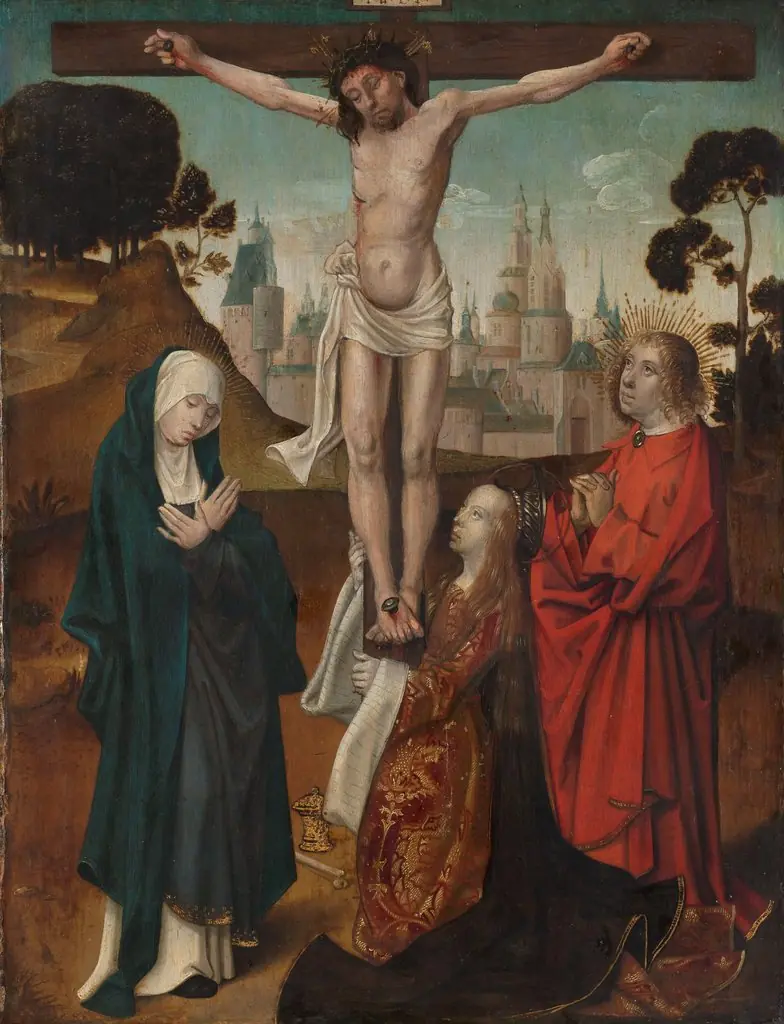 Crucifixion with the Virgin, Mary Magdalen and St John the Evangelist
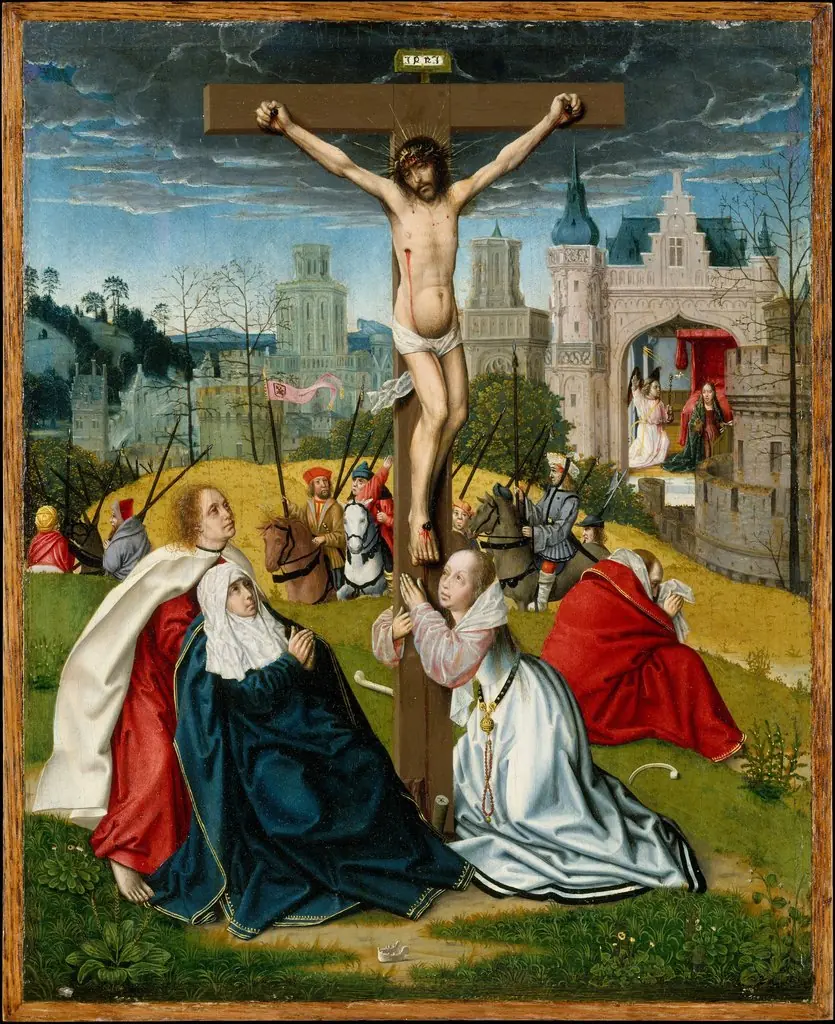 The Crucifixion
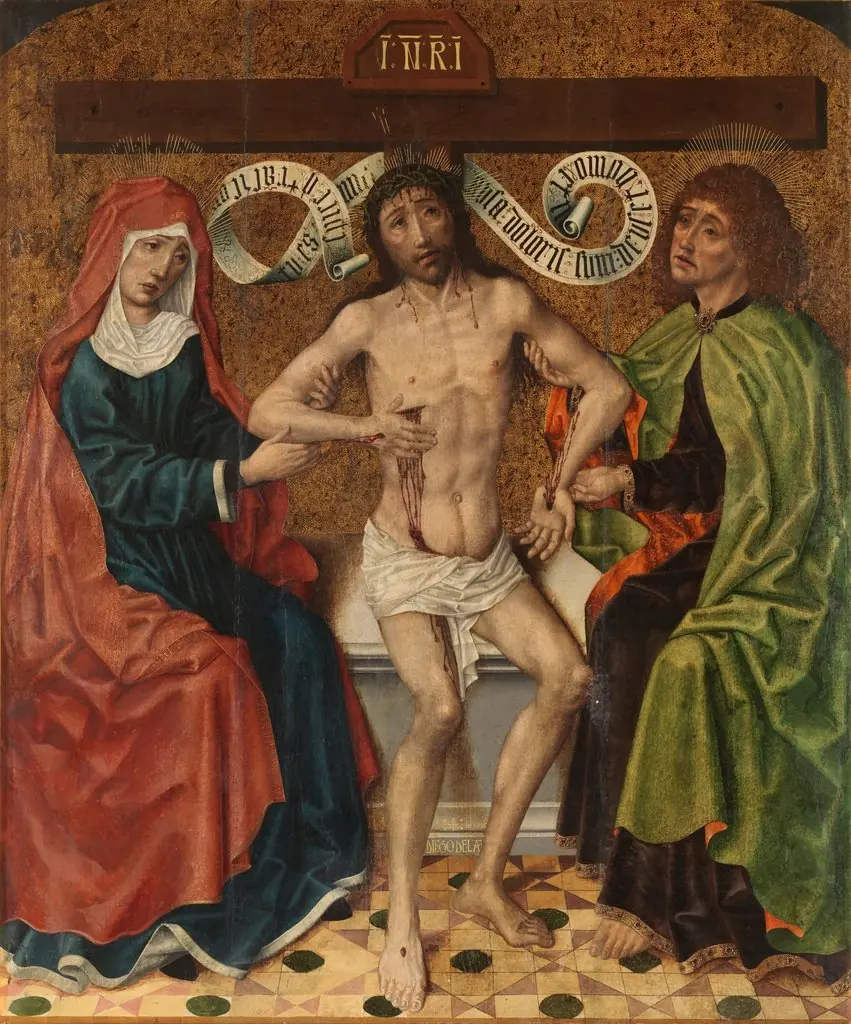 Christ between the Virgin and Saint John
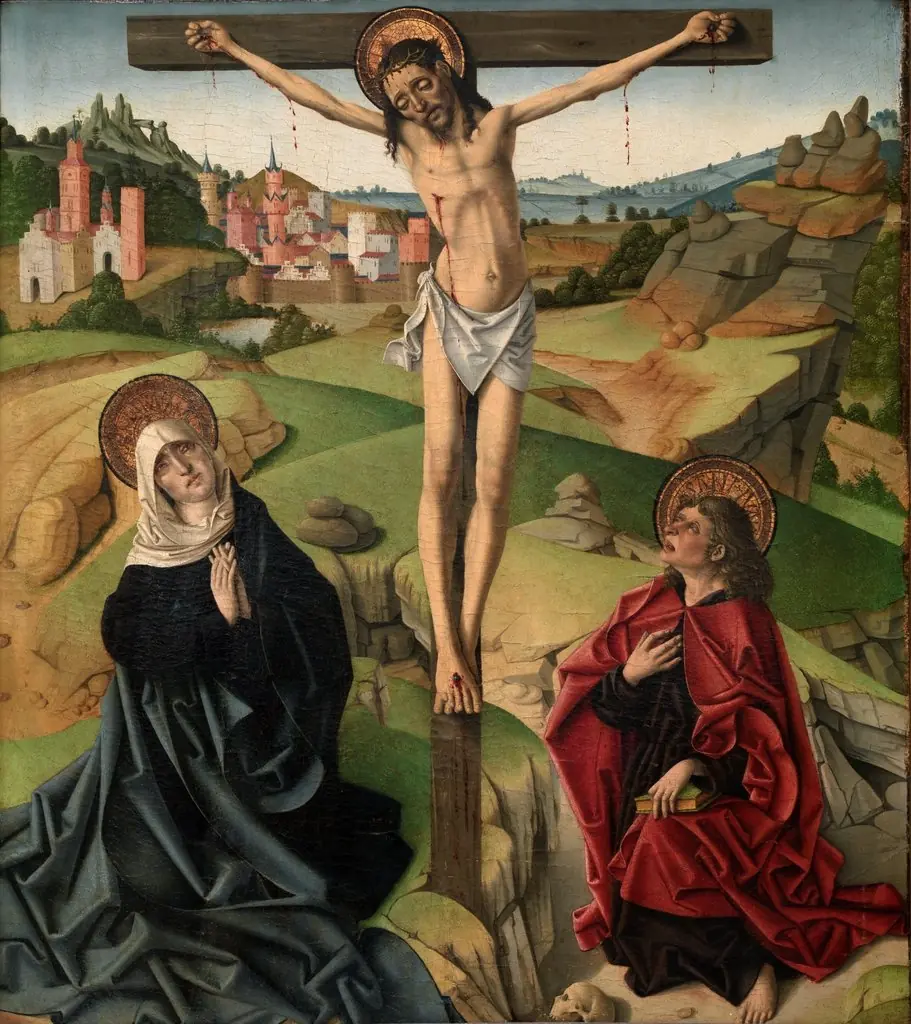 The Crucifixion