The Annunciation by Gerard David
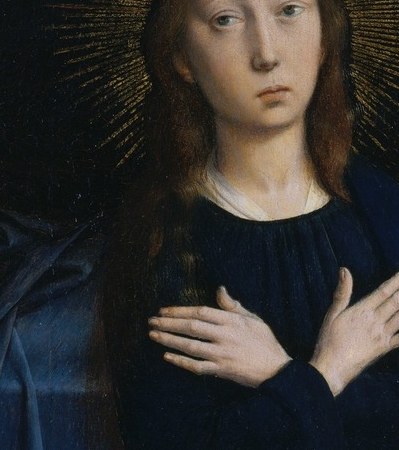
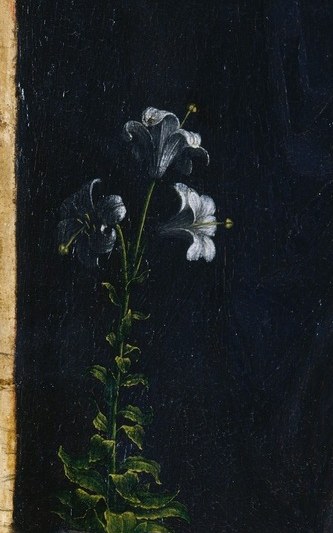
Gerard David's 1506 masterpiece, *The Annunciation*, at The Metropolitan Museum of Art, is renowned for its meticulous detail typical of the Northern Renaissance. While the central figures and traditional symbols like lilies and an open book draw the eye, a tiny, easily missed detail adds another layer to the narrative: a small spider on the floor tiles.
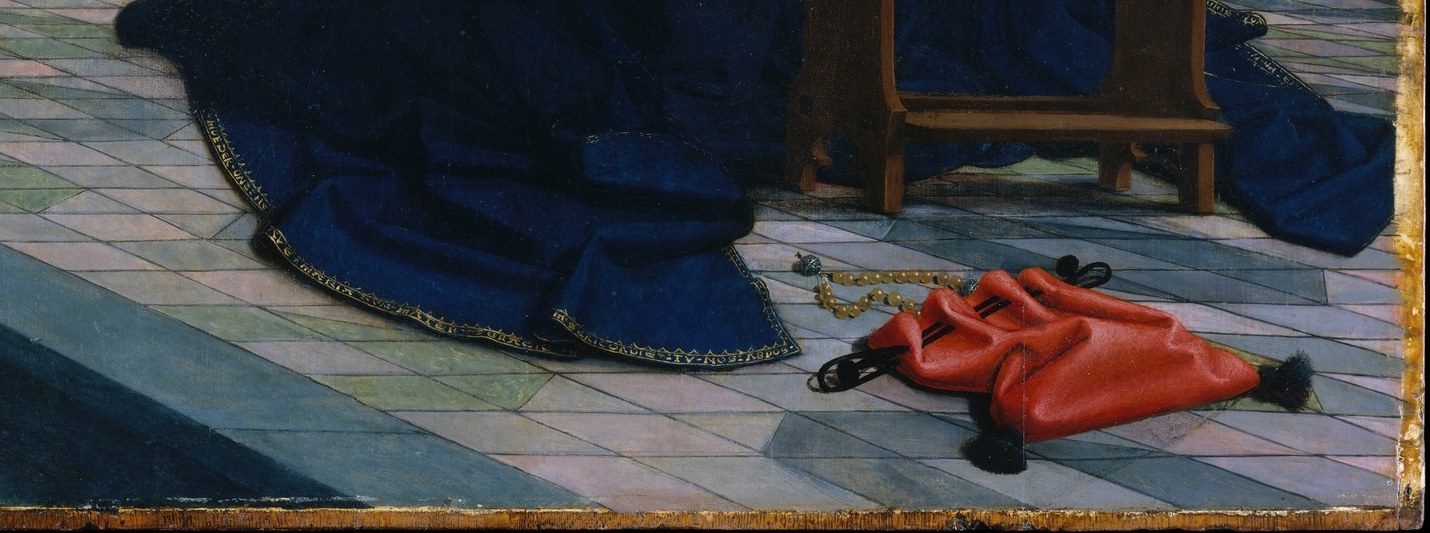
This almost invisible arachnid, positioned subtly above Mary's folded hands, is characteristic of David's skill in blending naturalism with spiritual symbolism. It grounds the divine event in a tangible, earthly setting, inviting viewers to examine the sacred in the everyday.
David, a prominent artist in his time with workshops in Antwerp and Bruges, created this oil painting as part of a tradition that sought to bring biblical scenes into intimate, domestic spaces. His work, like many of his contemporaries, integrates detailed observation with devotional subjects, a hallmark of the era's artistic sensibilities.
What other small details in paintings have you noticed that change your perception of the work?
Details
Transcript
This is Gerard David's Annunciation, from 1506. Mary kneels, accepting her divine destiny. Lilies symbolize her purity, an open book, prophecy. Even the rosary beads suggest her devotion. But look closely at the floor tiles, just above her hands. A tiny spider crawls across the geometric pattern. A nearly invisible detail, often overlooked.