The Adoration of the Magi by Jacob Cornelisz. van Oostsanen
This 1517 triptych, "The Adoration of the Magi" by Jacob Cornelisz. van Oostsanen, now in the Rijksmuseum, tells a familiar biblical story with a unique detail: the prominent inclusion of the patron.
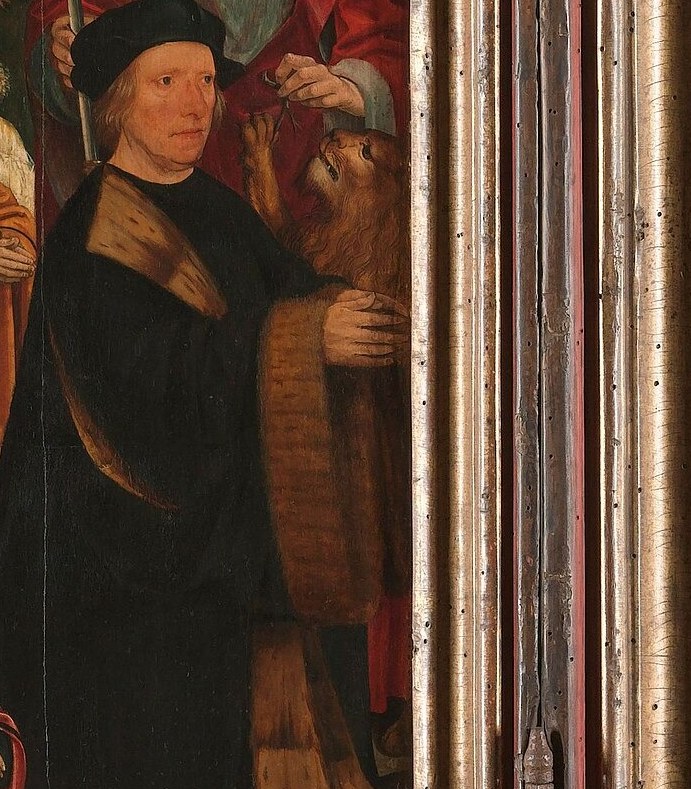
Notice the man in the dark robe and hat, positioned among the figures of adoration. His heraldic shield clearly identifies him, a common practice in Northern Renaissance art where patrons often commissioned religious works and had themselves depicted within the scene.
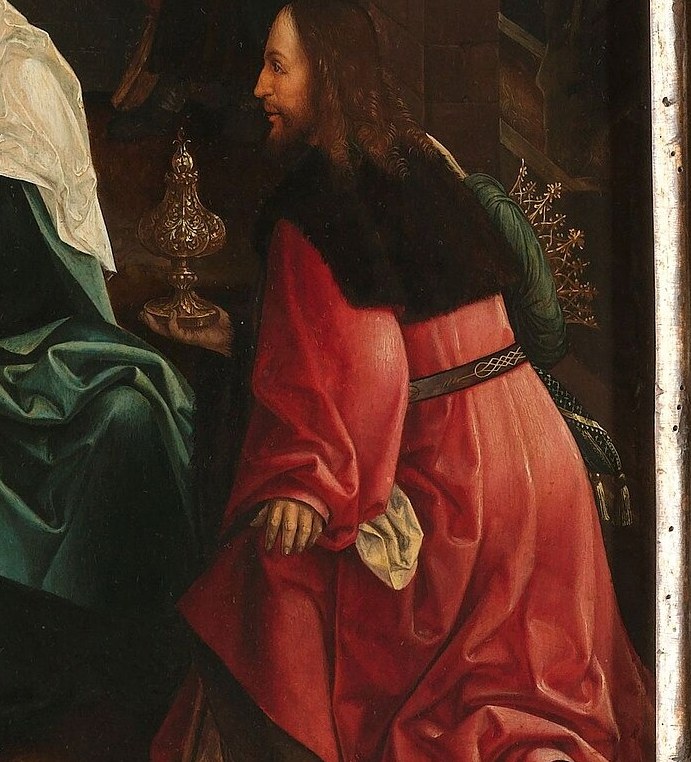
Van Oostsanen, one of Amsterdam's first important artists, created this work during a period when devotional triptychs were popular. Artists used oil on panel, allowing for the meticulous detail and vibrant colors seen in the ornate robes of the Magi and the serene expression on Mary's face.
This painting offers a glimpse into how art served both religious devotion and personal commemoration in the early 16th century. What details do you find most striking?
Details
Transcript
This 1517 painting shows the Adoration of the Magi. Mary presents the infant Jesus to the three wise men. The kneeling Magus offers a precious gold cup. But look at the man in the dark robe and hat. His shield on the left displays a coat of arms. This is the painting's patron, added into a sacred scene.