Pilate Washing His Hands by Mattia Preti
Mattia Preti's "Pilate Washing His Hands" (1663) lives in the shadows. Painted by an Italian Baroque artist who later became a knight in Malta, the work freezes the exact moment a Roman governor declares his innocence while condemning an innocent man.
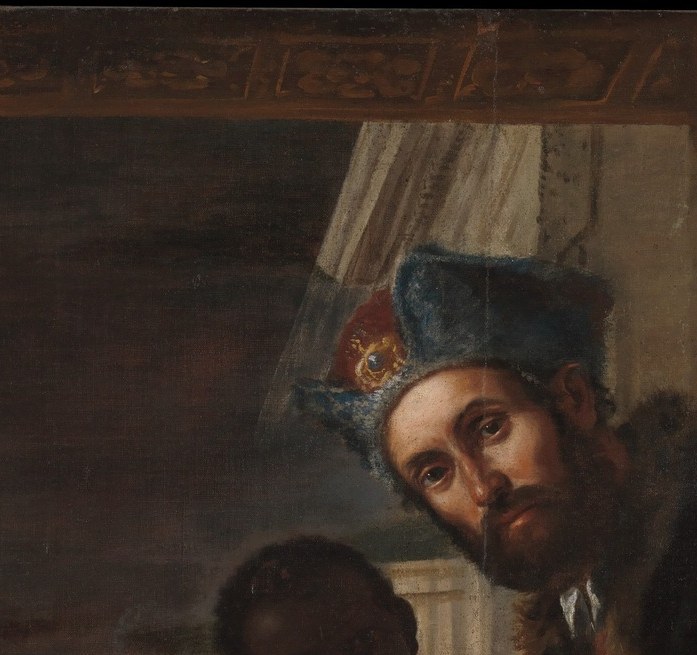
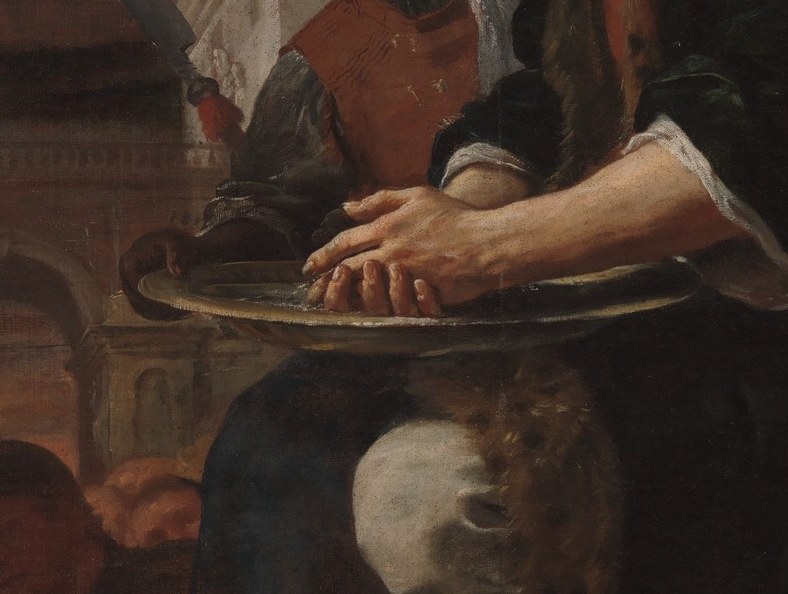
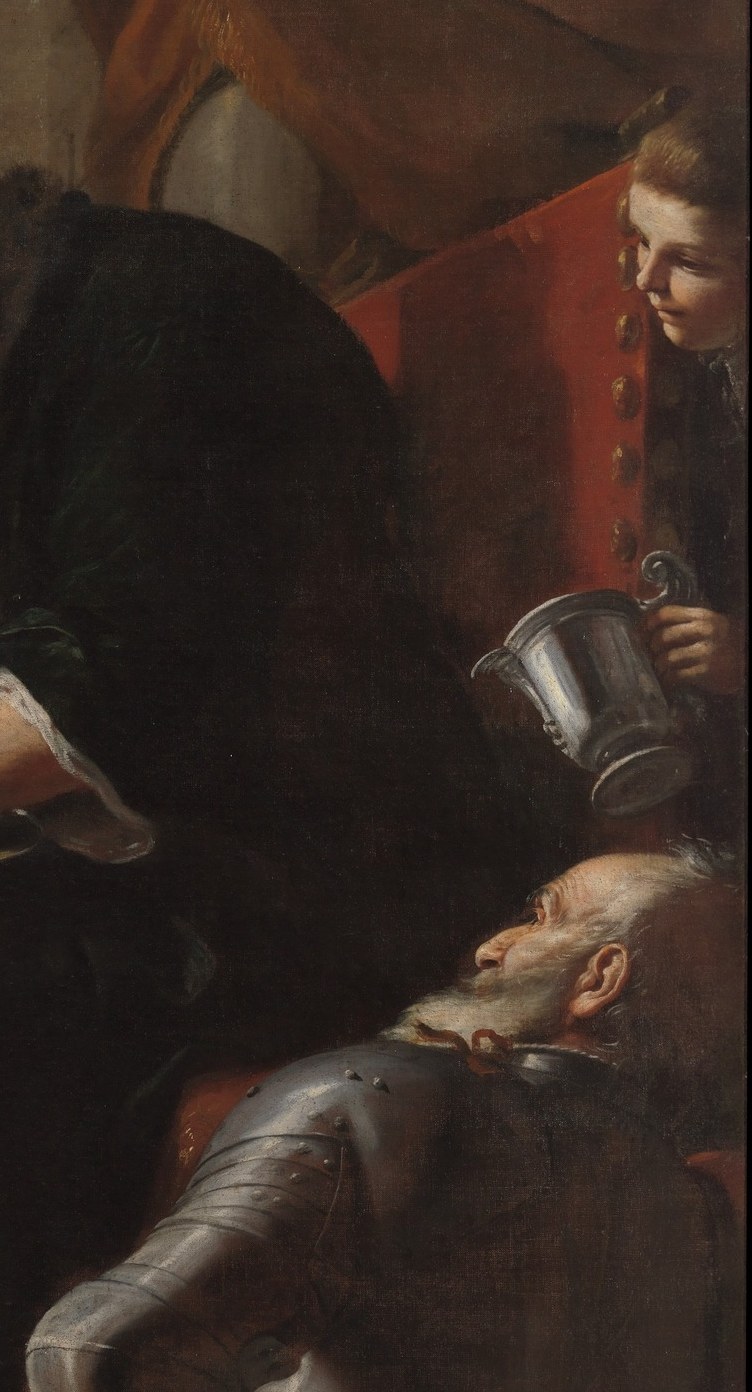
Preti was a master of Caravaggio's light. The scene is a study in moral physics: light hits those who are acted upon, while Pilate's face is half in shadow as he turns away. The gleam on the water basin and the servant's upturned face are deliberate, one draws the eye to the ritual, the other to its cost.
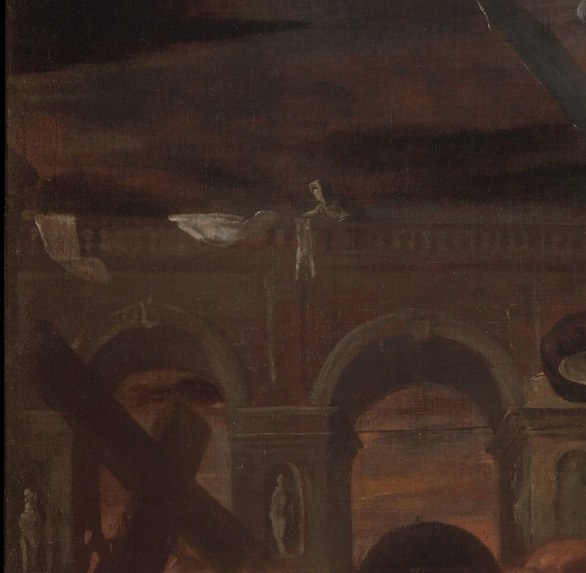
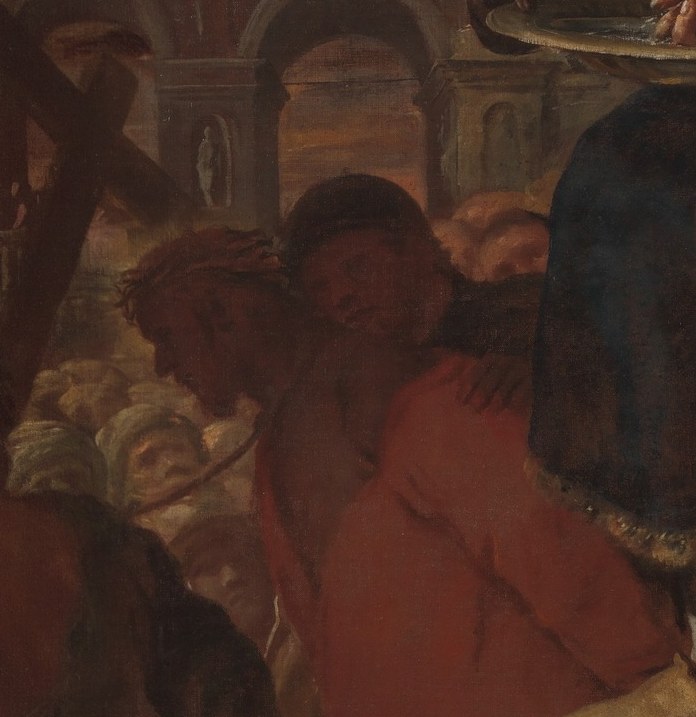
The painting's most haunting detail hides in the upper left. At first glance it reads as architectural murk, but brighten the image and faces emerge from the darkness. An entire crowd is already there, watching in silence. Pilate isn't alone with his conscience. He is performing for an audience.
That crowd changes everything. What looks like a quiet chamber becomes a public theater, and a private act of washing becomes a declaration made under scrutiny. Are the shadowed witnesses there to judge Pilate, or to let him off the hook?
Details
Transcript
He won't even look. Pilate washes his hands of the whole affair. This kneeling servant holds the basin. The towel meant to dry, but nothing here is truly cleansed. A Roman soldier stands guard, making this a state act. But the real pressure comes from the top left corner. Look into the darkness. More faces are watching. Pilate's guilt is private, but the crowd makes it a spectacle.