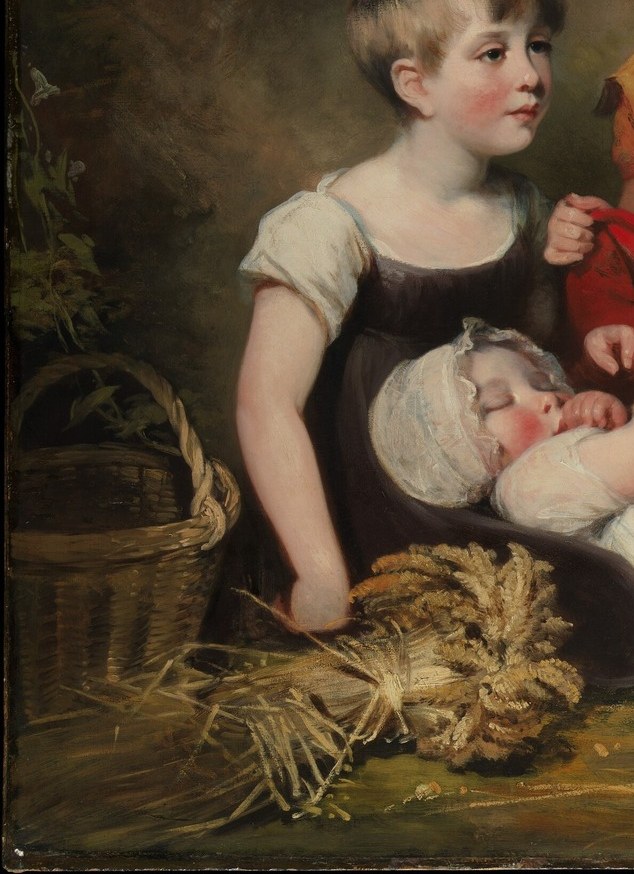
The Grandchildren of Sir William Heathcote, 3rd Baronet by William Owen
In 1964, the Metropolitan Museum of Art paid £105,000 for this painting, a record price for the artist William Owen and a figure that made headlines in London. Today the painting hangs quietly at the Met, a high-water mark of British neoclassical portraiture by a painter whose name most visitors no longer recognize.
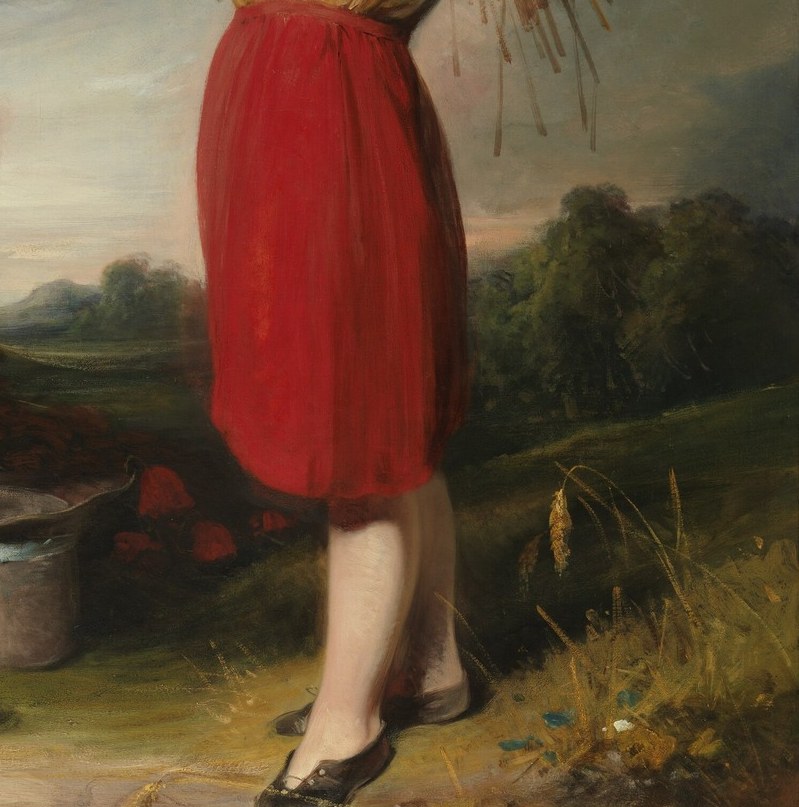
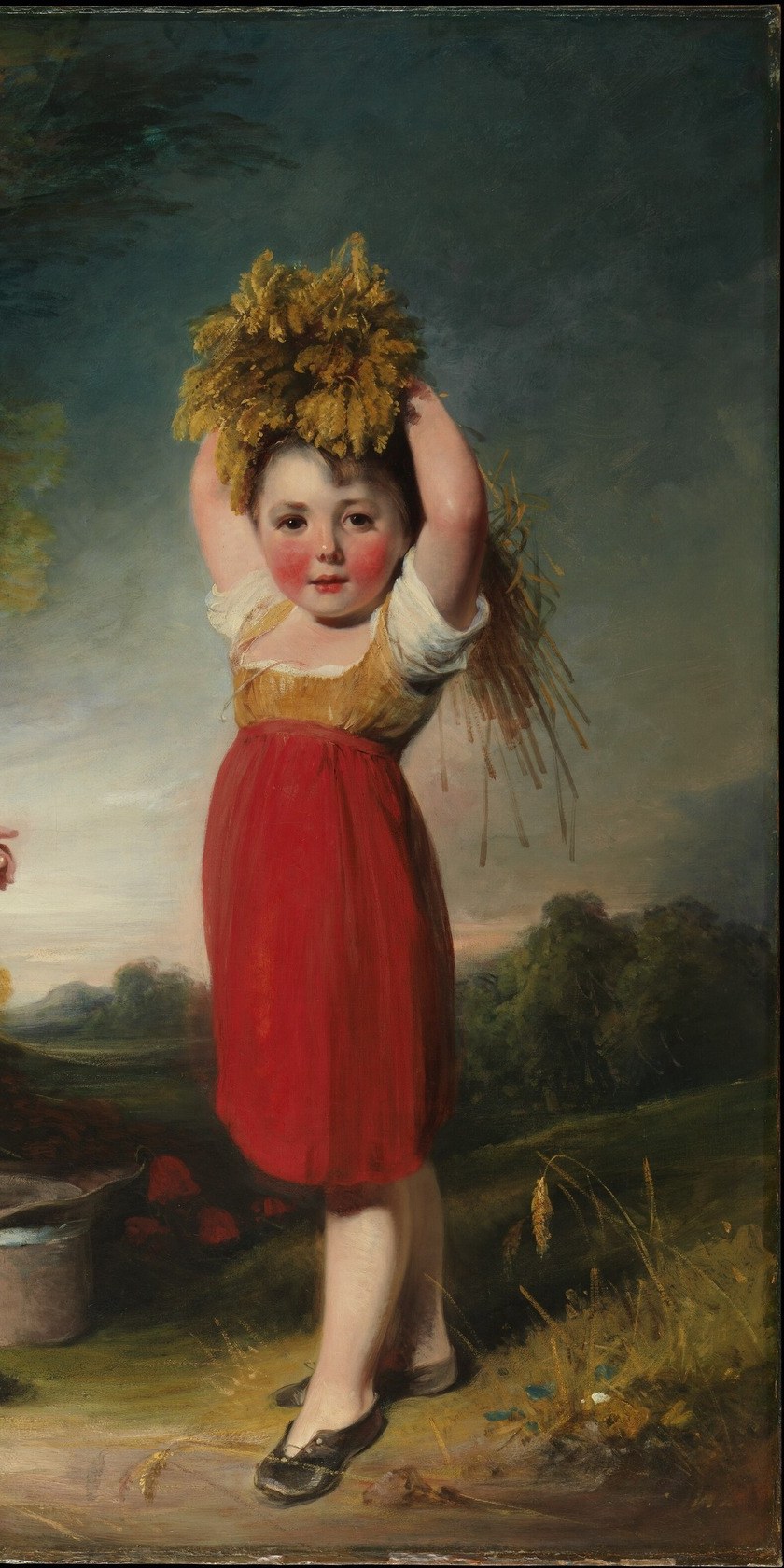
Look first at the girl in the red dress on the right. Her face is the most legible in the painting: open mouth, bright eyes, an expression of unguarded harvest joy that is rare in formal Georgian portraiture. The golden wheat sheaf she holds above her head reads as a trophy of rural abundance, but it also anchors the composition, her raised arms are the only vertical axis in an otherwise low, sprawling group of children.
Sir William Heathcote, 3rd Baronet, commissioned this portrait of four of his grandchildren in 1807. Owen was a known hand for titled families, he had painted William Pitt the Younger and would later chronicle the Prince of Wales. The children are posed in a wooded estate landscape, their clothing refined but deliberately free of ostentation, a neoclassical statement about natural innocence and familial continuity.
What does it mean when a record auction price becomes a historical footnote? Owen was buried in 1825, his reputation already fading. The Met did not buy the painting for Owen alone, it was paying for a slice of the Heathcote lineage, a landscape of English childhood, and a moment just before photography would rewrite what a family portrait could be. Look again at that girl's face. She held the room in 1964.
Details
Transcript
The Metropolitan Museum of Art bought this painting in 1964. It paid £105,000, a price that stunned the London art world. All four are grandchildren of a baronet. But look who commands the scene. Her open mouth and bright eyes turn a posed portrait into something alive. The bundle she raises was once read as aristocratic pastoral fantasy. The auction buyer: American heiress and collector Adelaide Milton de Groot. Within five years, her collection promised the Met one of the last great 18th-century family portraits.