40, Rue Ravignan by Maurice Utrillo
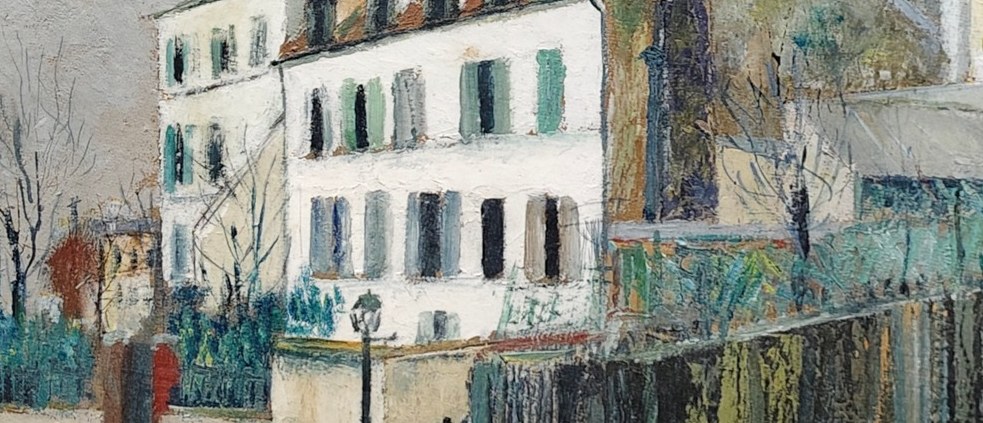
Maurice Utrillo was born and died in Montmartre, and for much of his life he painted nothing but its streets. "40, Rue Ravignan" (1913) shows the view from a window or street corner in the artists' quarter, and at first glance it reads as unremarkable: a quiet winter day, a row of low buildings, an overcast sky. Carnegie Museum of Art, Pittsburgh, holds the work.
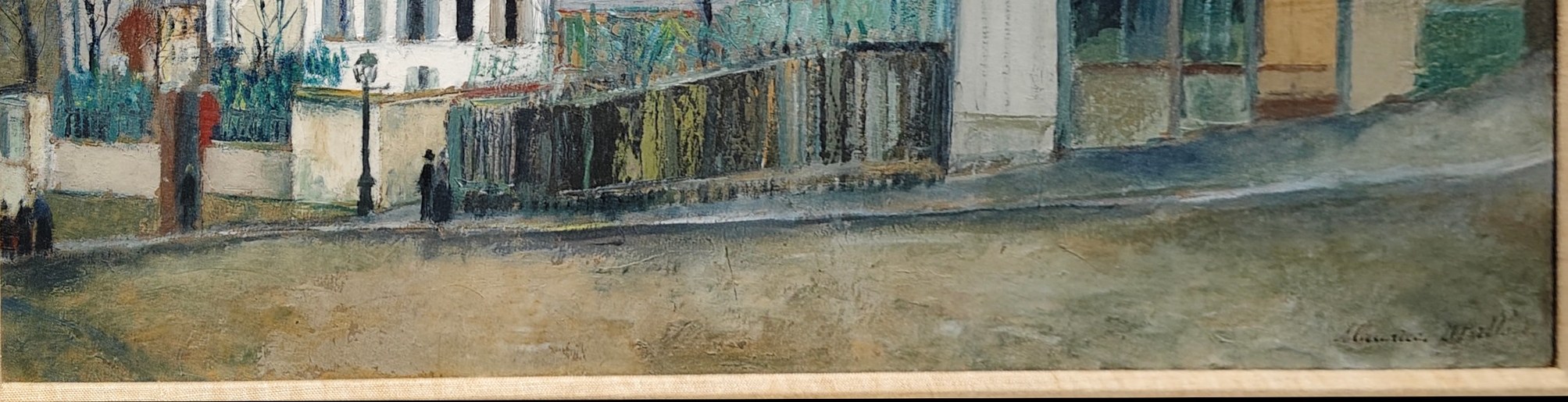
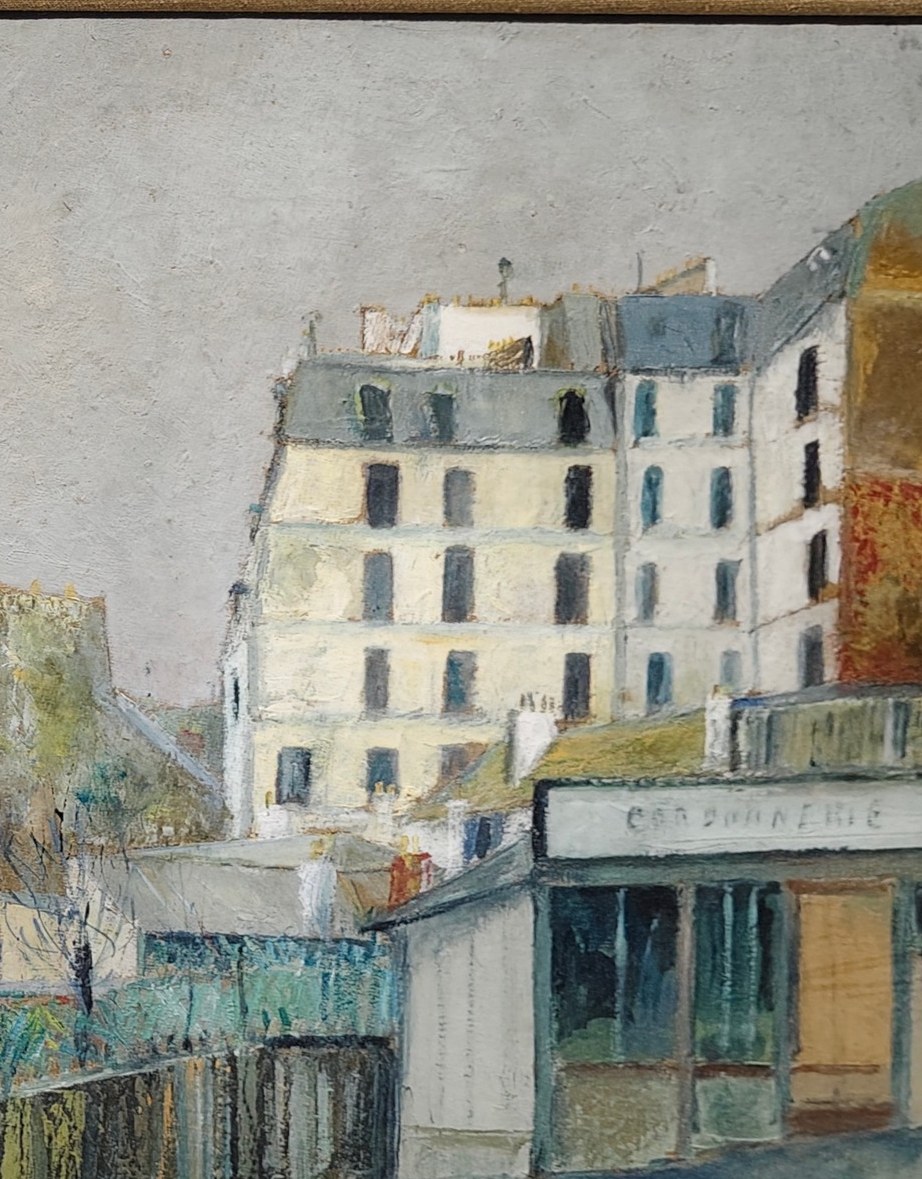
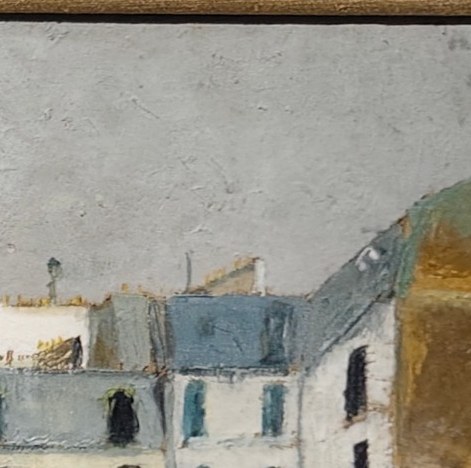
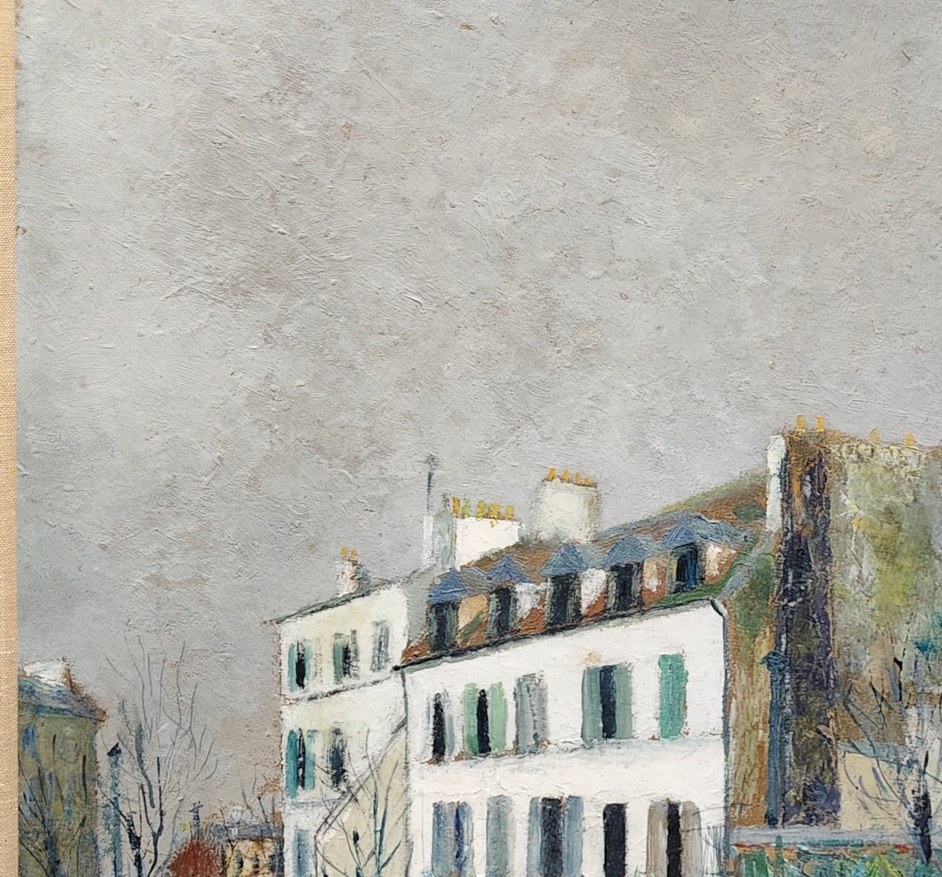
What makes it strange is the surface. Utrillo did not just depict walls, he built them. He mixed sand, plaster, and even glue into his pigments, troweling the paint onto the canvas so that the physical texture of the street entered the painting. Run your eye along that large white building on the right: the roughness is not an illusion of light, it is the actual grit of Montmartre suspended in oil.
Utrillo learned to paint while institutionalized and struggling with alcoholism; his mother, the painter Suzanne Valadon, encouraged the practice as therapy. He became obsessed with the streets he walked, producing hundreds of white-period cityscapes in a narrow palette of chalk, cream, and ochre. The sand-paste technique was partly practical, he often painted from postcards and needed a way to make the placid scenes feel physically present, and partly an inheritance from the crumbling walls around him.
The street here is entirely empty except for a single lamp and a row of bare trees. The absence is not accidental. Utrillo's Montmartre is not the festive village of Renoir but a place of winter quiet where the walls themselves do all the talking. What would a painting smell like if it were made from the street it shows?
Details
Transcript
An empty street in Montmartre, winter 1913. No people, no horses, not even a cat. Now look closer at that big white wall. Those are not brushstrokes. They are grains of sand. Utrillo scooped sand from the street and mixed it with his paint. So paint becomes the thing it is painting. Plaster, brick, and stucco: all made from the same dirt.