Rue Terre Neuve, Meudon by John, Gwen
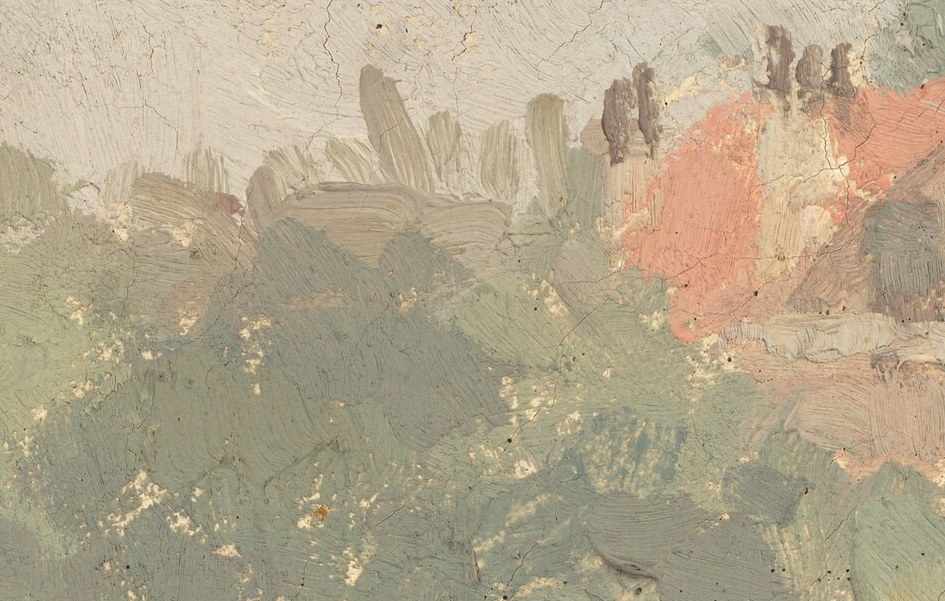
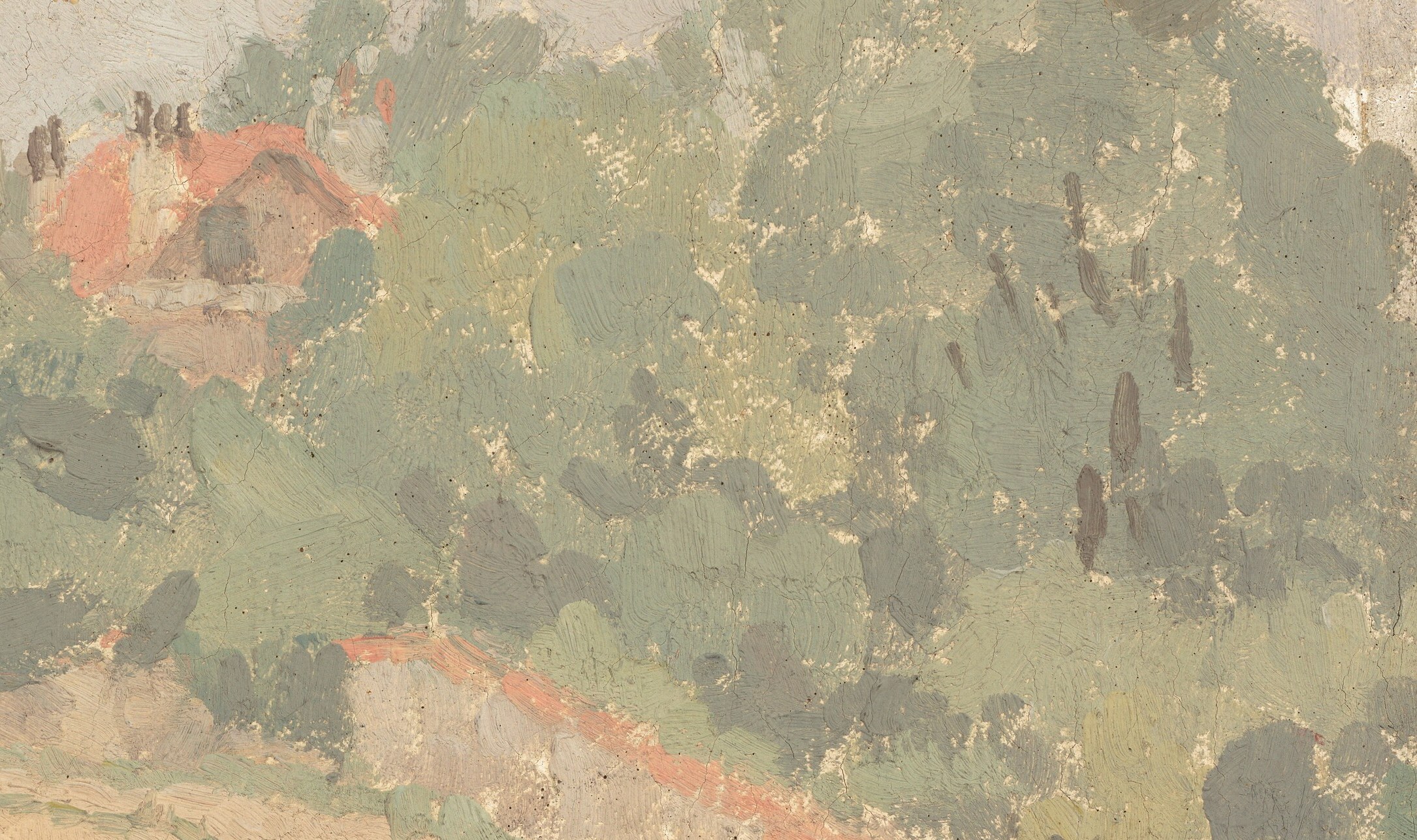
Step into *Rue Terre Neuve, Meudon*, a serene oil on canvas by Welsh artist Gwen John, painted around 1920. This work offers a glimpse into the quiet, everyday life of a Parisian suburb in the post-World War I era, reflecting the subdued palette and intimate subject matter for which John is known.
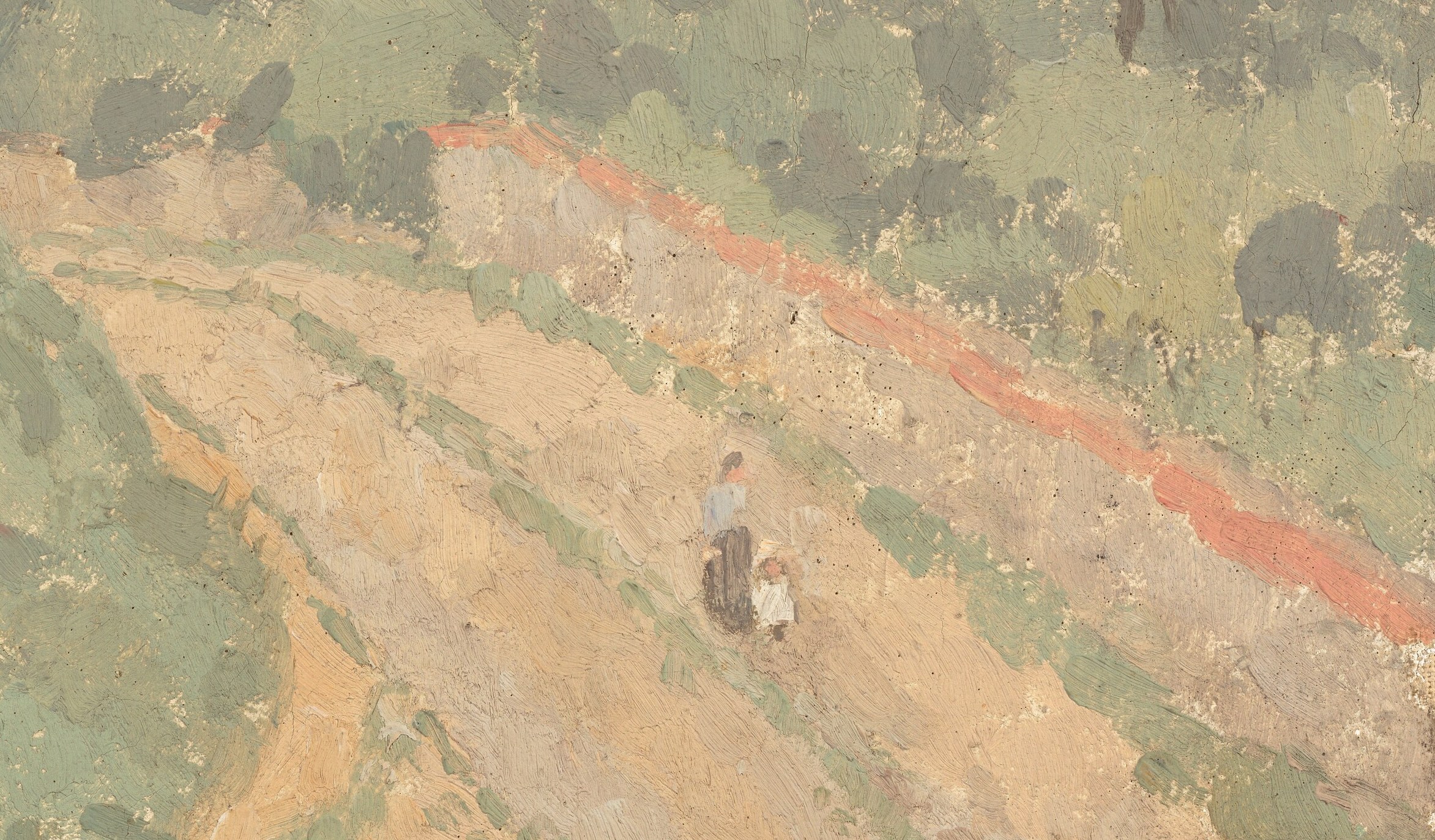
The painting centers on a woman and child walking along a dirt path, their figures small and indistinct, emphasizing their anonymity amidst the modest houses and lush foliage. John's focus on such ordinary rhythms of suburban life invites contemplation of solitude and the quiet beauty of daily routines.
Gwen John, though overshadowed by her brother Augustus John and mentor Auguste Rodin during her lifetime, has since been recognized as a significant figure in modern painting. Her nuanced handling of light, space, and understated emotion, as seen in this piece, solidified her position in the post-impressionist movement. The painting remained in private collections for decades before gaining public attention.
What do you notice first about this tranquil scene?
Details
Transcript
This is Rue Terre Neuve, in Meudon, France. The year is around 1920. Post-war life slowly resumes. Simple houses line a quiet, unpaved street. Most of the painter's life was spent here, in France. A woman and child walk this path, their faces obscured. They are anonymous, part of the ordinary rhythm of life. The artist specialized in these quiet, intimate moments.