Riders Gallopping towards the Gates of the Fortress by Jan Asselijn
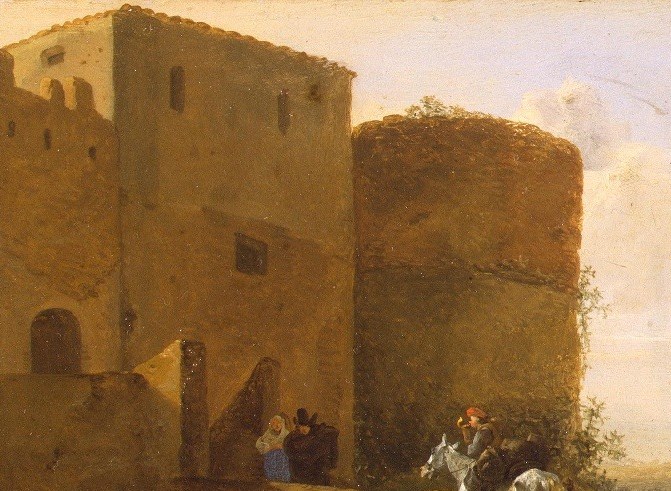
Jan Asselijn's "Riders Galloping towards the Gates of the Fortress," painted in 1645, is a landscape rendered on copper, a material choice that greatly influenced its longevity. Held at the State Hermitage Museum, this painting offers a glimpse into 17th-century Dutch art.
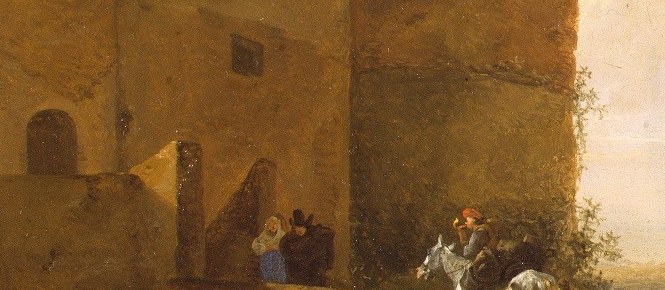
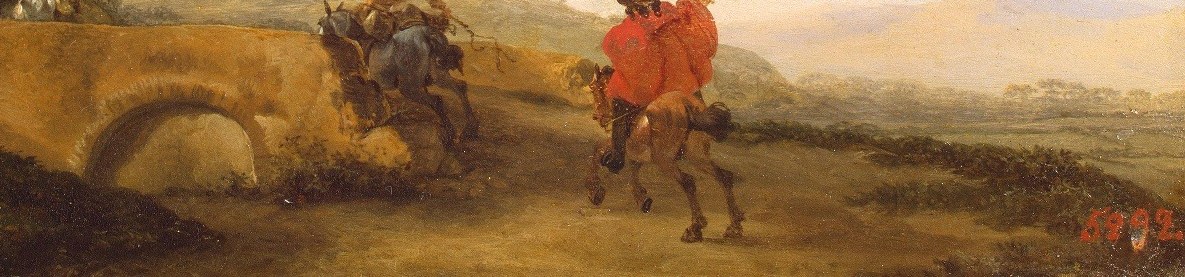
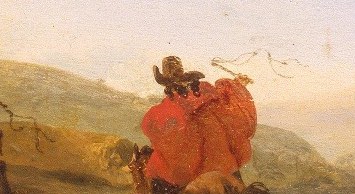
The artist used brisk brushstrokes to depict the movement of the horses and textured surfaces for the fortress walls. The choice of copper, while more costly than traditional canvas, provided a smooth, rigid surface that allowed for fine detail and resisted degradation, ensuring the painting's remarkable preservation over centuries.
Asselijn, known for his Italianate landscapes, often explored themes of passage and the impermanence of structures. This work exemplifies the era's fascination with ruins and fortified architecture, blending realistic observation with dramatic elements. The durable medium of copper perfectly captures the tension between fleeting motion and enduring stone.
Doesn't it make you wonder how many other details were preserved by such a deliberate choice of materials?
Details
Transcript
This fortress looks ancient, crumbling over time. Yet this painter captured it in 1645, on copper. Copper was more expensive than canvas, but very durable. This material helped preserve the painting's detail. Look at the cracking in the arid ground, still so clear. Its vibrant red signature is also perfectly preserved.