Salome with the Head of John the Baptist by Gustave Moreau
Gustave Moreau’s 'Salome with the Head of John the Baptist' (1888) at The Metropolitan Museum of Art doesn't just illustrate a biblical execution. It traps you in a heavy, dreamlike space where violence and sacredness refuse to separate. Moreau, the Symbolist painter par excellence, wasn't interested in straightforward storytelling. He wanted the psychological tangle underneath.
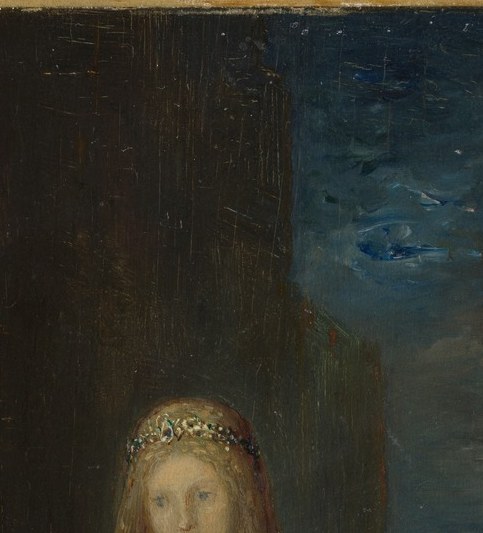
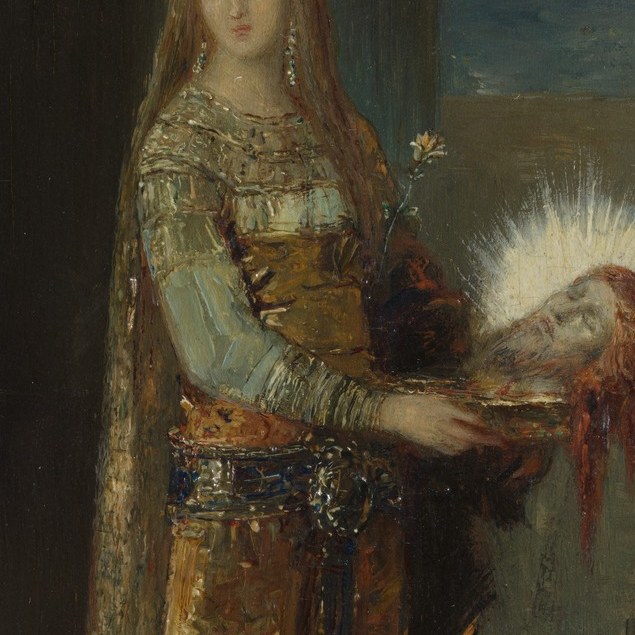
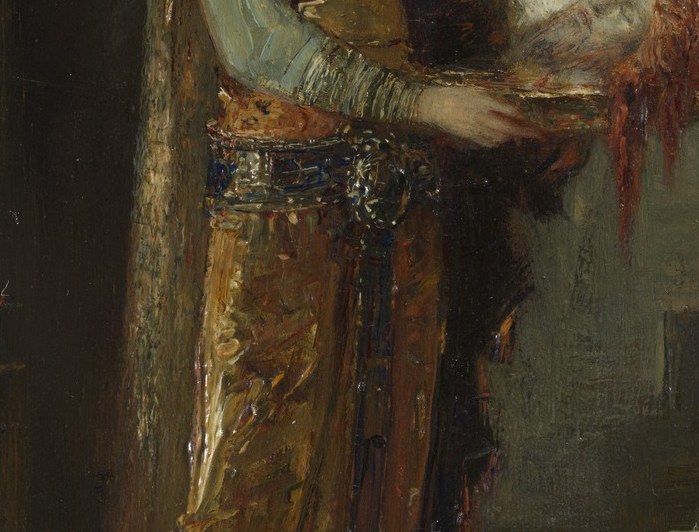
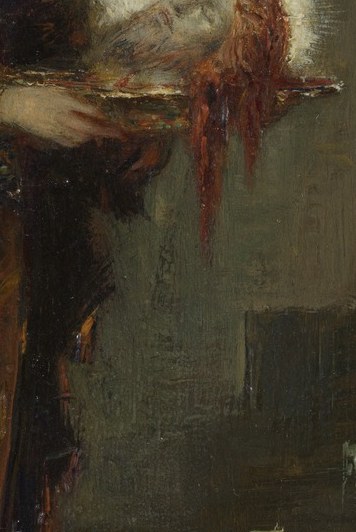
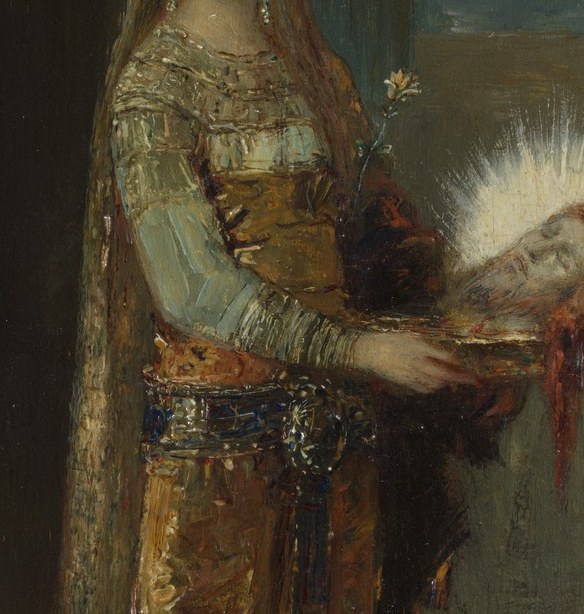
Look first at the face. Salome is not triumphant, not disgusted. She is eerily serene, her downcast gaze almost drowsy. Then look at her hands. One holds the platter bearing the head. The other holds a delicate flower. Moreau identified that bloom as an emblem of pure innocence. Holding innocence and death in the same moment is the whole point of the painting. The shimmering halo around John's head reinforces it: holiness persists even here. No detail is accidental. The jeweled bodice is armor. The robe is a cage.
Moreau spent decades mining biblical and mythological subjects to explore dangerous female archetypes. He painted over 15,000 works, but the Salome figure obsessed him. He made her regal, impassive, and complicated. His Paris studio, now the Musée Gustave Moreau, is still filled with unfinished canvases that show him layering paint, encrusting surfaces with ornament, and refusing to let a story stay simple. His reputation dimmed after his death in 1898, then roared back in the 1960s when a new generation recognized his psychological depth.
The flower and the severed head. That is the painting. Not a verdict, but a collision. What do you think Moreau actually felt about Salome?
Details
Transcript
At first glance, a princess and her gruesome trophy. She looks down with an unnerving, almost serene detachment. The head still glows. Moreau insisted holiness persists. But the real clue is held in her other hand. A single delicate flower. The artist called this his symbol of pure innocence. Innocence and a severed head, held by the same person.