Portrait of a German Officer by Marsden Hartley
View the artwork: Portrait of a German Officer →
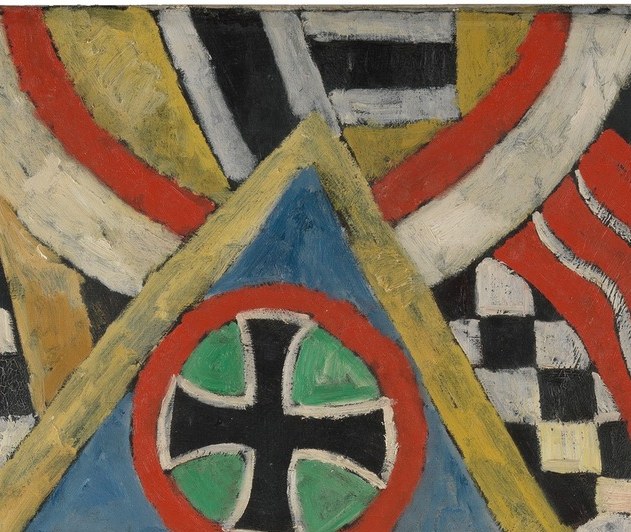
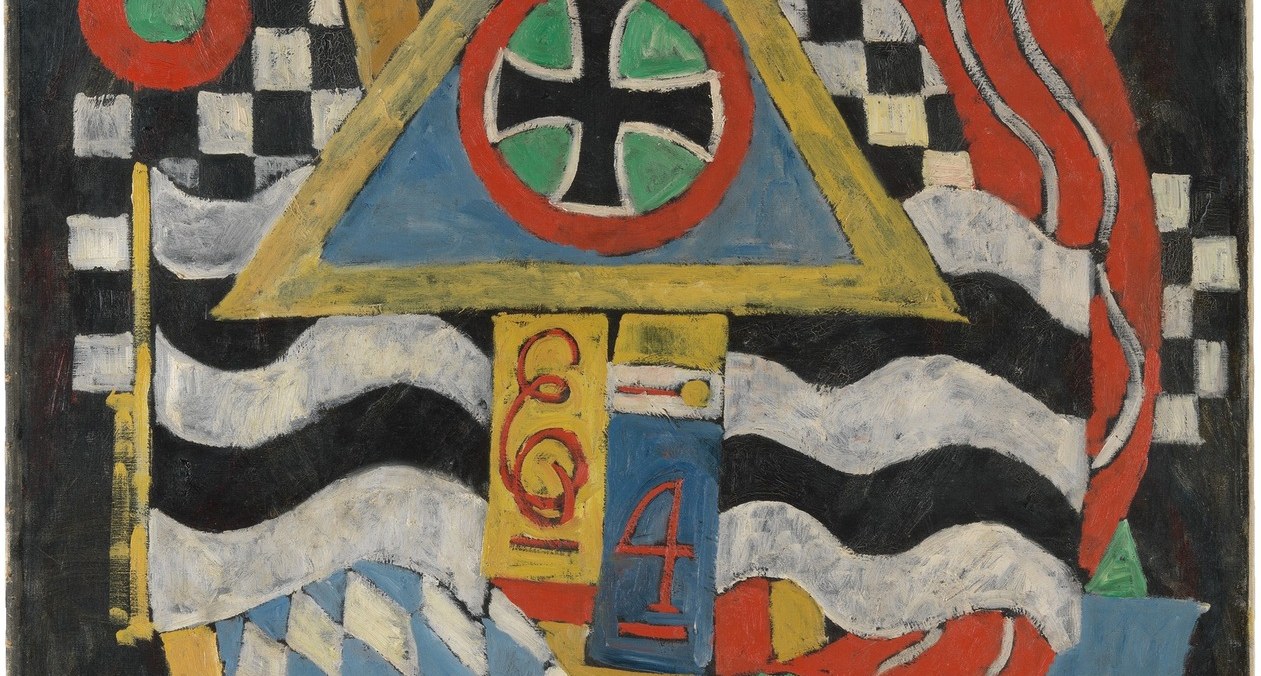
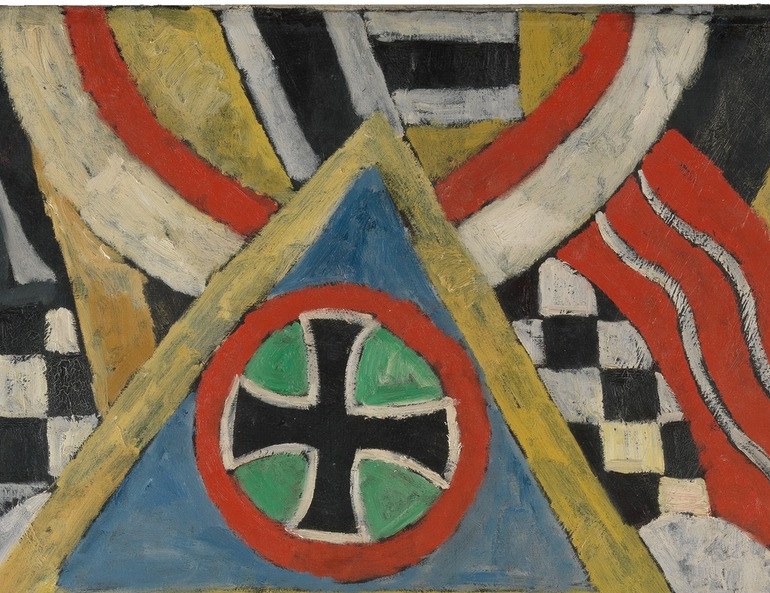
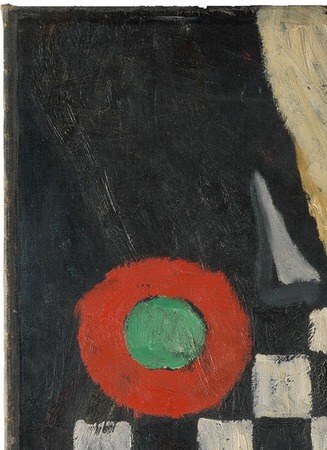
This is "Portrait of a German Officer" by American painter Marsden Hartley, completed in 1914 and now at the Metropolitan Museum of Art. There is no face in this portrait. The entire figure is built from the actual military insignia, flags, and decorations of Imperial Germany.
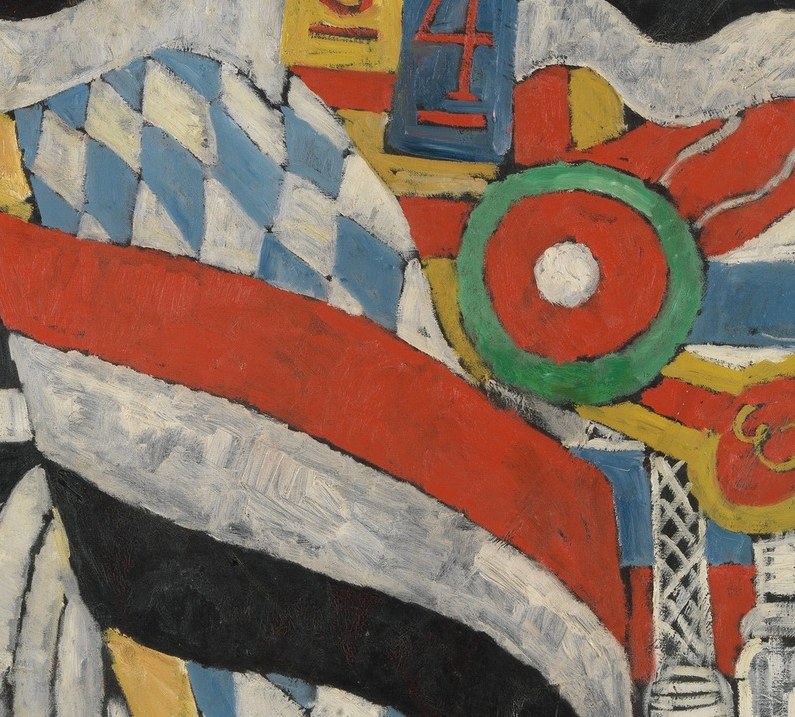
Start at the top. The black Iron Cross against a dark triangle was Germany's highest military honor, worn at the throat. The blue-and-white lozenge pattern is the unmistakable flag of Bavaria. The curved white ribbon sweeping across the canvas is the sash of the Iron Cross medal itself. Every shape is a real, readable symbol of rank and regiment.
Hartley painted this in Berlin just after the outbreak of World War I. He had fallen in love with a young German officer named Karl von Freyburg, whom he met through their shared social circle. In October 1914, barely two months into the war, Karl was killed in battle. He was 24 years old. Hartley was devastated, and he channeled that grief into this painting.
The hidden number at the left margin is almost certainly Karl's own regimental identification. The Iron Cross was awarded to him posthumously. Hartley did not paint Karl's face. He painted what the war turned him into: a body composed entirely of the symbols that sent him to die. The dark triangle above the cross reads as both a military cap and a funerary monument.
What looks at first like abstract energy is actually a coded love letter and a memorial. Every flag, every ribbon, every badge is a word.
#arthistory #marsdenhartley #worldwar1
Details
Transcript
A portrait with no face. The Iron Cross. Germany's highest military honor. These blue-and-white diamonds are the flag of Bavaria. A narrow black-and-white ribbon: the Iron Cross's actual medal sash. Now look at the left margin. A regimental number. The painter was in love with a German officer. Karl von Freyburg. Karl died at the front. October, 1914. Aged 24. This is him. Not his body. Everything the war made him wear.