Still Life with Poultry by Willem van Aelst
Willem van Aelst’s *Still Life with Poultry* (1658) is a masterclass in detail and light, currently held at the Rijksmuseum. This Dutch Golden Age oil painting exemplifies the period's interest in realistic, domestic subjects, turning everyday objects into art.
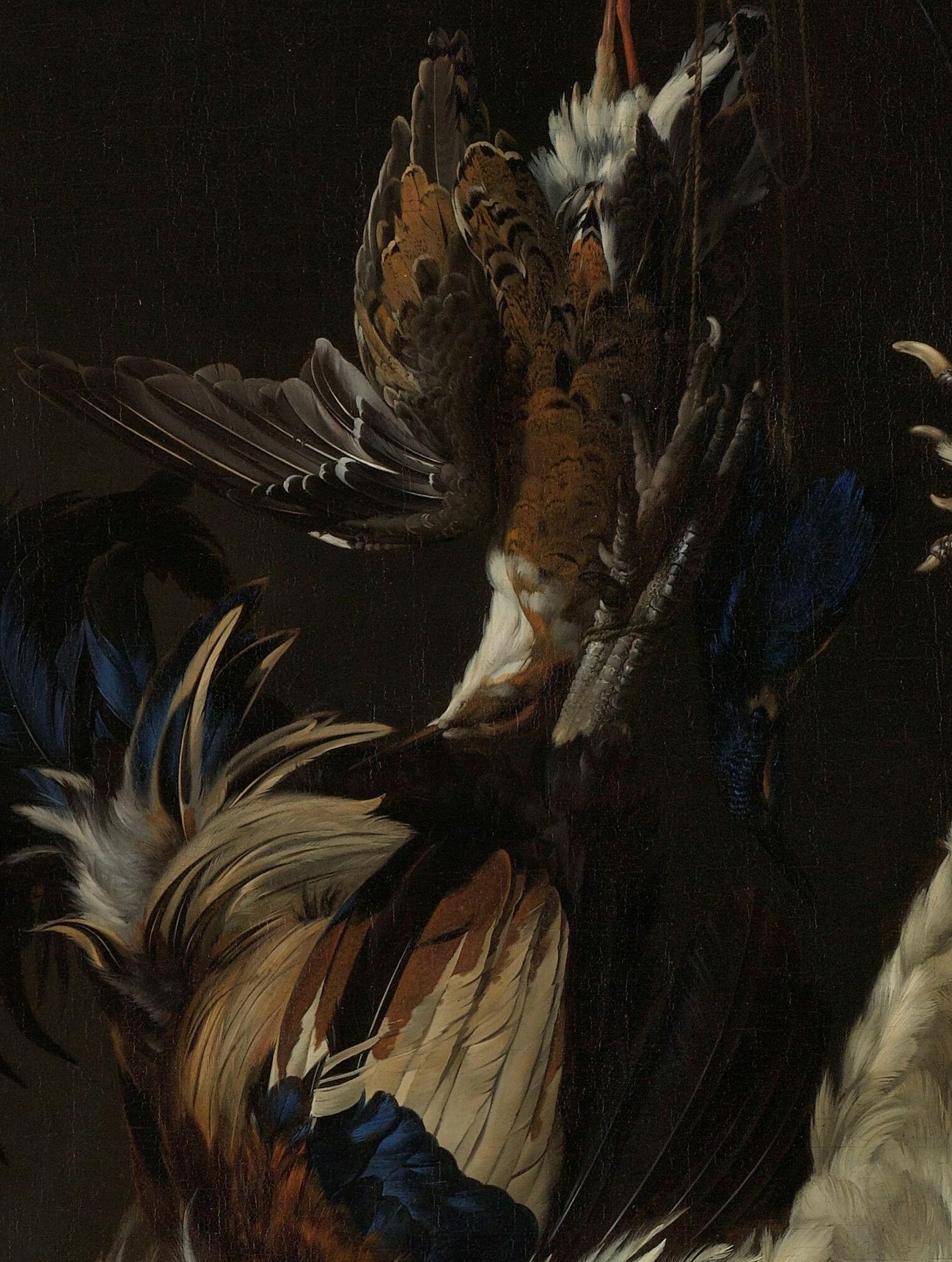
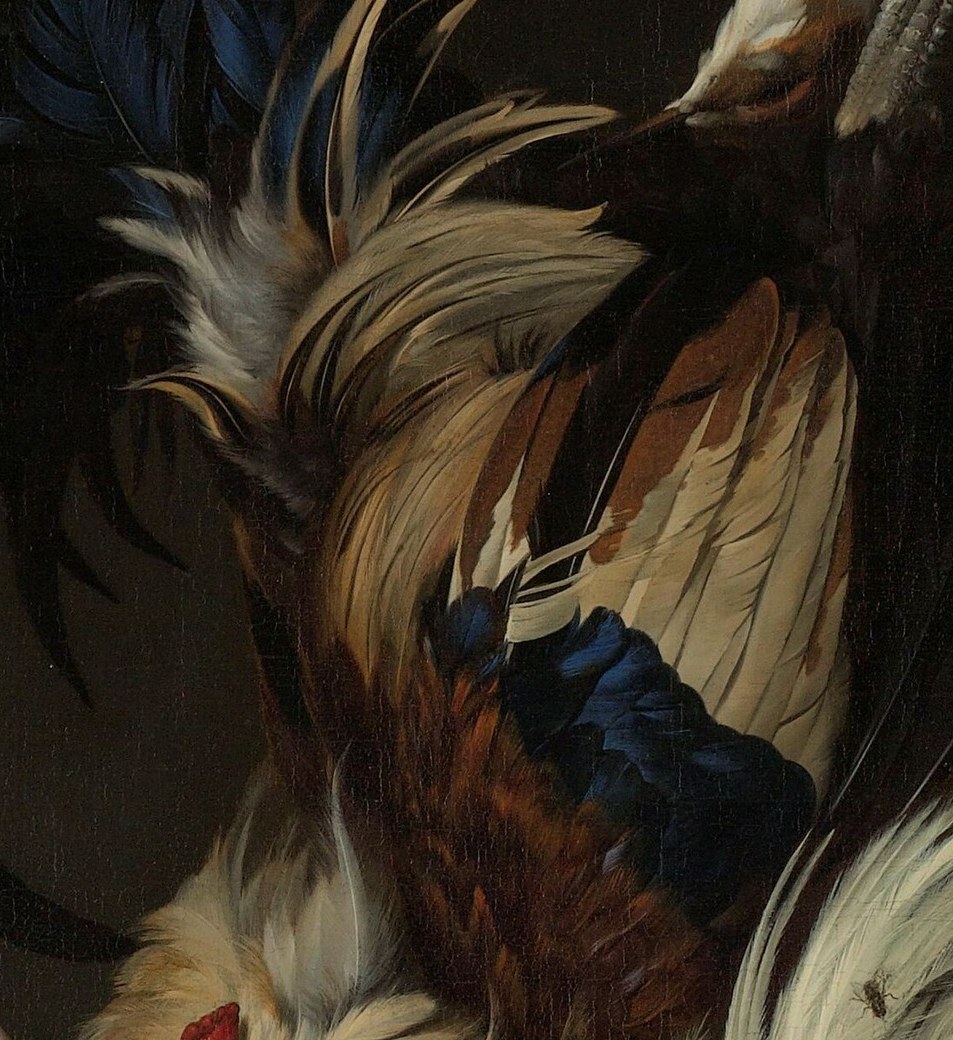
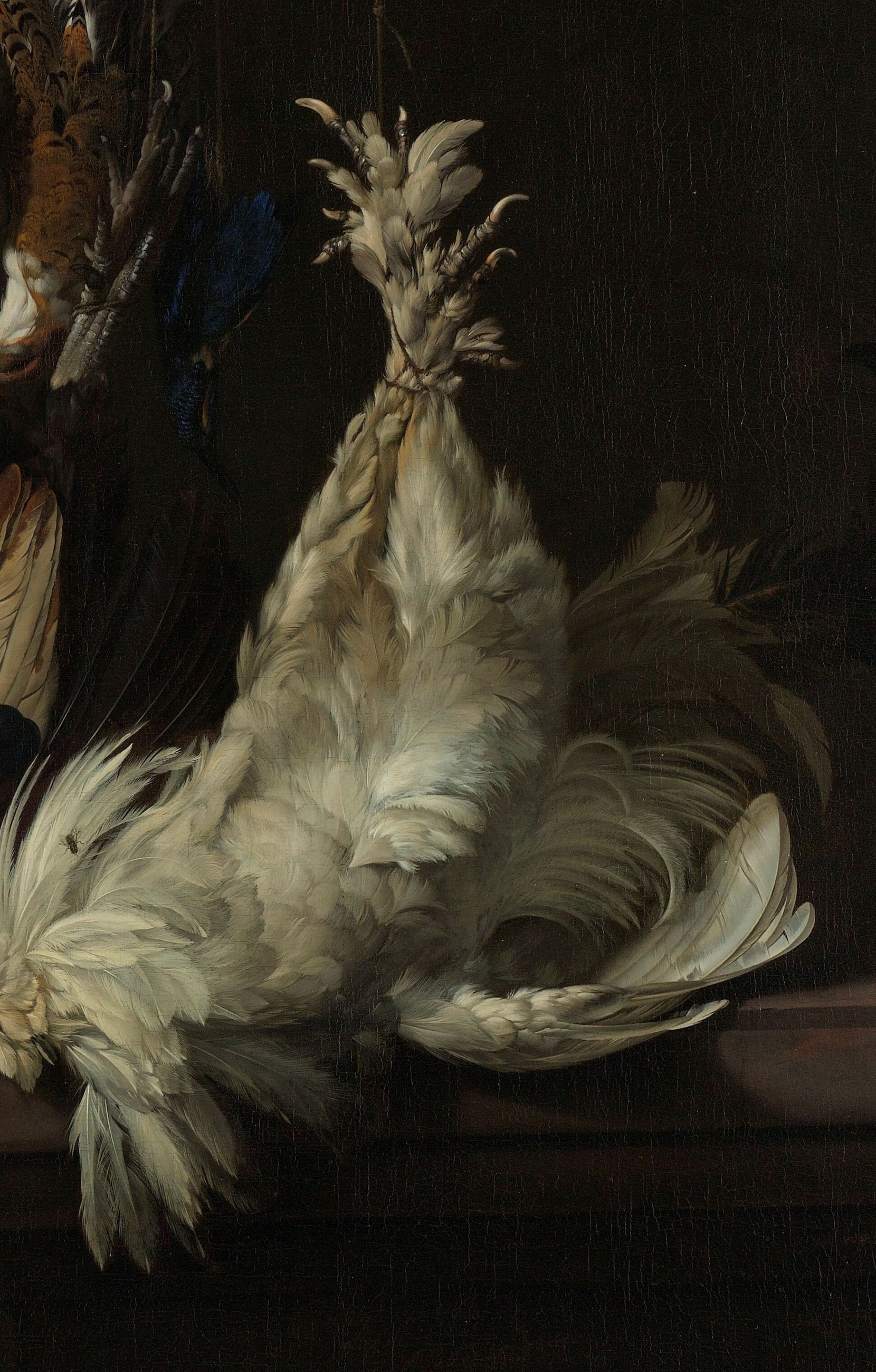
Look closely at the meticulous rendering of each feather, especially the vibrant plumage of the pheasant and the rooster. The artist’s use of chiaroscuro, strong contrasts of light and shadow, makes the colors appear to shimmer against the dark background.
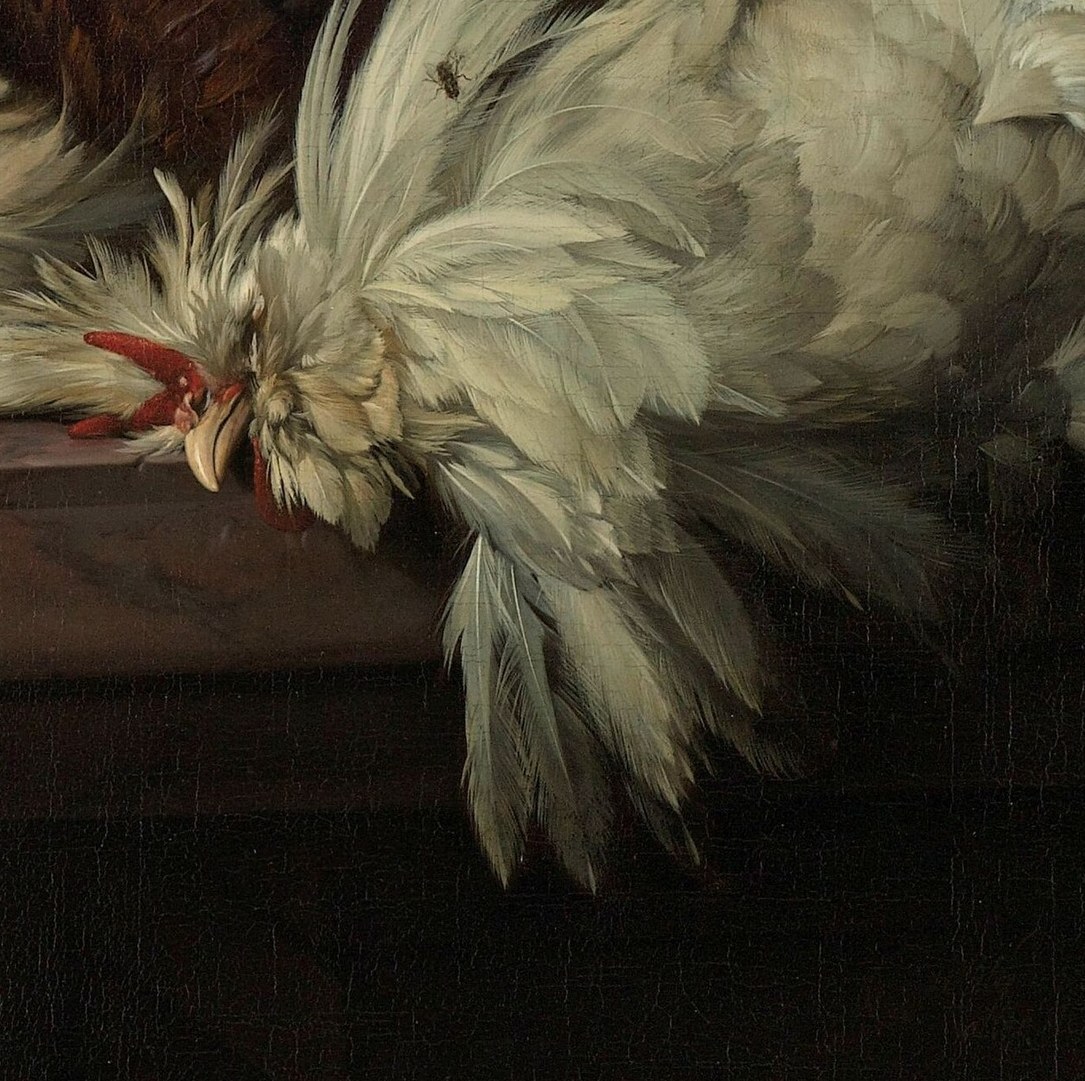
Van Aelst, a specialist in still-life painting, created this work in 1658, capturing the market for pieces depicting food and game. His precise observation and technique transformed simple subjects into profound compositions. The tiny insect on the white chicken is a subtle touch, reminding viewers of the 'vanitas' theme, or the transient nature of life.
What other hidden details do you notice in still life paintings?
Details
Transcript
This painter was famous for still lifes with flowers or game. He rendered every feather with meticulous precision. The light makes the colors of the plumage shimmer. But look closely at the white chicken's wing. A tiny insect sits there, a reminder of decay. This adds a layer of 'vanitas,' life's fleeting nature.