The Presentation and Marriage of the Virgin, and the Annunciation by Diana, Benedetto
Benedetto Diana's 'The Presentation and Marriage of the Virgin, and the Annunciation' (c. 1522), held at the [Museum Name, if known, otherwise omit], subtly weaves two key moments from the Virgin Mary's life into a single frame. This oil on panel painting showcases the Venetian artist's adherence to High Renaissance ideals of balance and harmony.
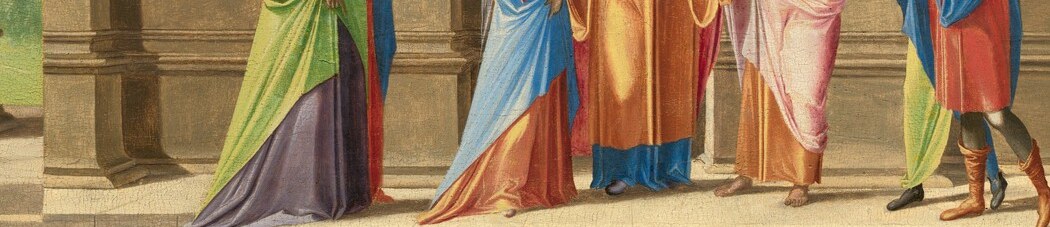
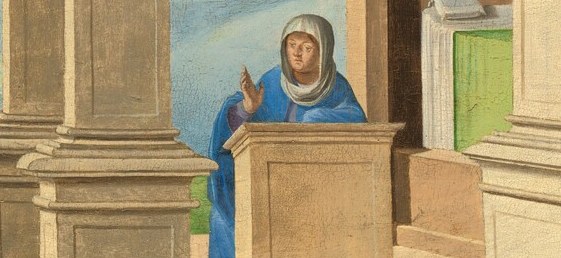
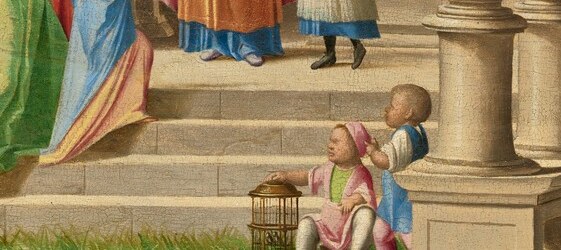
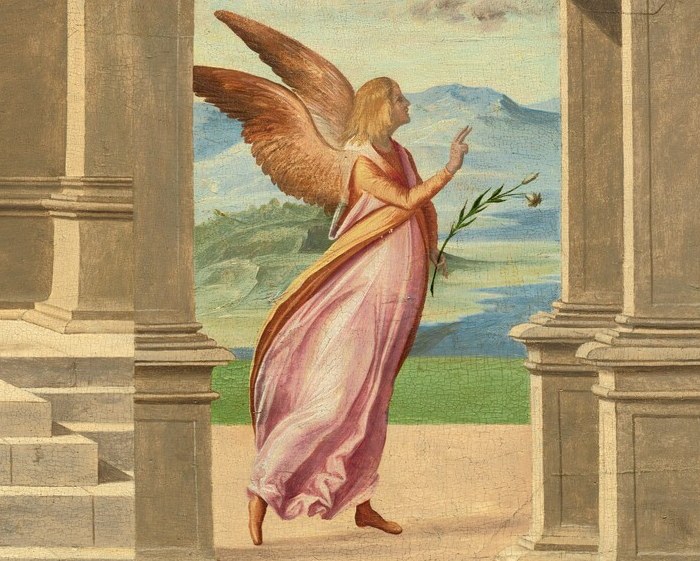
The left side of the composition depicts the Marriage of the Virgin, with Mary receiving a ring from the High Priest, while rejected suitors with their withered rods look on. On the right, the Annunciation unfolds, showing the Archangel Gabriel delivering the divine message to Mary. Look for the small child figure in the bottom left foreground, who also holds a withered rod, echoing the theme of divine selection over earthly claims.
Diana, active in the early 16th century, was a student of Giovanni Bellini. His work is known for its soft, diffused color palette, creating a serene and calm atmosphere. This painting exemplifies his mature style, blending traditional influences with the evolving aesthetics of his time.
What other subtle details do you notice in this harmonious composition?
Details
Transcript
This painting tells two stories of Mary at once. On the left, she is married to Joseph by the High Priest. Rejected suitors stand by, their rods having failed to bloom. On the right, Mary learns she will bear a child. But look closely at the very bottom, far left. A small child offers a withered rod, like the suitors. It's a subtle symbol of Mary's divine, not earthly, choice.