The Feast of the Gods by Bellini, Giovanni
Giovanni Bellini's final painting, *The Feast of the Gods* (1514), is one of the greatest Renaissance works in the United States, housed at the National Gallery of Art in Washington D.C. It is a rare mythological subject for the Venetian master, and it tells a very specific, very human story from Ovid's *Fasti*.
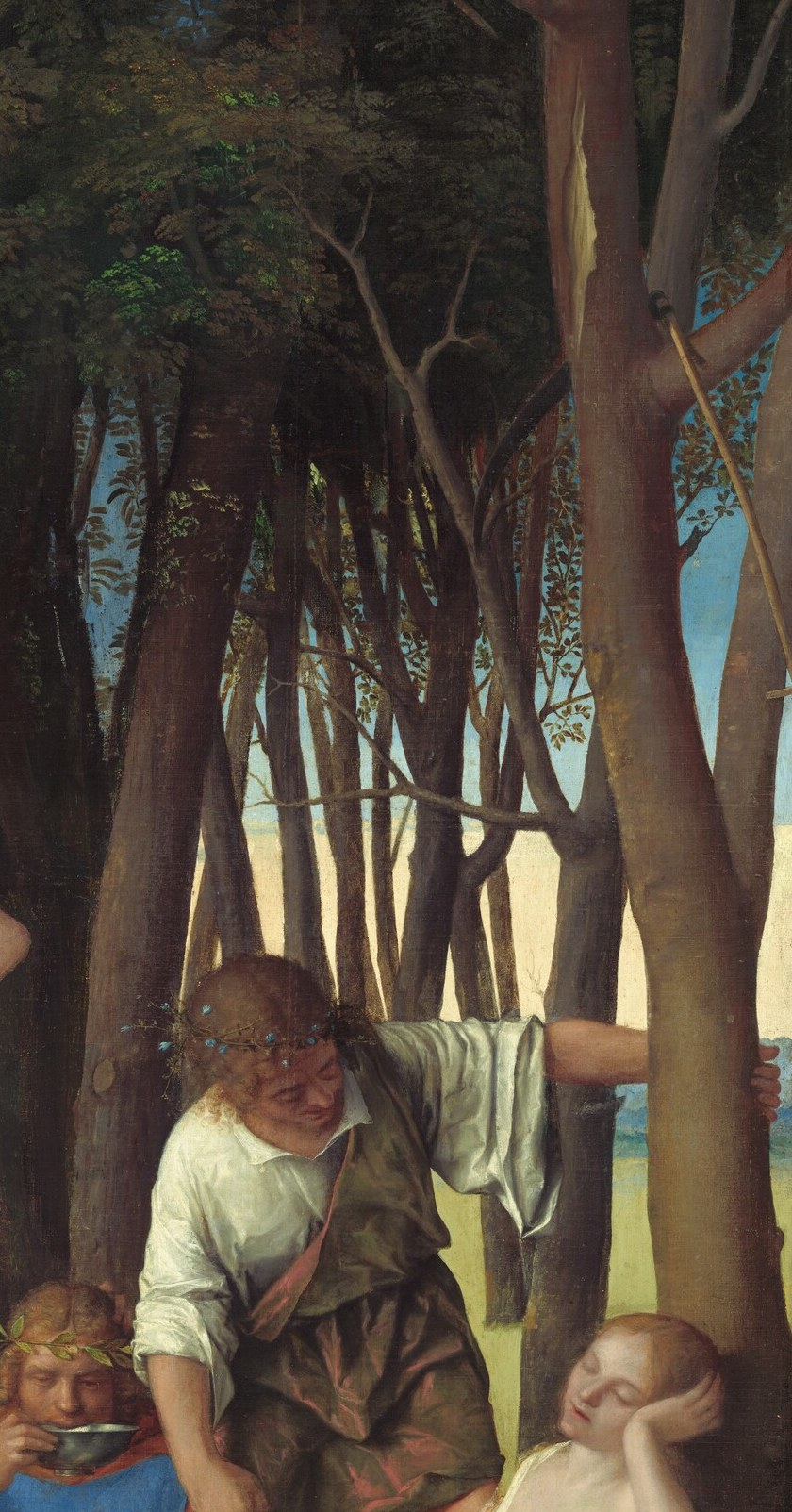
Start by finding the donkey on the right. His bray is the narrative hinge of the entire scene. Just below him, you will see Priapus creeping toward the sleeping nymph Lotis. He is about to be thwarted, publicly and loudly, by an animal. The painting is a divine comedy, a moment of drunken misbehavior frozen in time.
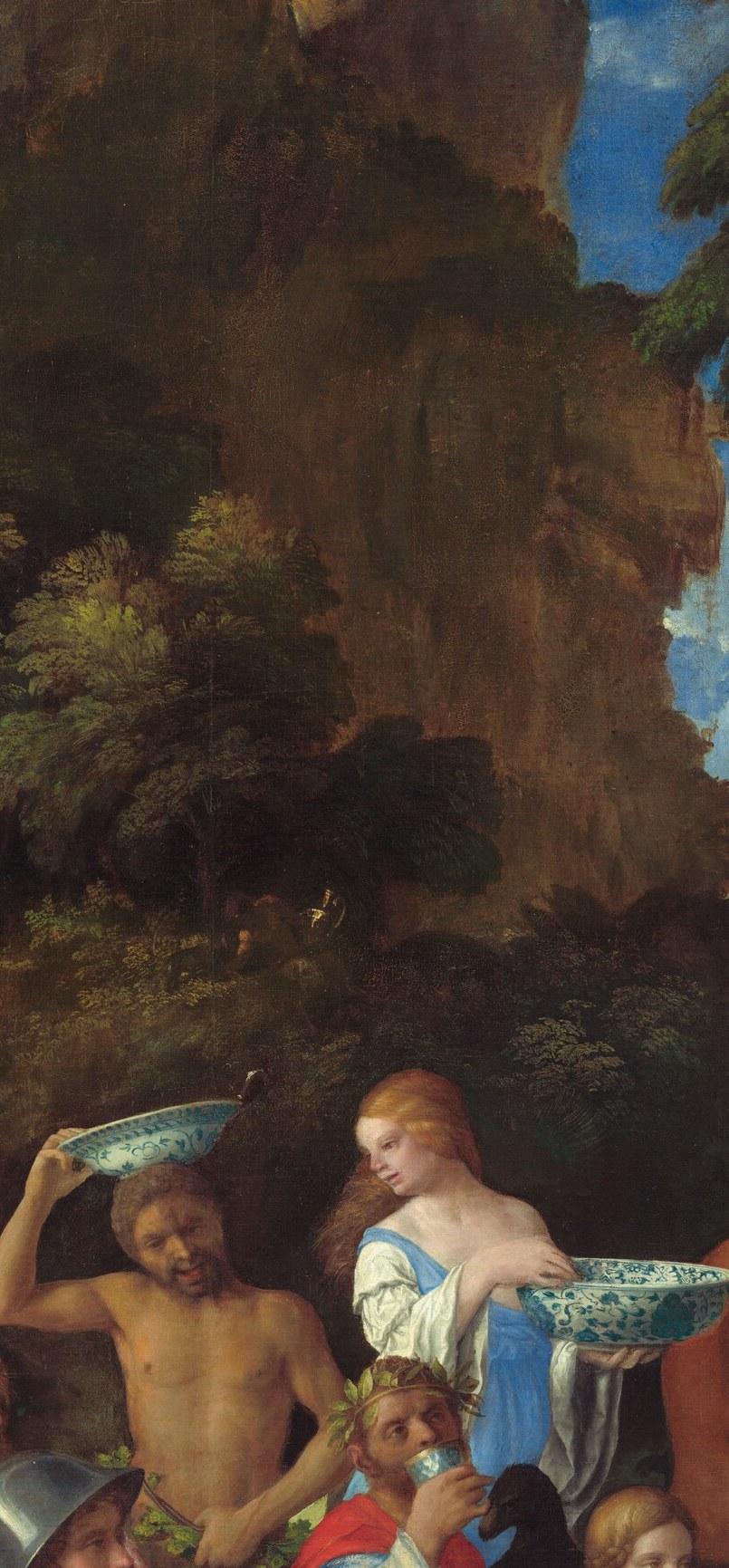
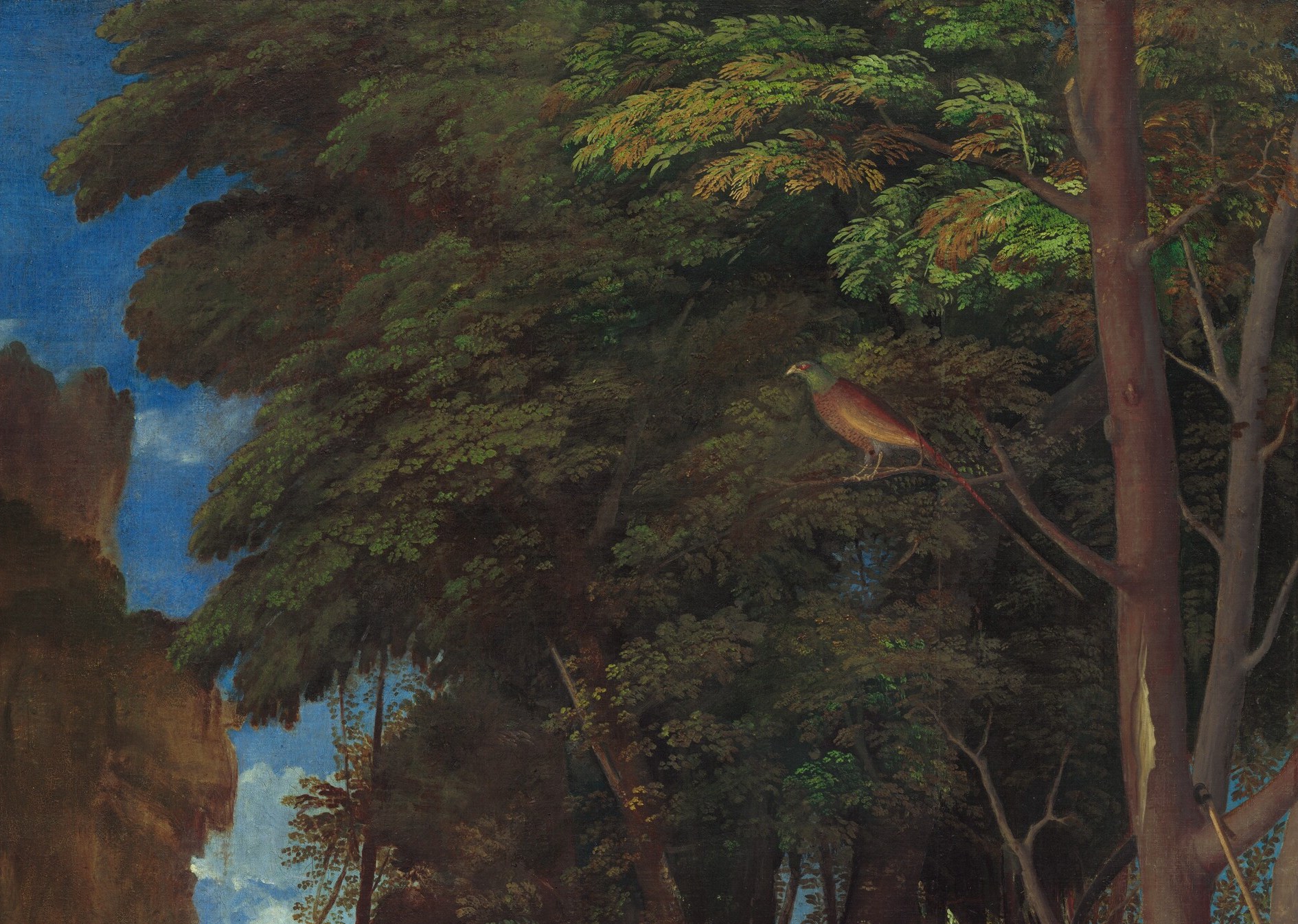
Bellini finished the original composition in 1514, late in his life. The luminous drapery and warm skin tones are pure Venetian oil technique, building light from within. Portions of the landscape on the left were later repainted by Dosso Dossi and Titian, making this a rare collaboration between three giants of the Renaissance.
Next time you see a grand mythological scene, look for the joke. The gods were often more ridiculous than we remember.
Details

Transcript
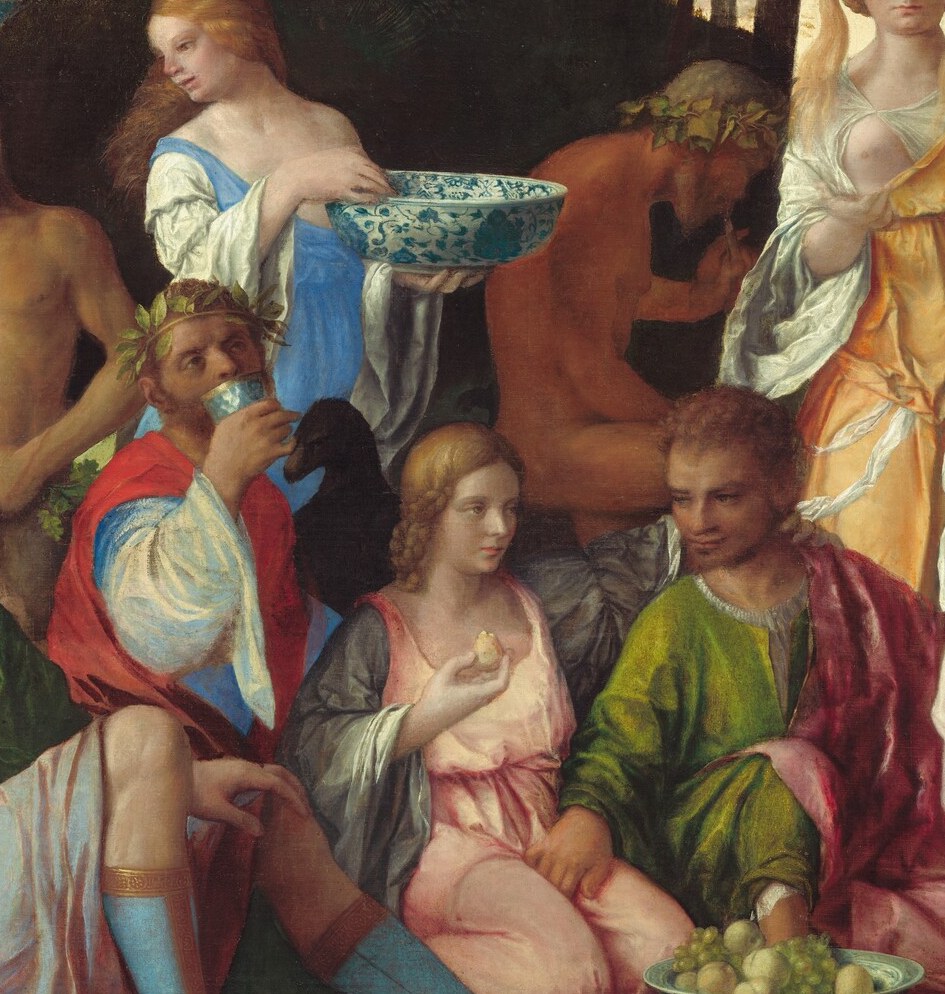
A feast deep in the woods. Every guest is a god. This is Bellini's last painting, finished in 1514 at the end of his life. The central figure anchors the revelry, her dress a pool of light. Now look to the far right. A donkey is about to bray. Just below, Priapus creeps toward the sleeping nymph Lotis. The gods are drunk. The donkey’s bray will expose him and save her. This is a divine comedy, recorded straight from Ovid.