The Scalper Scalped - Pawnees and Cheyennes by Catlin, George
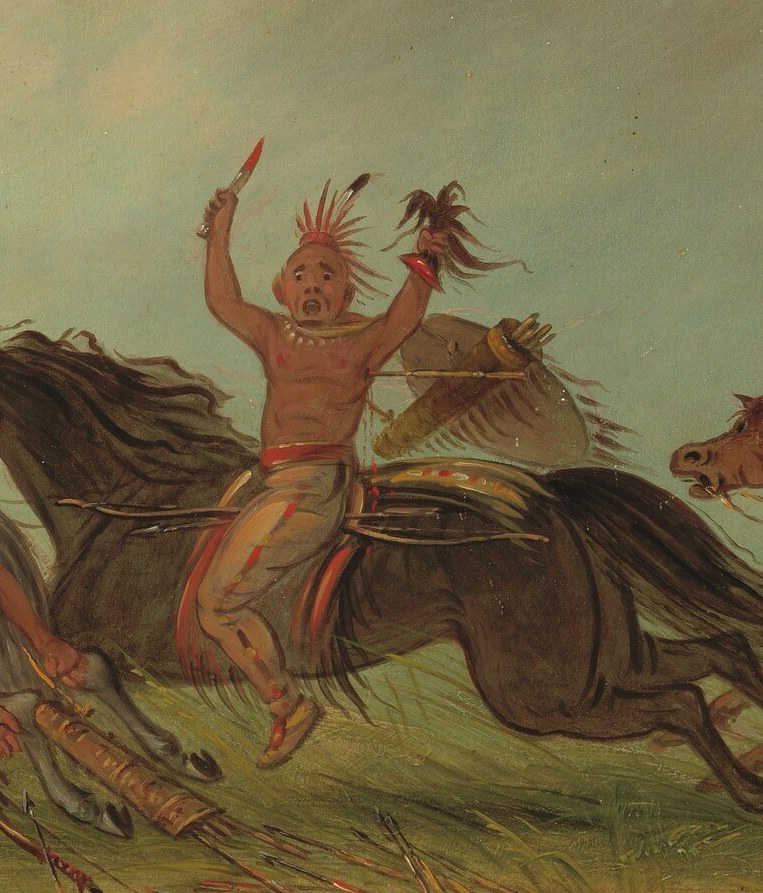
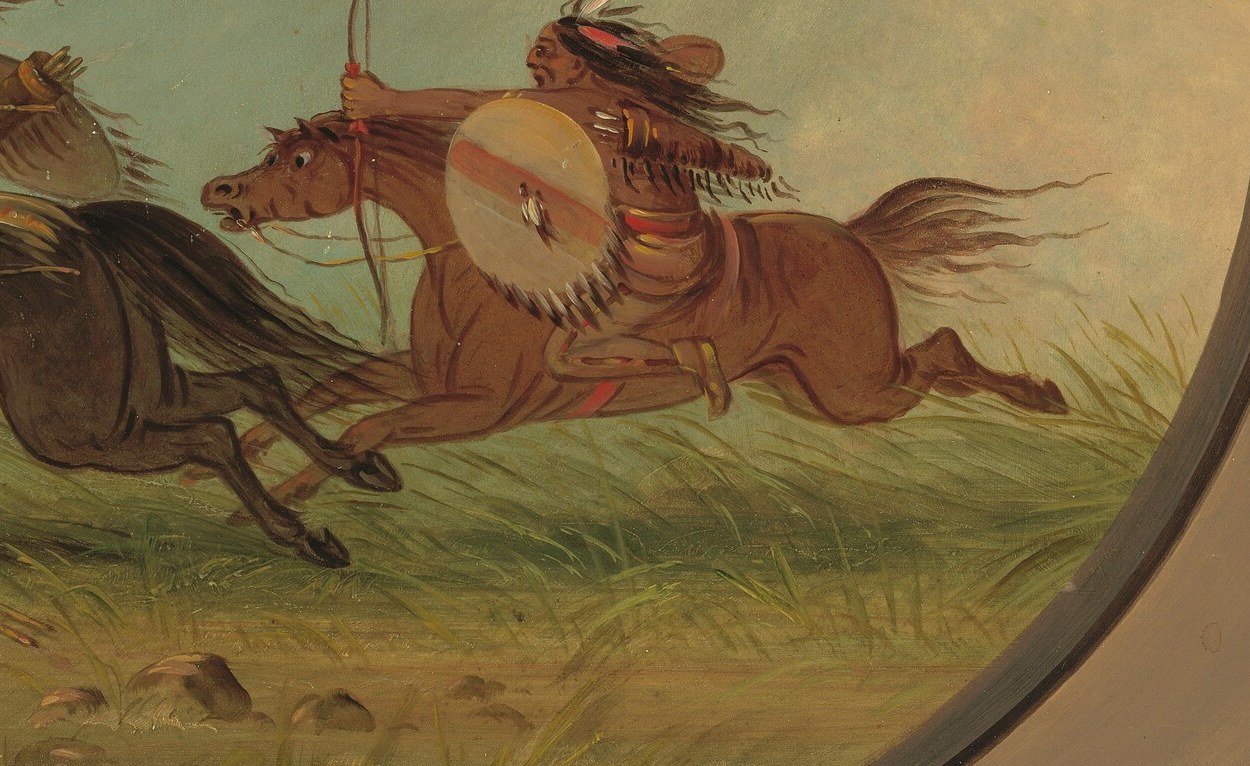
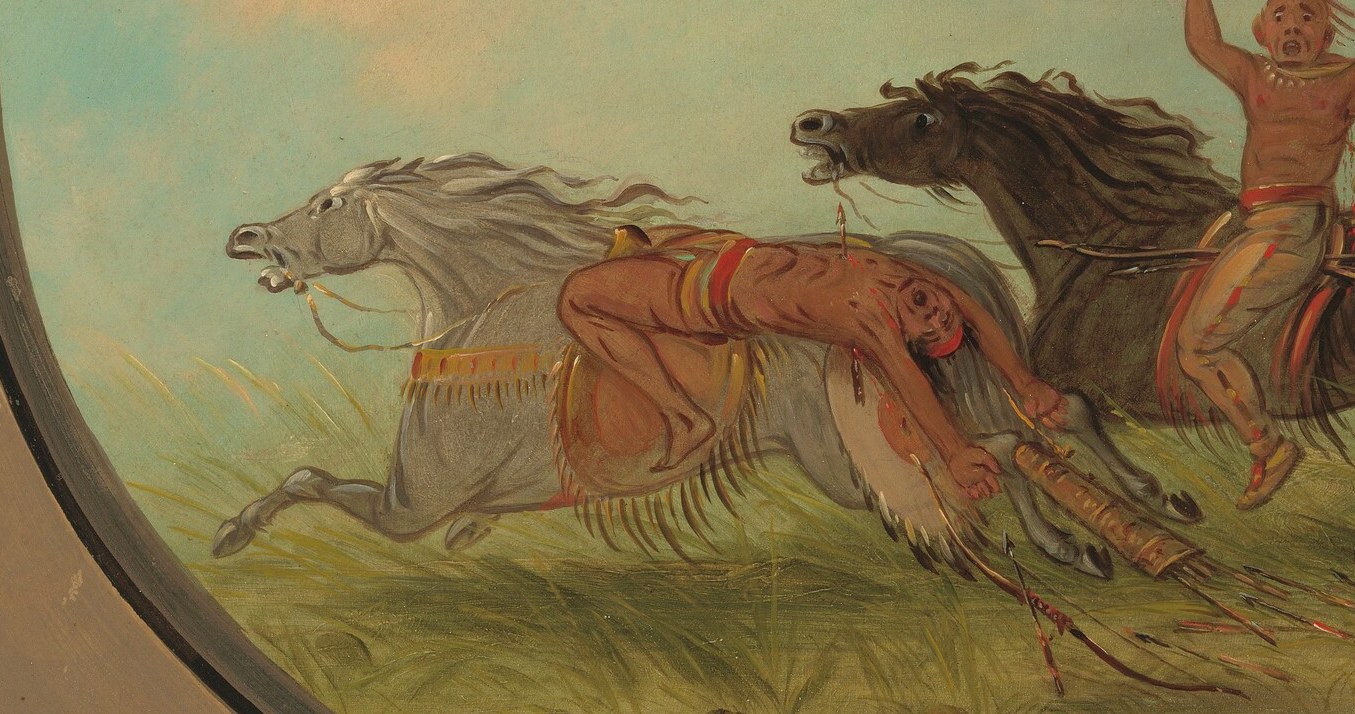
George Catlin, a lawyer-turned-painter, dedicated his life to documenting Native American cultures. His painting, *The Scalper Scalped, Pawnees and Cheyennes*, created in 1861, is a powerful example of his work and is held in a private collection.
This dramatic scene depicts an intense moment of intertribal conflict. Notice the warrior on the dark horse proudly displaying a freshly taken scalp, a traditional, albeit brutal, symbol of victory in warfare. His opponent, on the brown horse, is armed with a rifle, representing the introduction of new weaponry into these age-old conflicts.
Catlin, who traveled the American West extensively in the 1830s, witnessed such encounters firsthand. He painted this work decades later, from memory and sketches, as part of his extensive visual record of Indigenous peoples, aiming to preserve their customs and realities.
The painting's direct, narrative style aligns with American folk art, favoring storytelling over academic refinement. It offers a stark glimpse into the historical complexities of the American frontier.
Details
Transcript
This painter traveled the American West in the 1830s. He documented Plains Indian life, including its conflicts. Here, a warrior brandishes a freshly taken scalp. This was a traditional, brutal trophy of warfare. His opponent advances with a newly introduced firearm. The scene captures the harsh realities of tribal conflict.