Madame Bergeret de Frouville as Diana by Jean-Marc Nattier
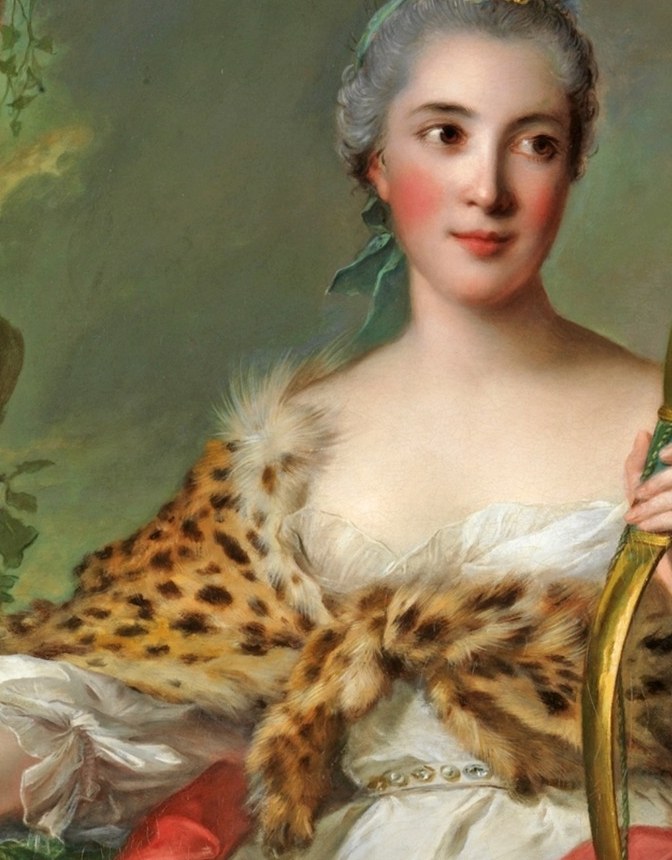
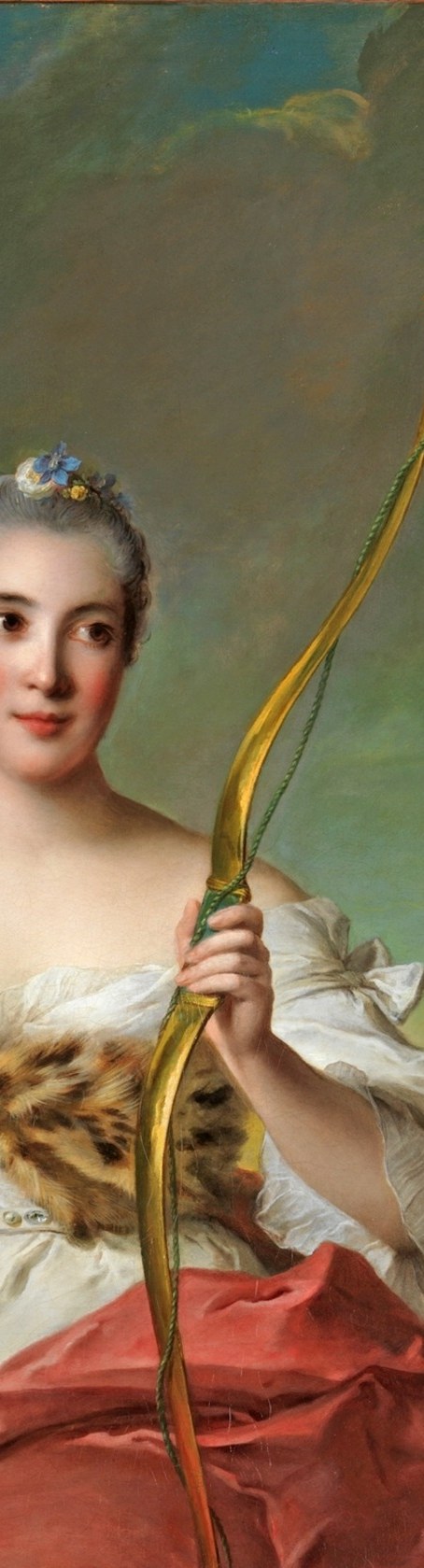
This is Jean-Marc Nattier's "Madame Bergeret de Frouville as Diana," painted in 1756 and now at The Metropolitan Museum of Art. Nattier was the go-to portraitist for women at Louis XV's court who wanted to be seen not as themselves, but as goddesses, muses, and heroines from classical myth. The fashion was so specific to this moment that it practically vanished with the French Revolution.
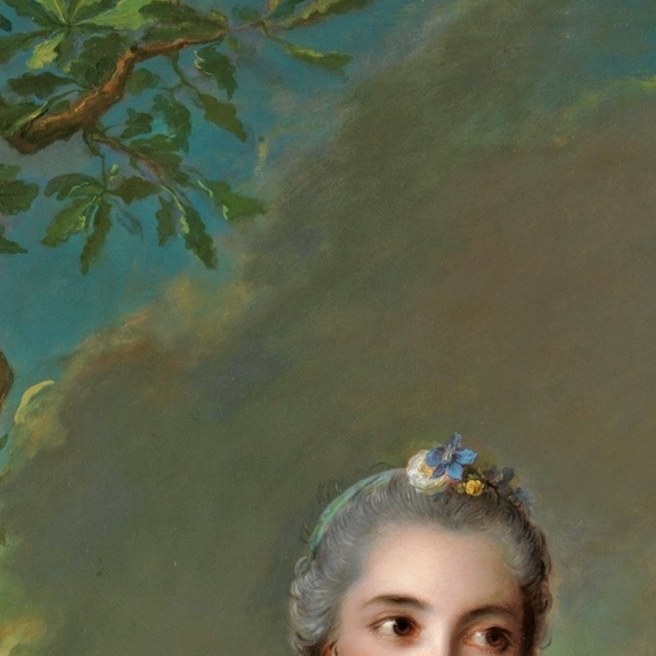
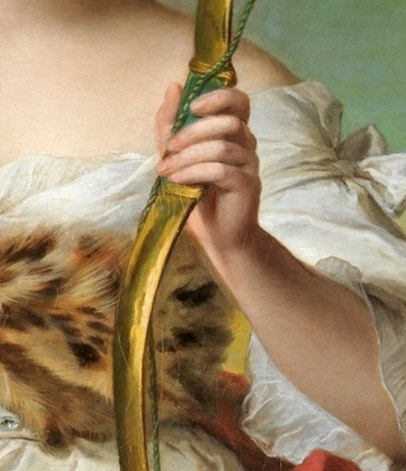
Look for the crescent moon nestled in her powdered hair, easy to miss on a first glance, but once you see it, the whole painting snaps into focus. It identifies her as Diana, the virgin goddess of the hunt. Then notice how her right hand grips the bow with complete aristocratic ease: no tension, no urgency. This is a huntress who has never needed to hurry.
Nattier was born in Paris in 1685 to artist parents, and by mid-century he had become the court's specialist in this strange, flattering genre, real faces wearing mythological costumes. The sitter here was the wife of a royal tax official, a woman of status performing divinity for a circle that understood the game perfectly.
The painting is a record of a world that believed in its own permanence. Twenty-three years after this canvas dried, the Bastille fell, and the market for portraits of aristocrats as gods evaporated overnight.
Details

Transcript
Paris, 1756. Louis XV has been king for forty-one years. At court, the most fashionable women commission portraits like this. Not as themselves, as goddesses. A crescent moon tucked into her powdered hair. The mark of Diana. Diana, goddess of the hunt. Virgin, archer, untouchable. Her hand grips the bow with the ease of someone who has never drawn one. This is Madame Bergeret de Frouville, wife of a royal tax official. Twenty-three years later, the Revolution will come for her world.