Sainte-Adresse by Monet, Claude
Claude Monet's 'Sainte-Adresse' from 1867, housed in an undisclosed collection, is not just a serene coastal landscape but a snapshot of a busy working harbor. While its tranquil atmosphere might first suggest an idyllic scene, a closer look reveals the industrial realities of the era.
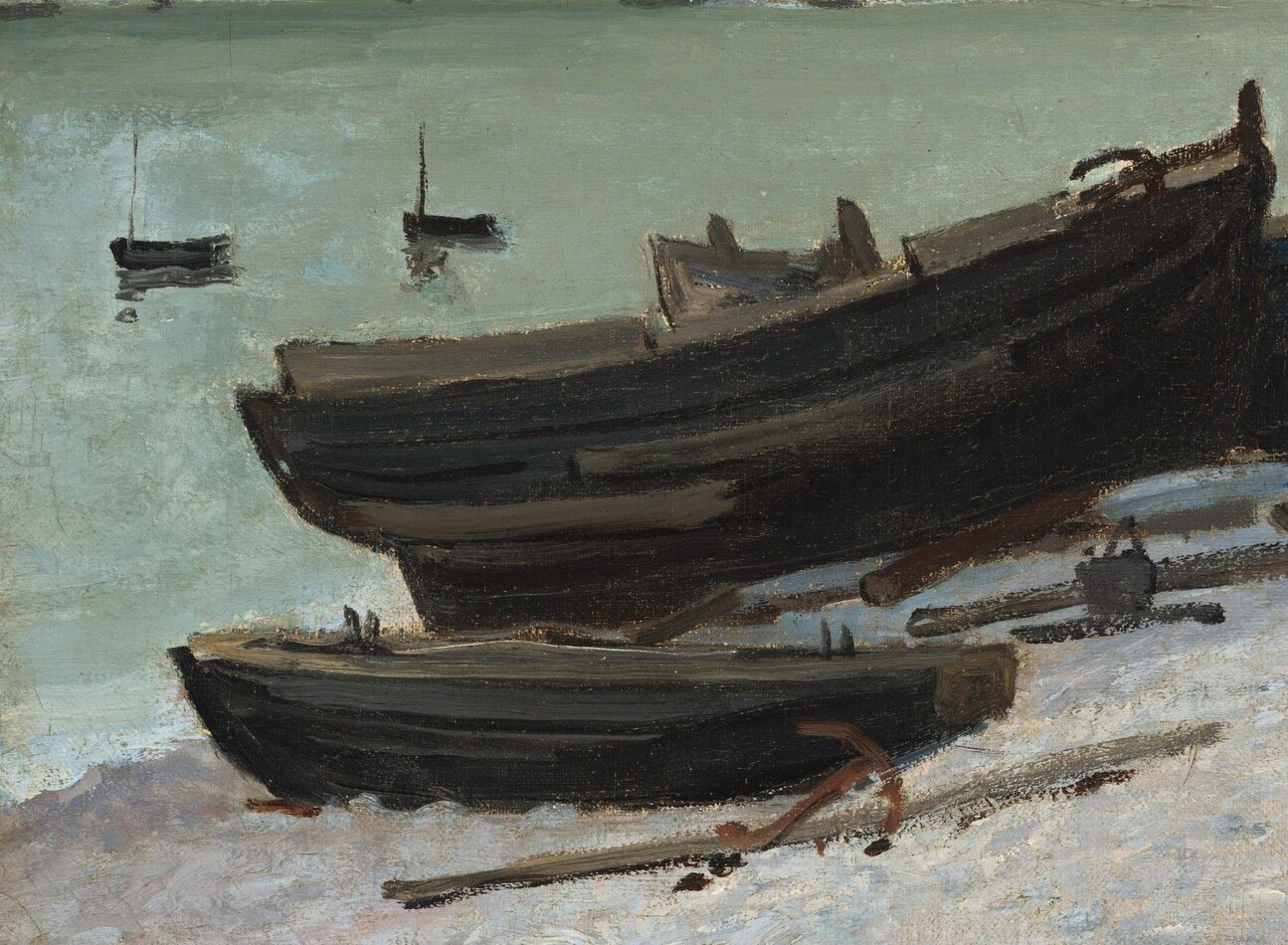
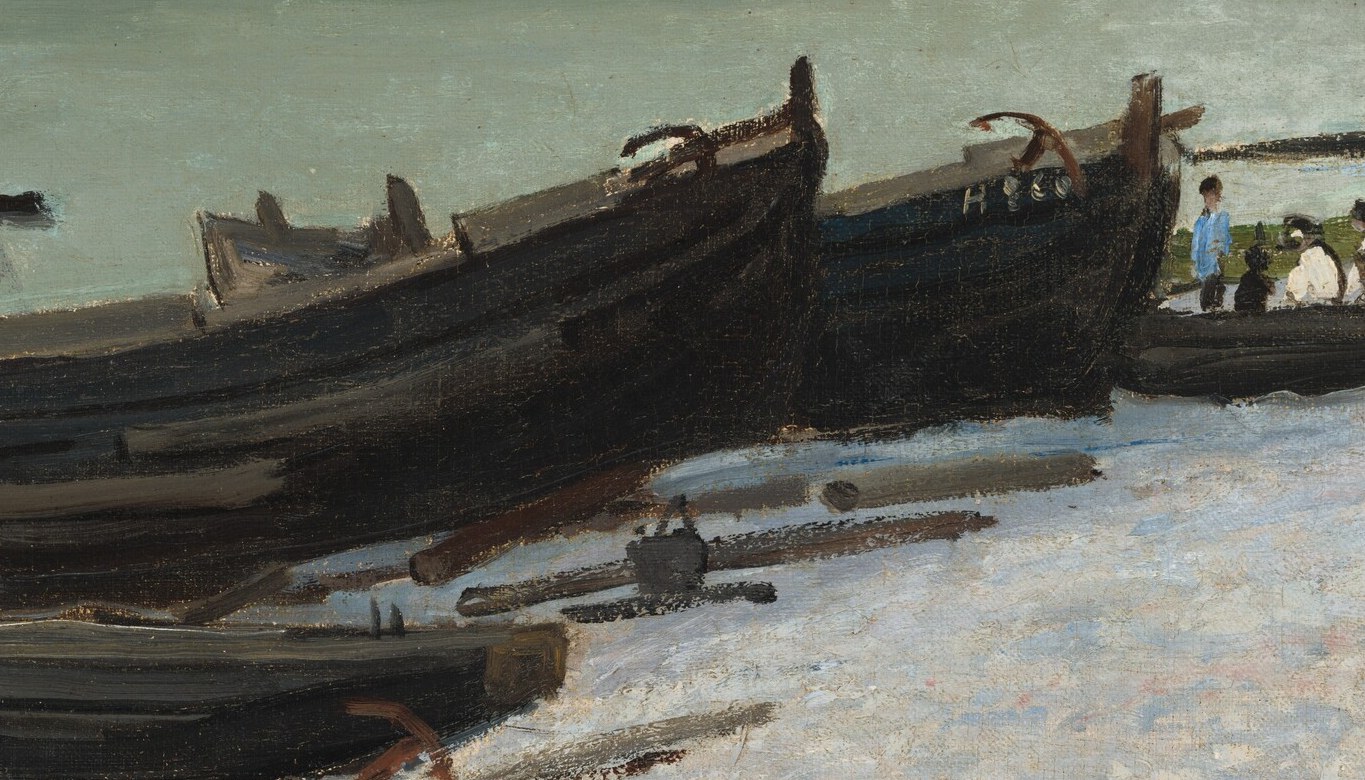
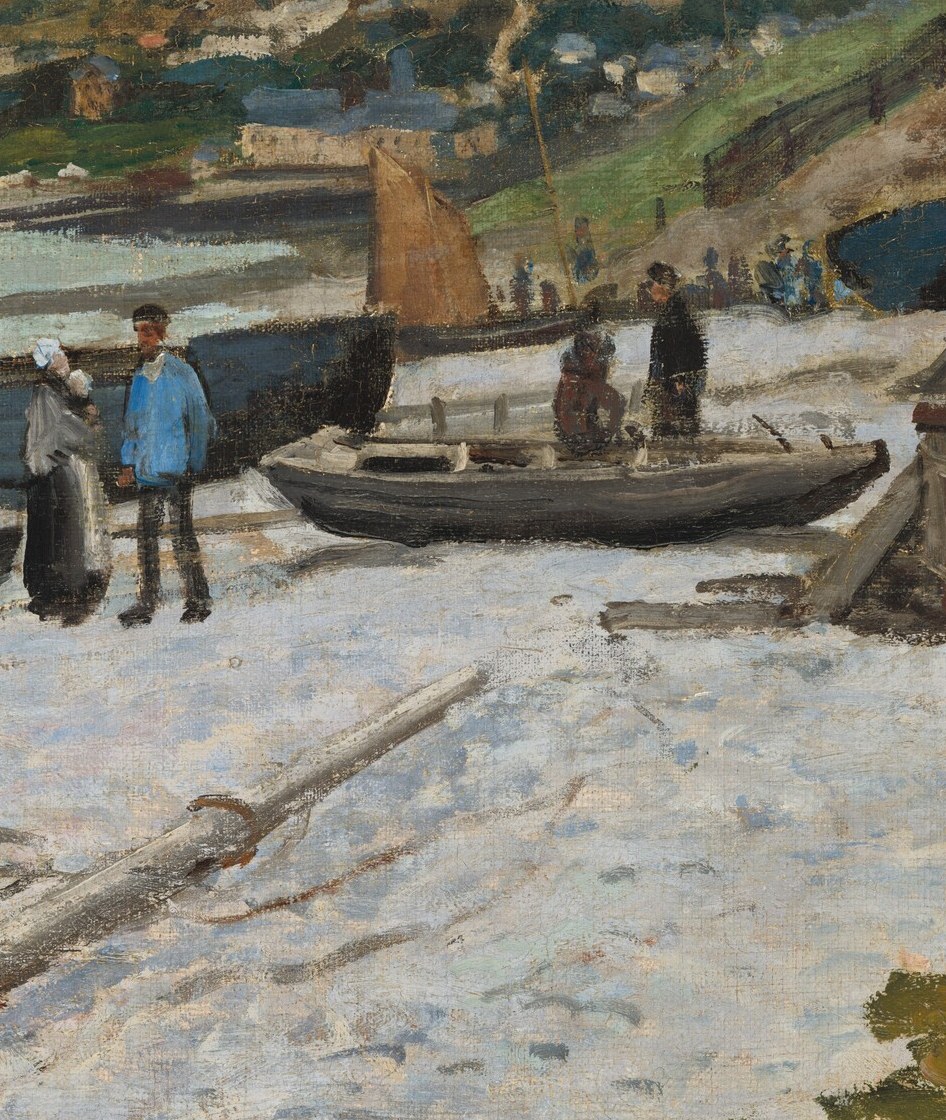
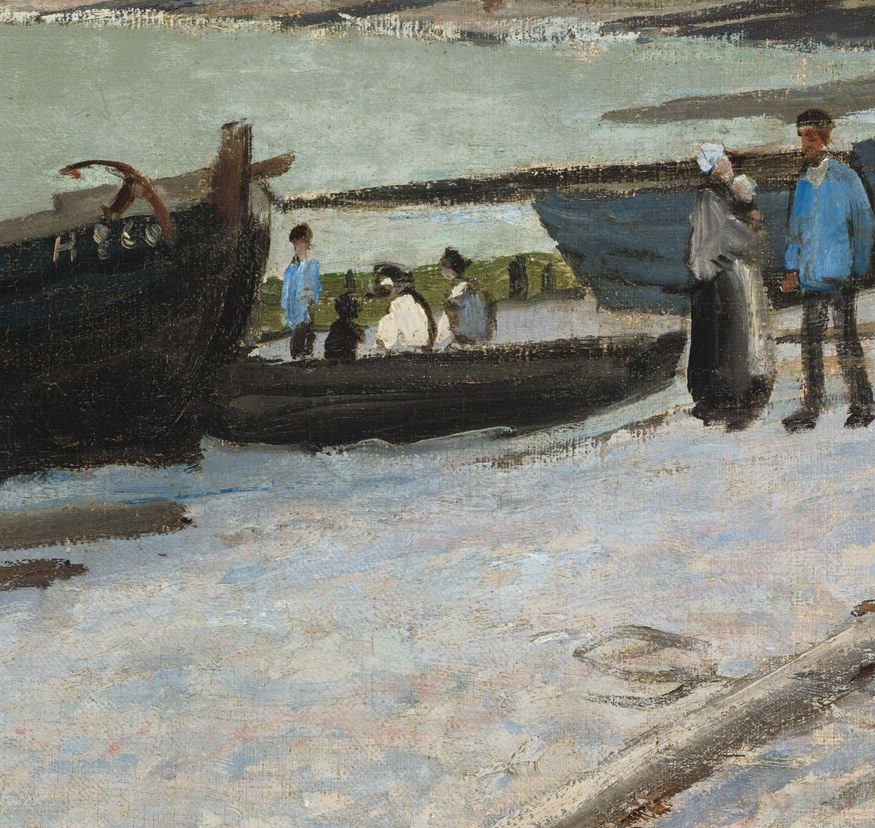
Observe the large, dark fishing boats beached for maintenance in the foreground and the wooden loading derrick on the right quay. These elements are not merely decorative; they depict the actual working life of Sainte-Adresse.
Monet, who grew up in nearby Le Havre, often captured the nuances of modern life within natural settings. His commitment to 'en plein air' painting allowed him to directly render these authentic details, moving away from purely romanticized views of nature. The small, almost hidden figures working between the boat hulls further emphasize the bustling activity of the port.
This painting is an important early work, showcasing Monet's developing Impressionist style and his interest in portraying both the beauty and the industry of the coastal environment. What other hidden details do you notice in his early works?
Details
Transcript
This coastal scene feels perfectly peaceful, almost empty. But in 1867, Sainte-Adresse was a working harbor, not just a resort. Monet included these massive fishing boats, beached for repair. And this wooden loading derrick on the right quay. Look closely: even tiny figures work between the hulls. Monet painted the reality of the working coast.