Still life of fish with a candlestick by Clara Peeters
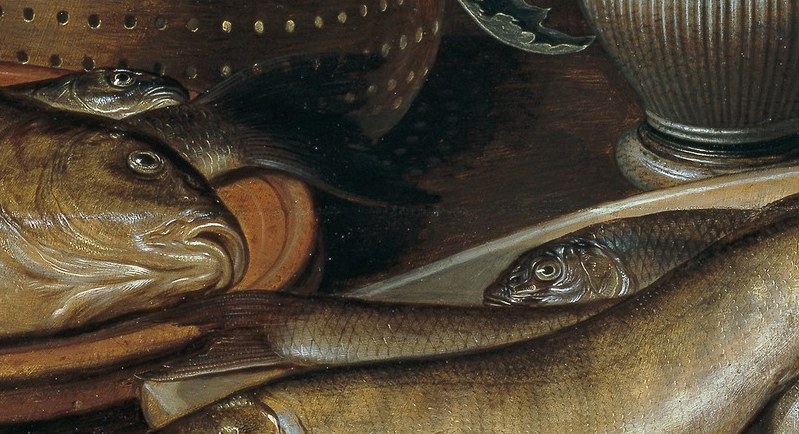
Clara Peeters's 'Still life of fish with a candlestick' (c. 1611, Museo del Prado) hides a remarkable secret. Despite the challenges for women artists in the 17th century, Peeters became renowned for her detailed still lifes.
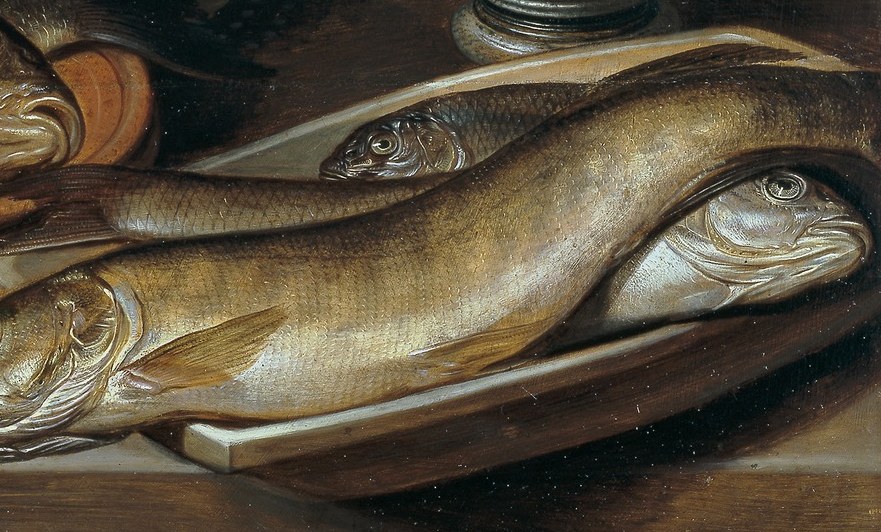
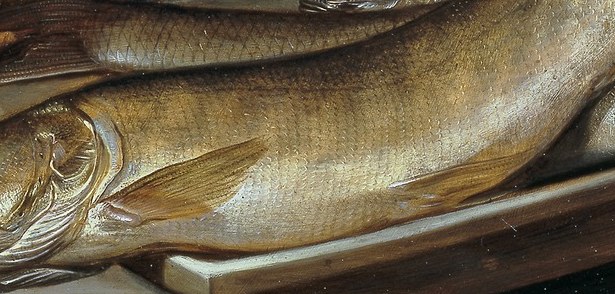
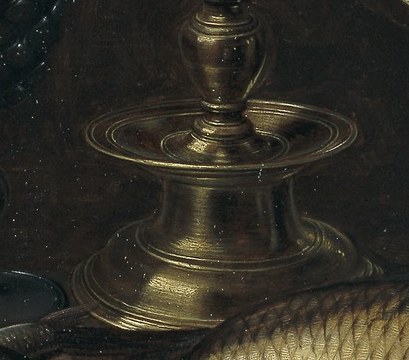
Observe the luxurious spread: glistening fish, a crab, an artichoke, and a snuffed candle. The arrangement exemplifies the Netherlandish 'breakfast piece' genre, meant to evoke bounty and perhaps the transience of life.
But look closer, at the edge of the fish platter. Peeters masterfully included a tiny, reflected self-portrait, a subtle yet defiant assertion of her presence and skill in a male-dominated art world.
This hidden detail allows us to see not just the artist's technical brilliance but also her personal courage.
Details
Transcript
The candle is snuffed, the meal unfinished. A bounty of fish fills the platter. This painter was Clara Peeters, born in Antwerp. She was one of the few women artists of her time. Look at the very edge of the plate. There is a tiny, reflected self-portrait. Peeters hid herself in plain sight.