Saints Catherine of Alexandria, Barbara, Agatha, and Margaret by Giovanni di Paolo
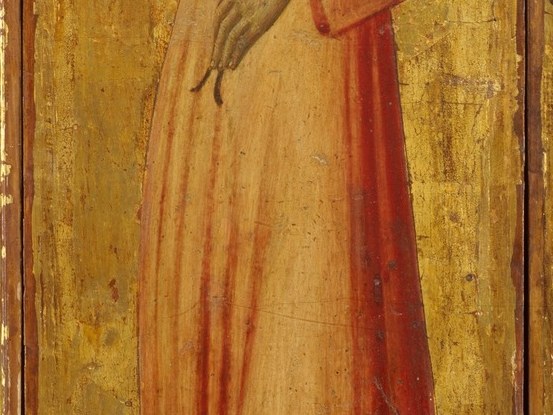
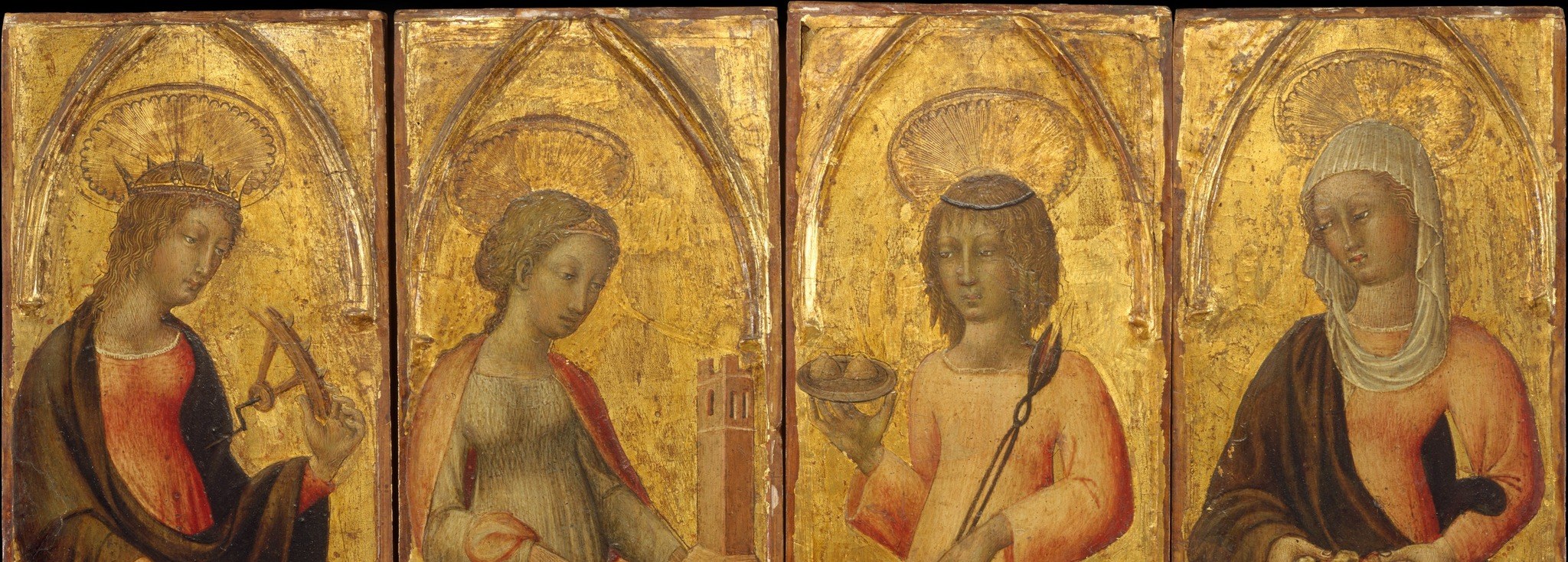
Saints Catherine of Alexandria, Barbara, Agatha, and Margaret by Giovanni di Paolo, painted in Siena around 1470 and now at The Metropolitan Museum of Art, is a luxury object built for private prayer. Every punched gold halo, every arcaded arch, and every grain of lapis-derived pigment cost money. Panels like this were not mass-produced frescoes for churches; they were exclusive commissions for families who wanted a portable piece of heaven in their palazzo, and the bill often exceeded a year’s wages for a skilled artisan.
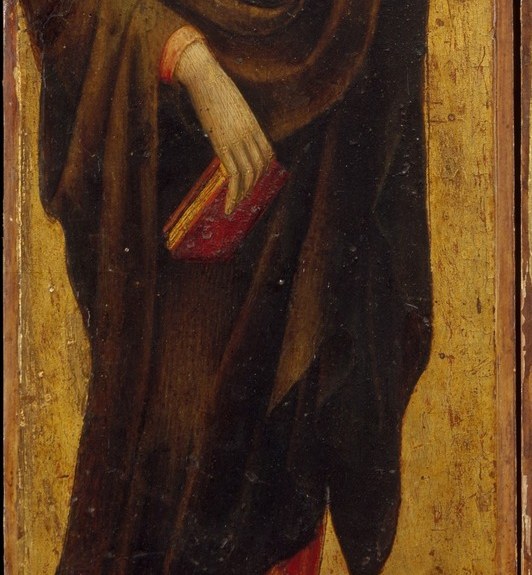
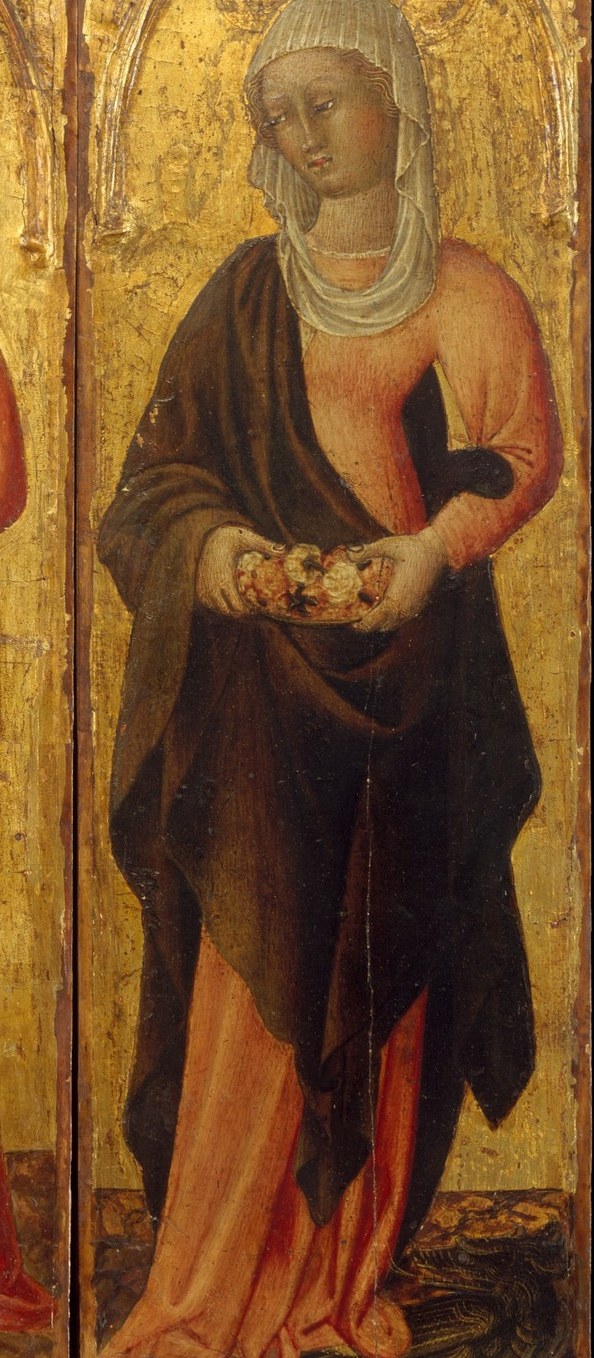
Look at what each woman holds. Catherine has a sword and a palm branch, the universal martyr’s sign of victory over death. Agatha carries a dish bearing what 15th-century viewers immediately recognized as her severed breasts. These are not merely props from a story; they are a devotional grammar, instantly legible to anyone in front of the panel, linking physical torment to spiritual triumph. The dark mantle wrapped around Margaret at the far right is the compositional anchor that keeps the quartet from floating away on all that gold.
The gold ground itself is the real architectural star. In candlelight, the carefully tooled and punched patterns would flicker, making the divine light behind the saints appear to pulse. Giovanni di Paolo was a master of the Sienese school, a tradition that clung to its elongated figures and flat, rhythmic drapery long after Florence had moved toward naturalism and perspective. He painted Dante manuscripts and altarpieces alike until his death in 1482, and his reputation, which faded for centuries, was revived by twentieth-century scholars who recognized his strange, almost dreamlike intensity.
Four women, four objects, four arches: the design is a visual litany. What a family paid for, beyond the gold, was the assurance that these saints were present in the room, looking down in their long, still silence. The question tucked inside the beauty is a hard one: why did such immense wealth gravitate toward such graphic suffering?
Details

Transcript
1470. A wealthy patron wants a panel of four female saints. Catherine holds a sword and a palm: beheading and victory. Agatha carries a dish bearing her own severed breasts. Margaret is a study in restraint. A dark cloak seals the right edge. This is tempera on wood, not canvas. The gold required guild punches. A panel this size would cost a prosperous family more than a year’s rent.