Virgin and Child by http://www.wikidata.org/.well-known/genid/df116f9c050c2eaf60ad145ea349c2fb
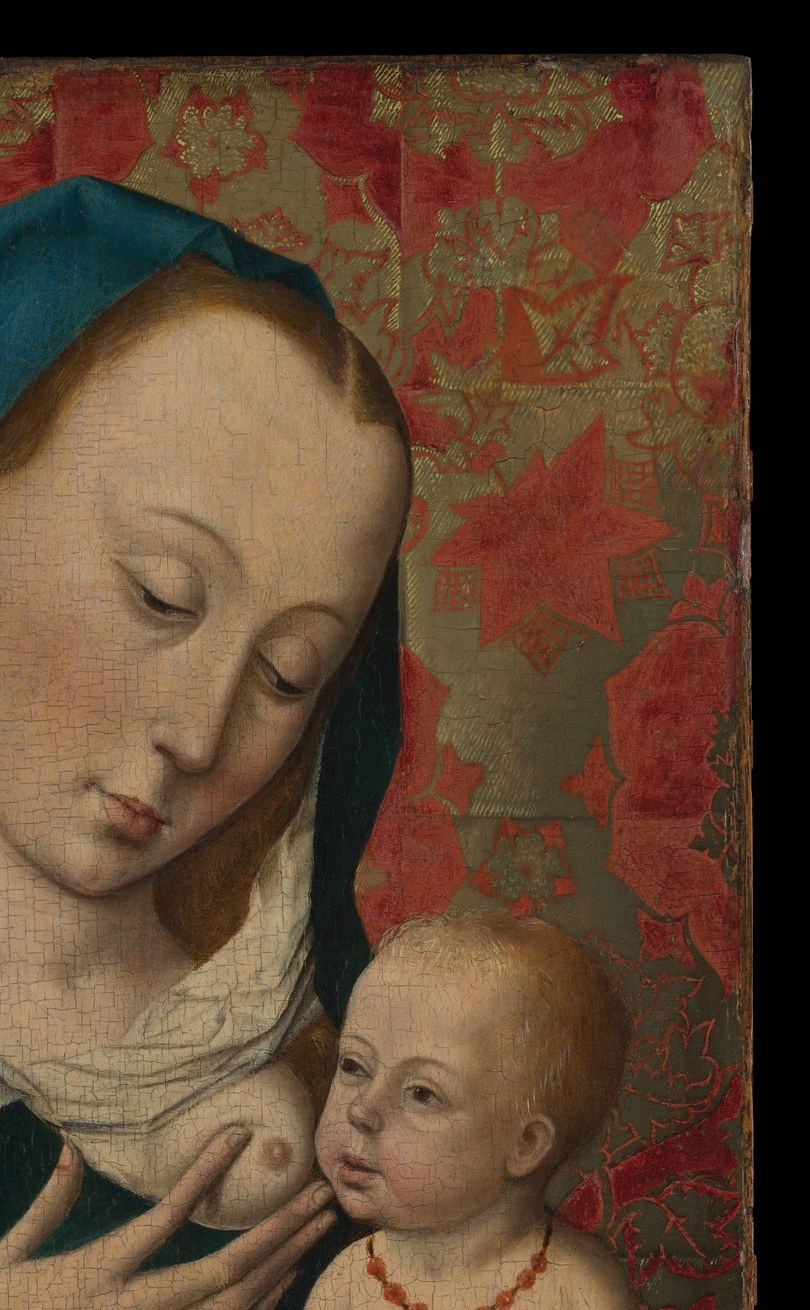
This is the Virgin and Child, painted around 1475 by an unknown artist. It's a masterclass in hidden meaning, with almost every element carrying a symbolic weight for its original viewers.
Look closely at the red coral necklace the child wears. This was a common amulet for protection, but its color here hints at the blood of Christ's Passion. Notice also the child's hand reaching toward Mary's breast; in Flemish art, this signifies spiritual nourishment, the grace of God.
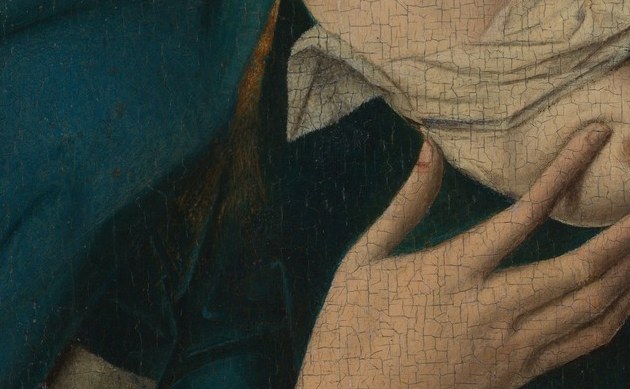
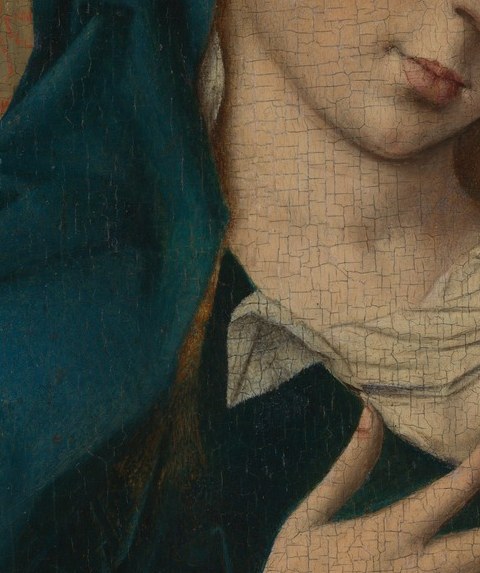
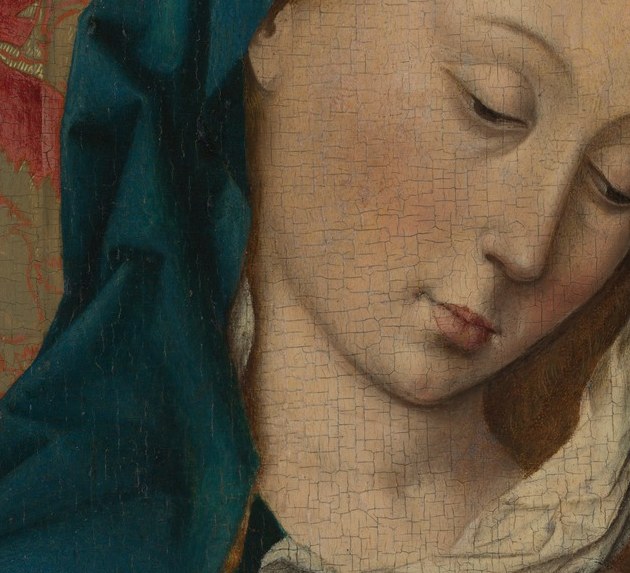
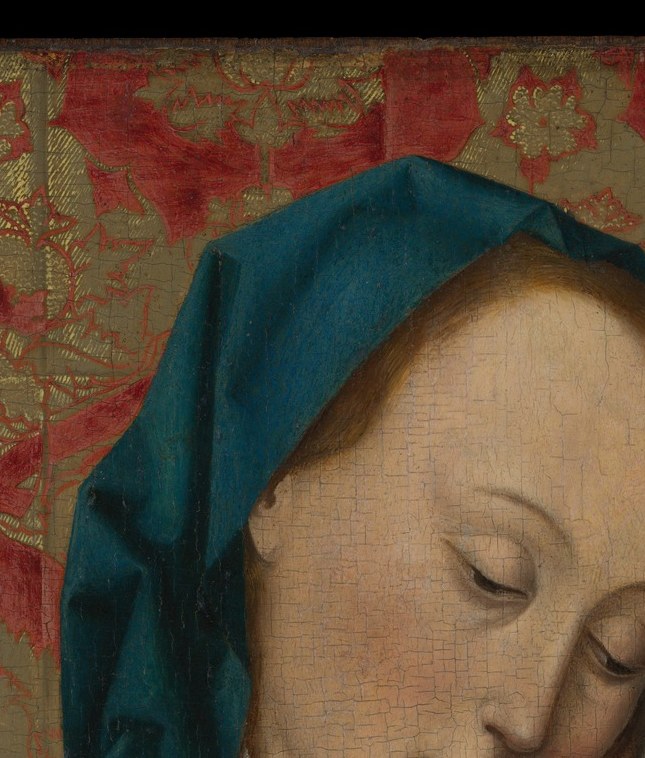
The rich brocade background, with its pomegranate motifs, symbolizes resurrection and fertility. The blue mantle worn by Mary was the most expensive pigment, denoting divinity, while the glimpse of red beneath signifies sacrifice. Together, these coded objects present a dense theological message about divine grace, sacrifice, and rebirth.
This painting rewards slow looking, revealing layers of meaning beyond its tender depiction of mother and child.
Details
Transcript
Look at the red coral necklace. It prefigures the Passion. See the child reaching toward Mary's breast. This touch means nourishment as grace. Her gold and red brocade background. Its pomegranates mean resurrection. The gold trim shows blue over red. Divine blue over sacrificial red.