The Approaching Storm by Troyon, Constant
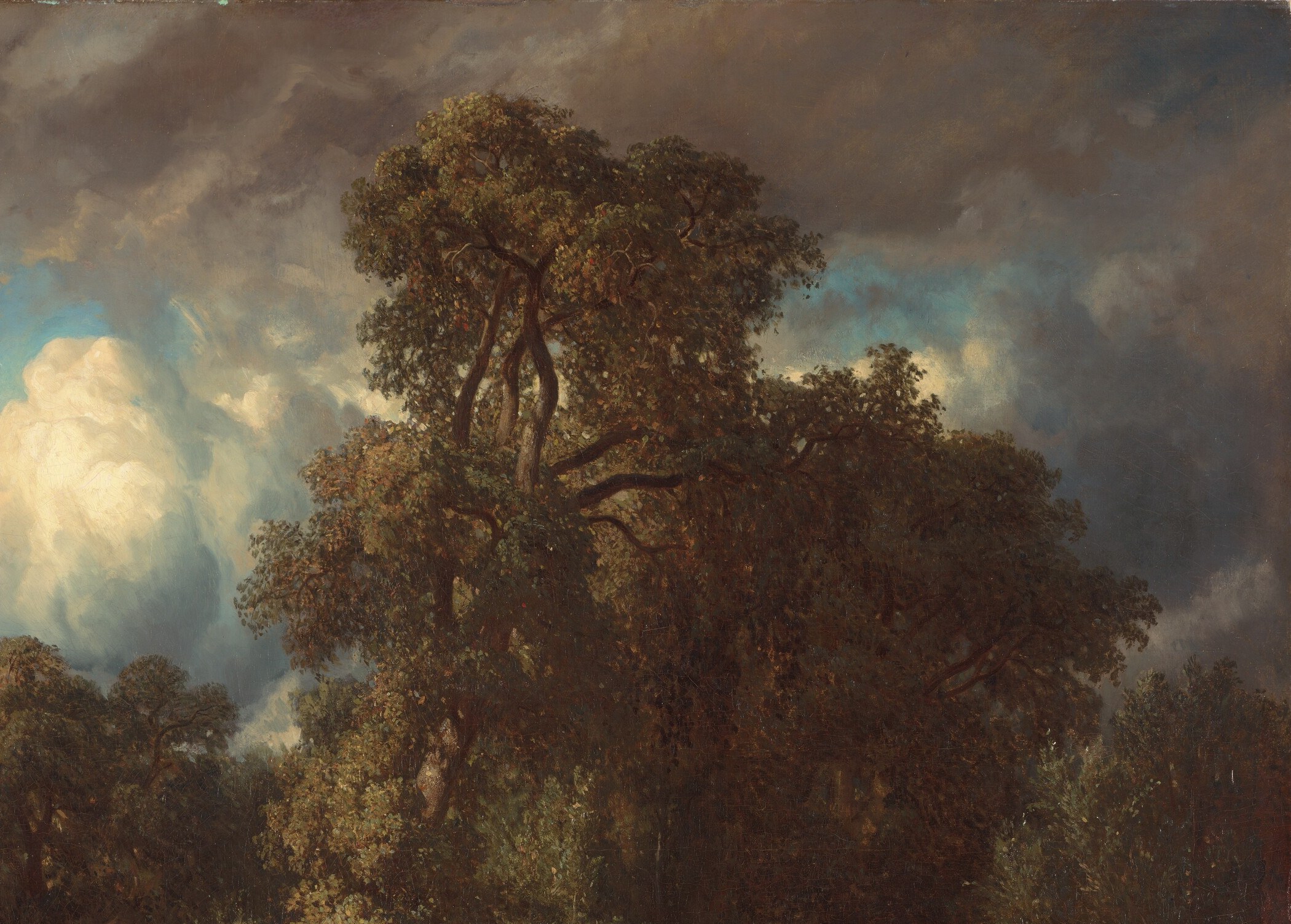
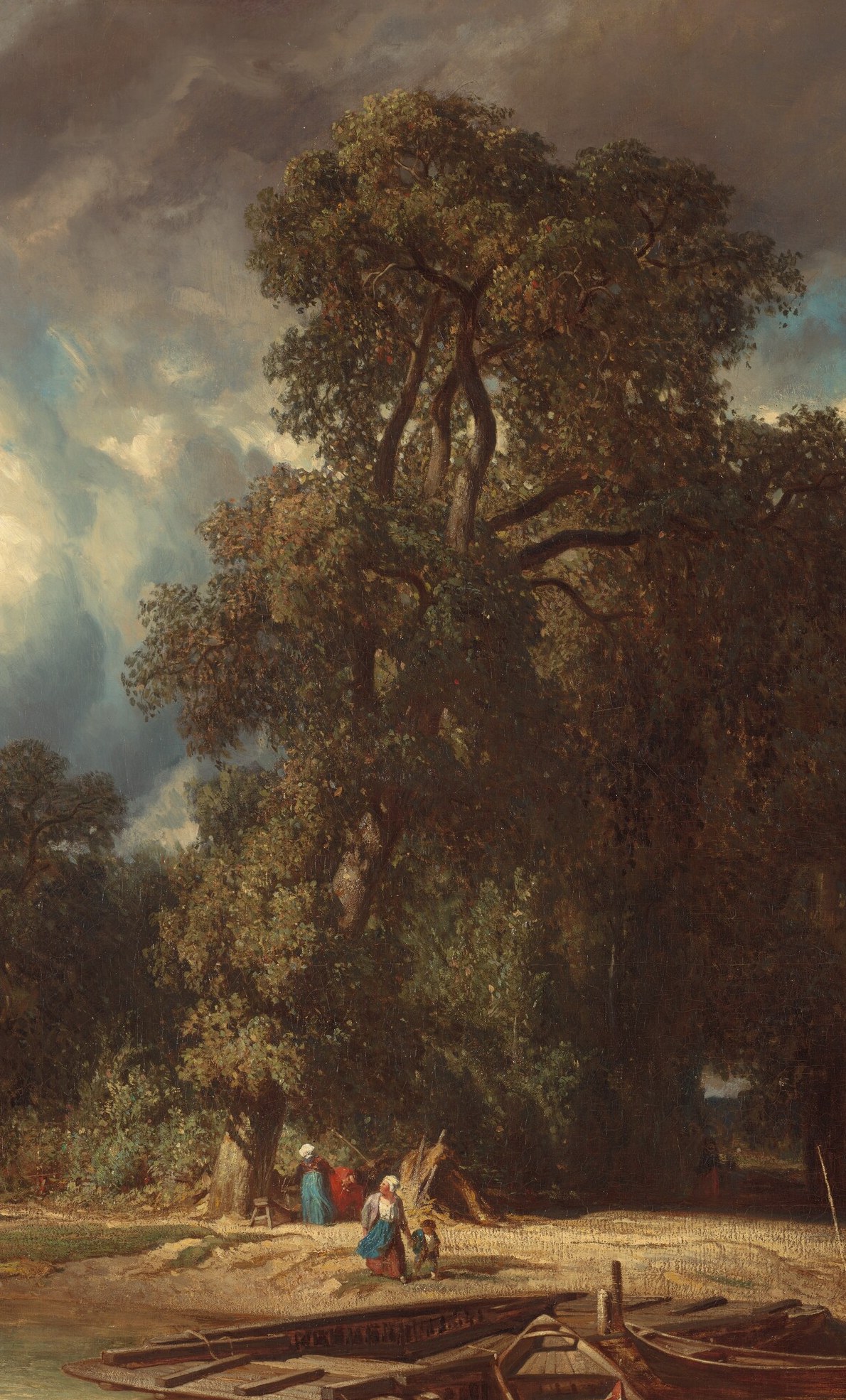
Constant Troyon painted The Approaching Storm in 1849, decades before Impressionism made painting outdoors a movement. He was part of the Barbizon school, a circle of French artists who left their studios to stand in actual fields and forests around the village of Barbizon. Their goal was to capture light and atmosphere directly, not reconstruct them from memory. This small oil on canvas, later mounted on board, lives now in the collection of the National Gallery in London.
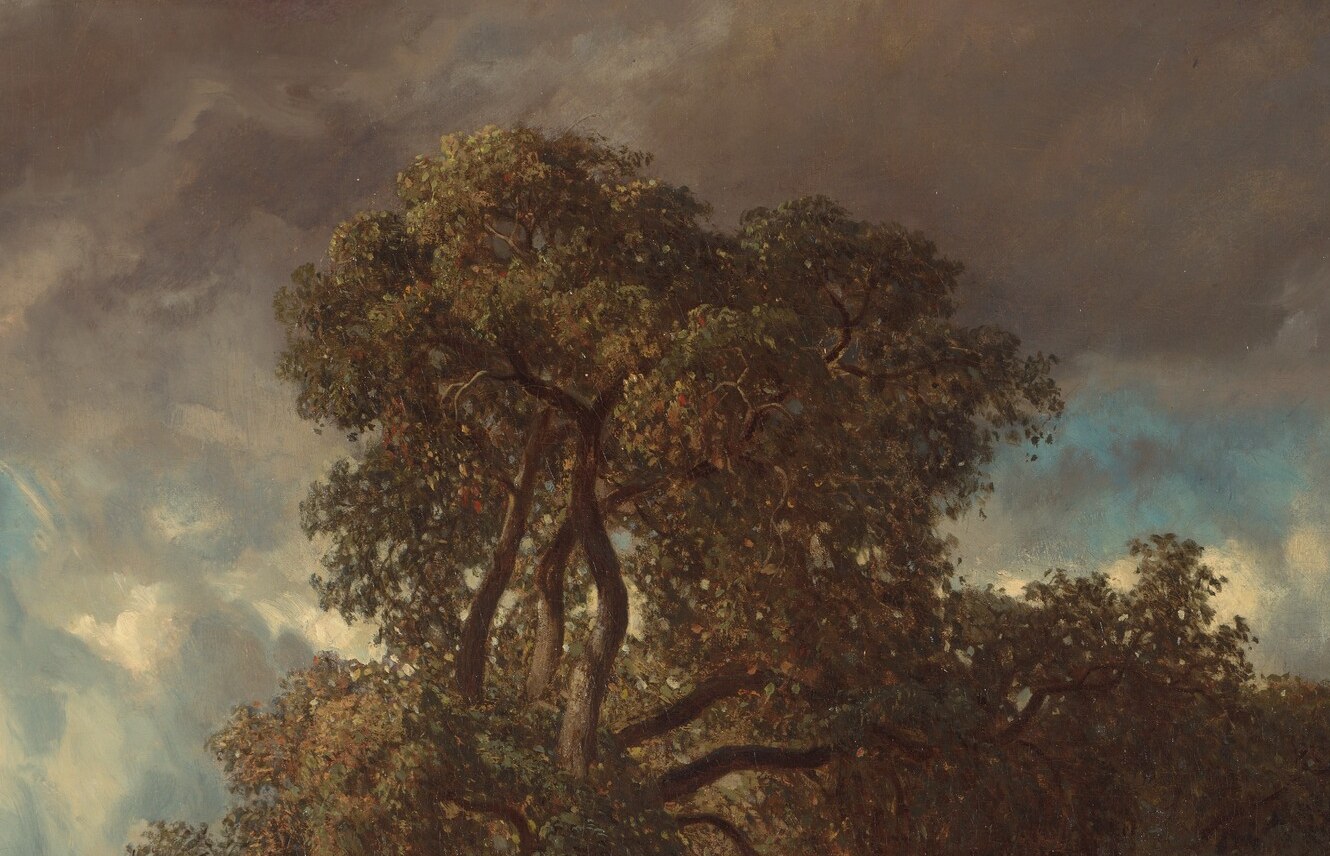
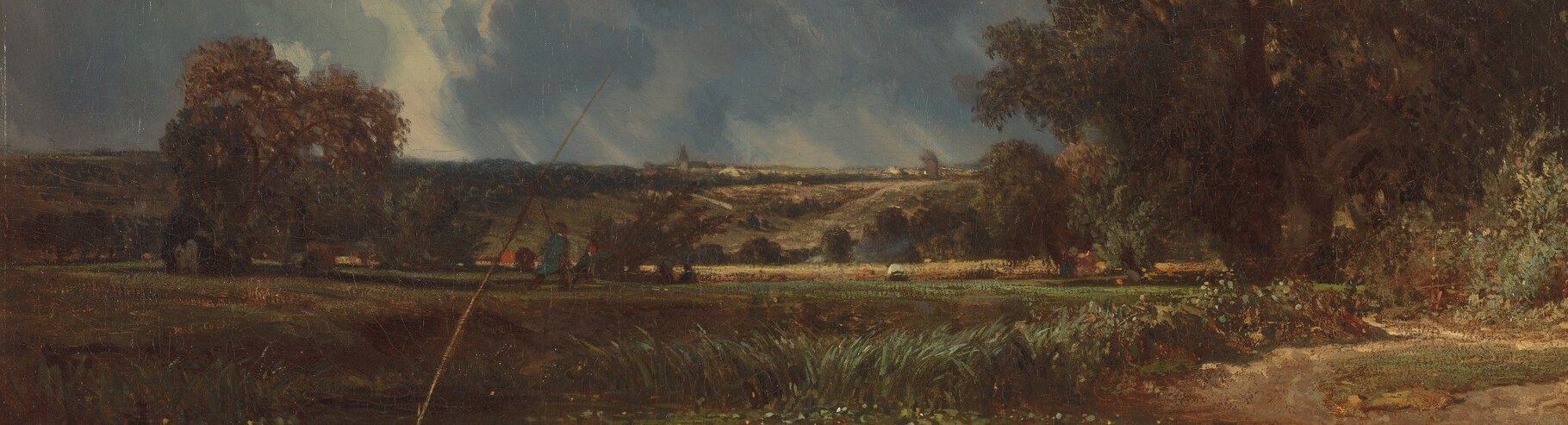
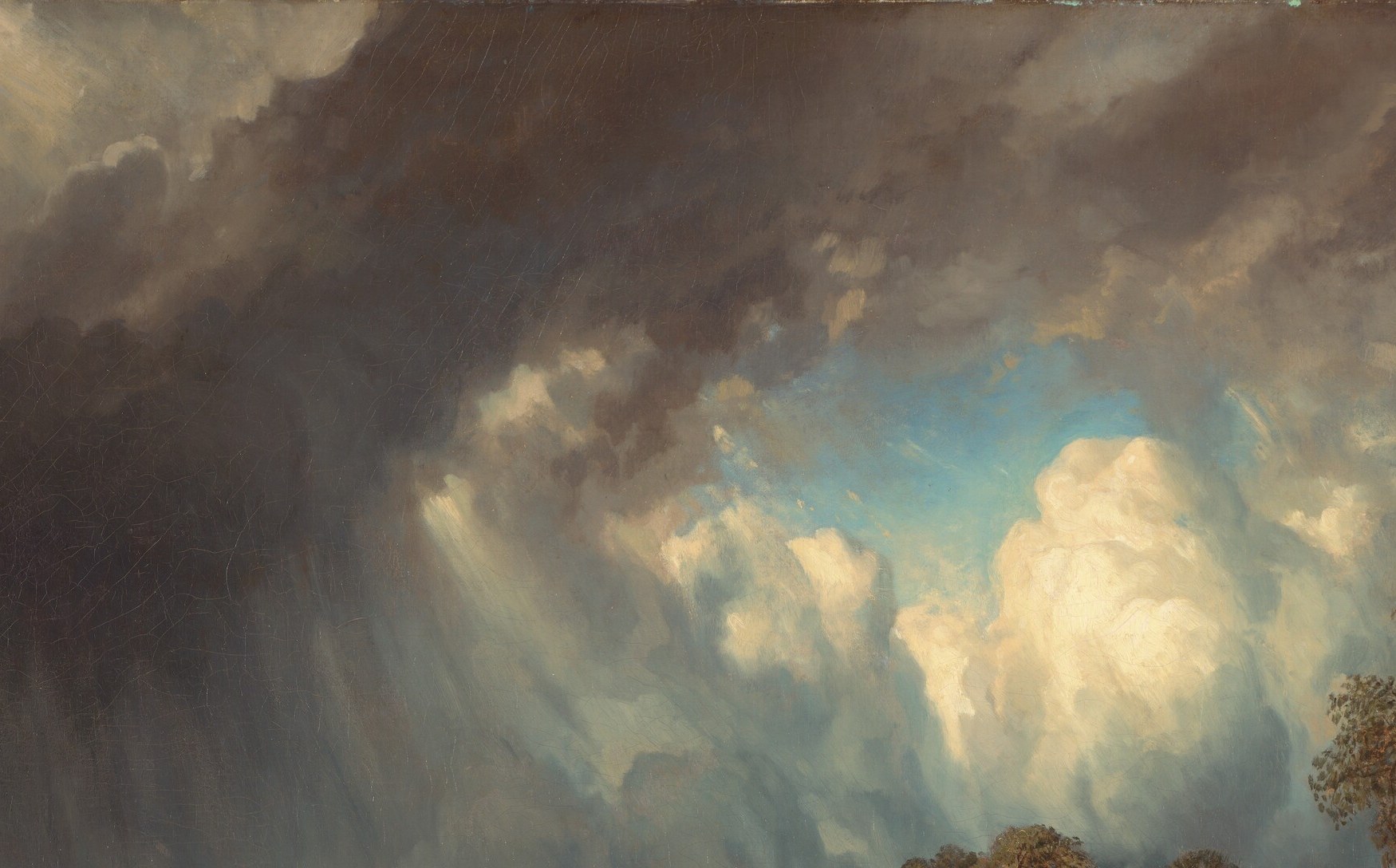
Look first at the contrast between the water and the sky. The foreground river is so still it mirrors the clouds, doubling the storm's presence across the lower half of the painting. Then shift your eye upward: the cloud mass on the right is built with wet paint worked into wet paint, the edges soft and smeared, while the agitated crown of the central tree is dry, loose scumbling, separate brushes, separate hands, same canvas.
Troyon made his early career on landscapes like this one before pivoting, surprisingly, to animal painting and gaining international fame for his cows and sheep. The Approaching Storm comes from before that turn, when he was still testing how much weather a flat surface could hold. That thin band of pale light at the horizon is the painting's emotional clock: it says the storm is minutes away, not hours, and it will arrive in silence.
What do you notice first, the calm below, or the chaos above?
Details
Transcript
The trees are not moving. The water is flat. But up here, it's all motion. Troyon's brush turns into loose, dry scumbling. The clouds are built wet-into-wet, pushed while they were still soft. He did all of this while painting outside, in one session. That pale strip is the last clear light before the storm closes.