The Toilers of the Sea by Albert Pinkham Ryder
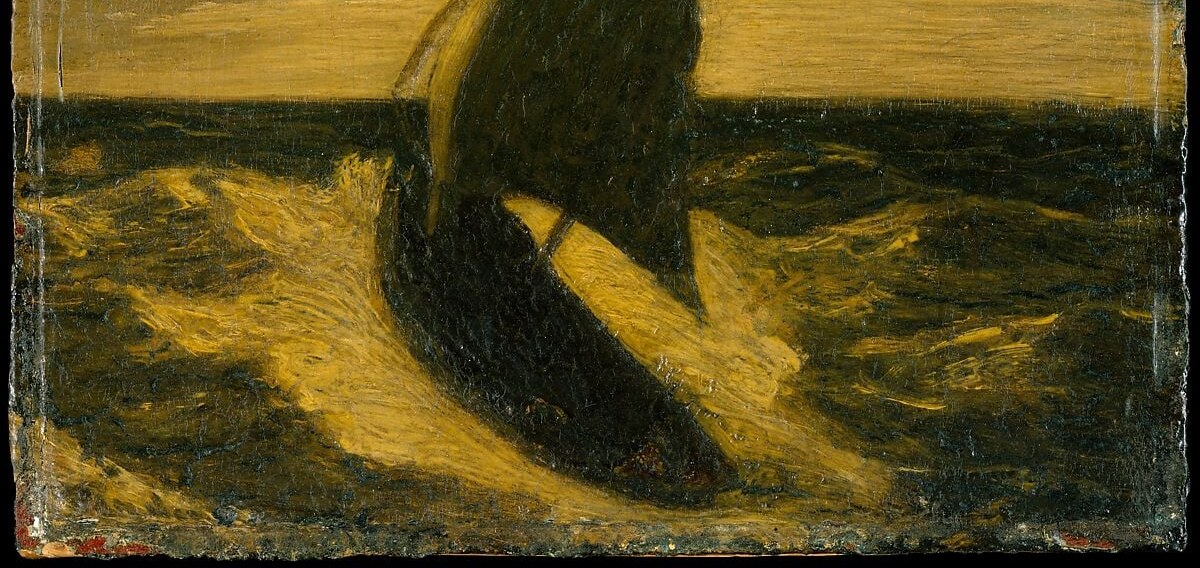
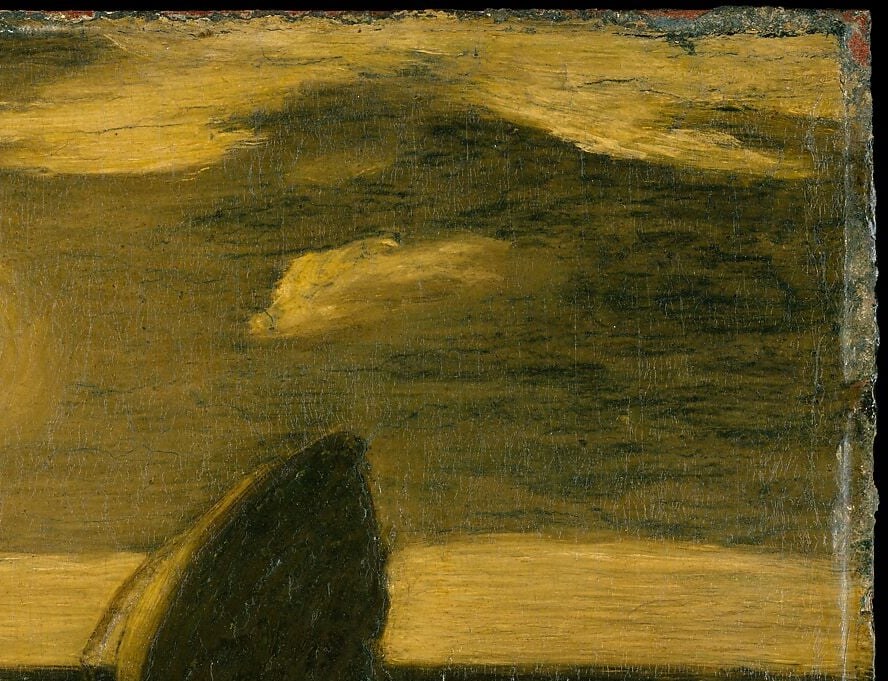
Albert Pinkham Ryder's "The Toilers of the Sea" (ca. 1880-85), held at the American Wing, is a prime example of his distinct style, characterized by its dreamlike atmosphere and symbolic depth. This oil on wood panel painting draws you into a turbulent, nocturnal seascape.
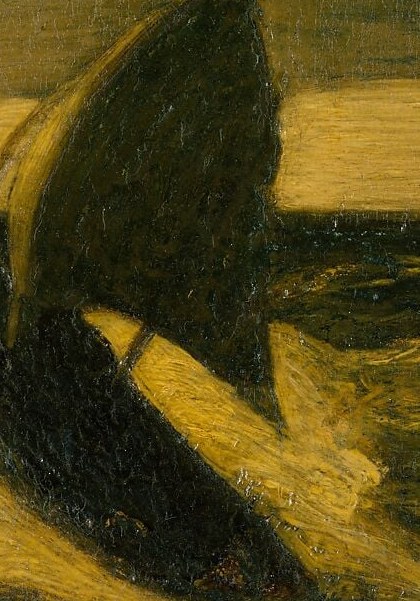
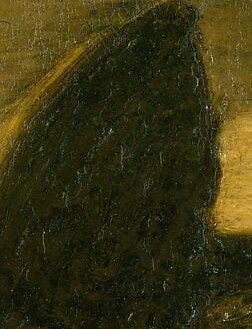
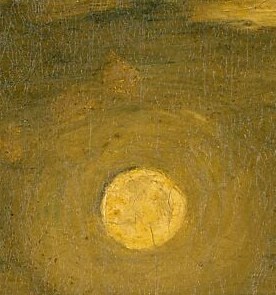
Notice the churning, luminous waves and the lone figure clinging to the mast. Ryder built up this scene using multiple layers of thin, translucent glazes directly onto a wood panel, which gives the painting its unique glowing depth and enhances the sense of mystery and isolation.
Ryder was known for his highly individualistic and often melancholic interpretations of natural scenes, moving away from direct observation towards symbolic, romantic themes. This piece captures the sublime power of the ocean and the fragility of human endeavor within it, reflecting his characteristic focus on atmospheric effects and emotional resonance.
What do these 'toilers' mean to you in the face of such a powerful sea?
Details
Transcript
This painter was known for dreamlike, atmospheric scenes. He preferred wood panels to canvas, layering thin glazes. The technique creates this eerie, glowing depth in the water. A lone figure clings to the mast, fighting the storm. This reflects the artist's view of humanity's fragile struggle. Nature, vast and powerful, remains indifferent to it.