Langebro, Copenhagen, in the Moonlight with Running Figures by Christoffer Wilhelm Eckersberg
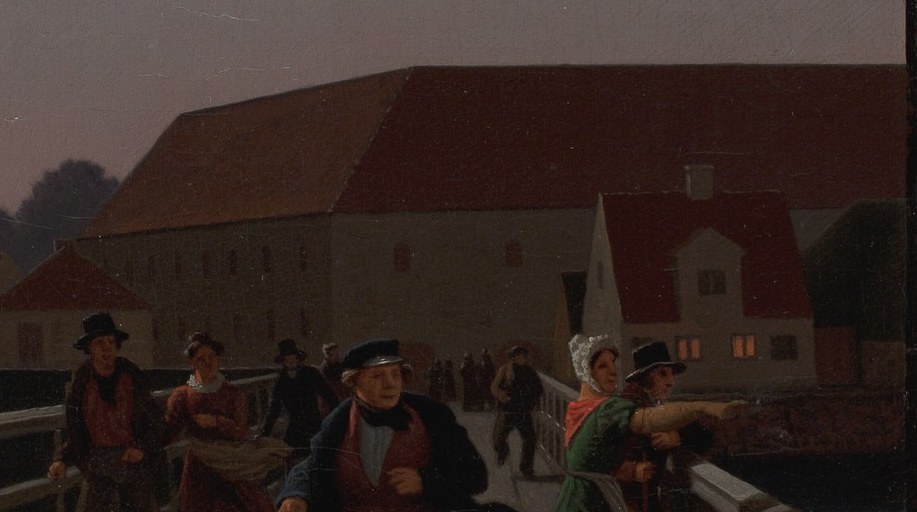
Christoffer Wilhelm Eckersberg's "Langebro, Copenhagen, in the Moonlight with Running Figures," painted in 1836, is an iconic work from Denmark's Golden Age, housed at the Statens Museum for Kunst. However, this seemingly tranquil night scene once held a scandalous secret.
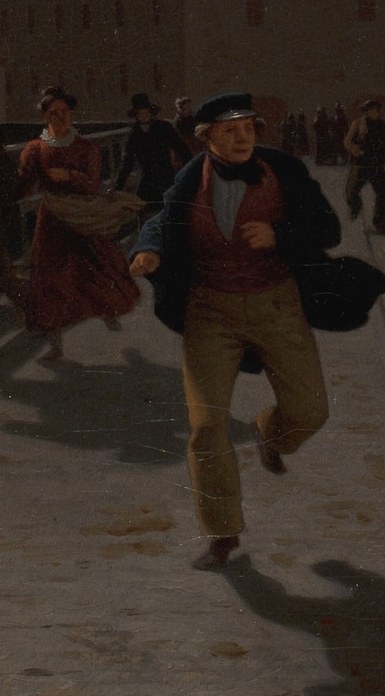
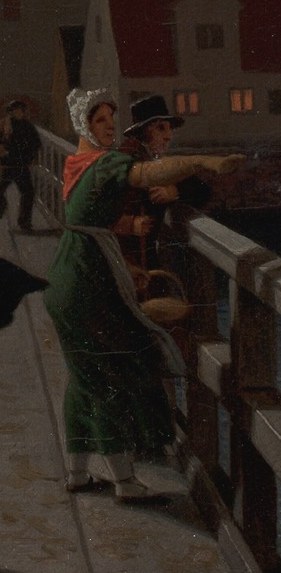
Observe the bridge, where figures are in motion under the full moon. Amidst the movement, a woman in a green dress stands by the railing. It is this figure who became the subject of controversy.
Originally, this woman was deemed "indecent" by contemporary standards and was completely painted over. For a time, she was hidden from public view, a testament to the societal norms and censorship of the era. Eckersberg, often called the "Father of Danish Painting," captured everyday life, but even his work could fall victim to moral scrutiny.
Today, the painting has been restored, and the woman in green is visible again, allowing us to see the artwork as the artist intended. What does her presence add to the scene for you?
Details
Transcript
This moonlit bridge looks peaceful, at first. A full moon illuminates the entire scene. But people are running across the bridge. The painter was known as the 'Father of Danish Painting'. And this work, from 1836, was quite famous. But look closely, there is a small detail. This woman was once entirely painted over. She was considered too indecent for public view.