The Artist's Garden by Blakelock, Ralph Albert
Ralph Albert Blakelock, an American painter, created "The Artist's Garden" around 1884, now held in a private collection. It's a prime example of his mature style, especially his distinctive impasto technique.
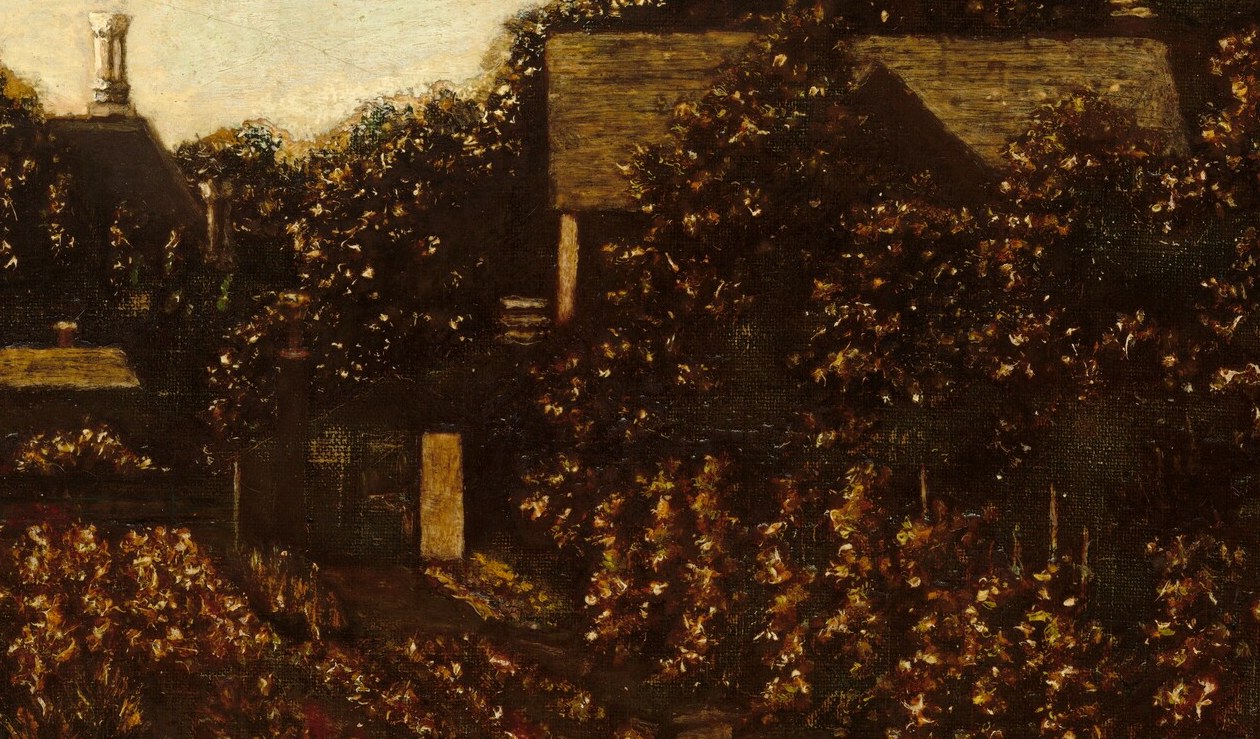
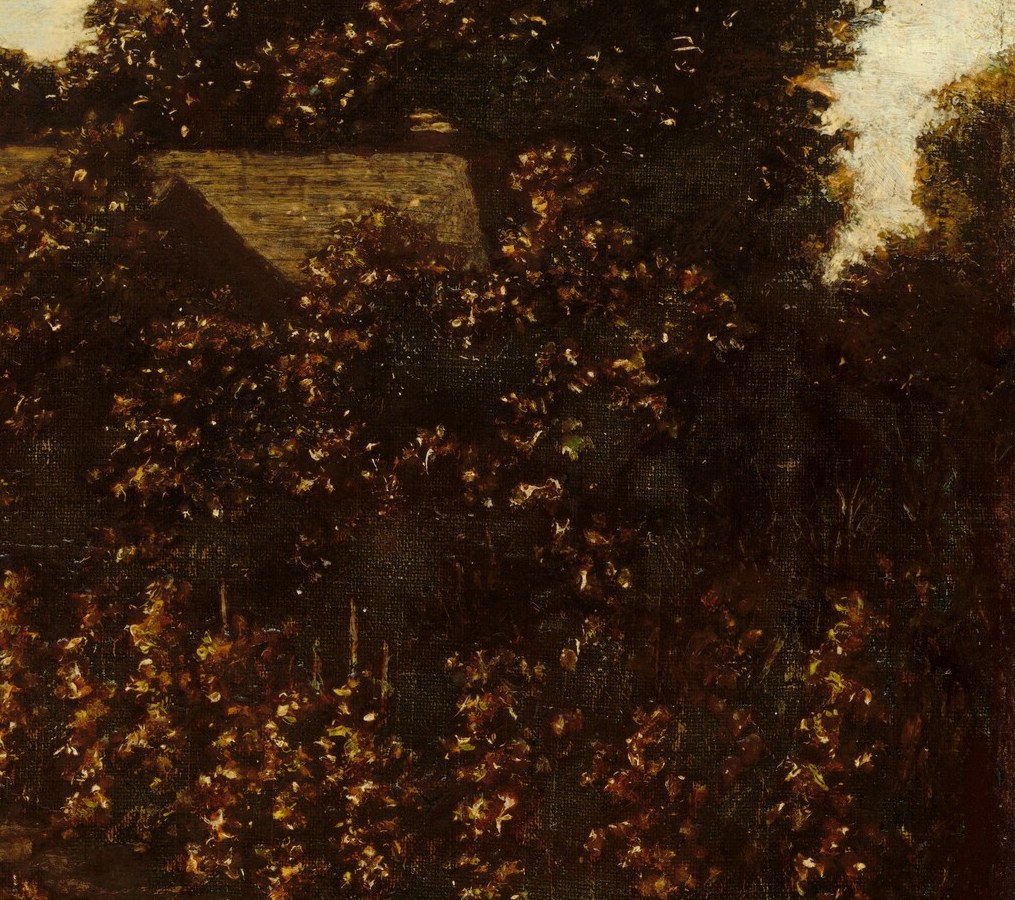
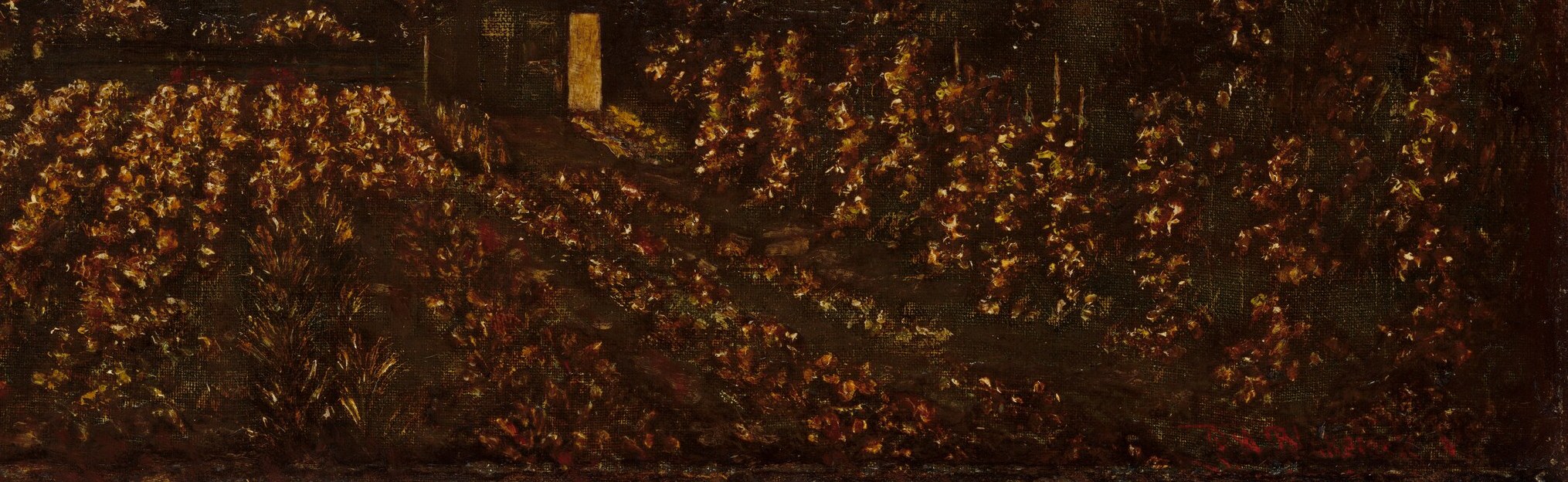
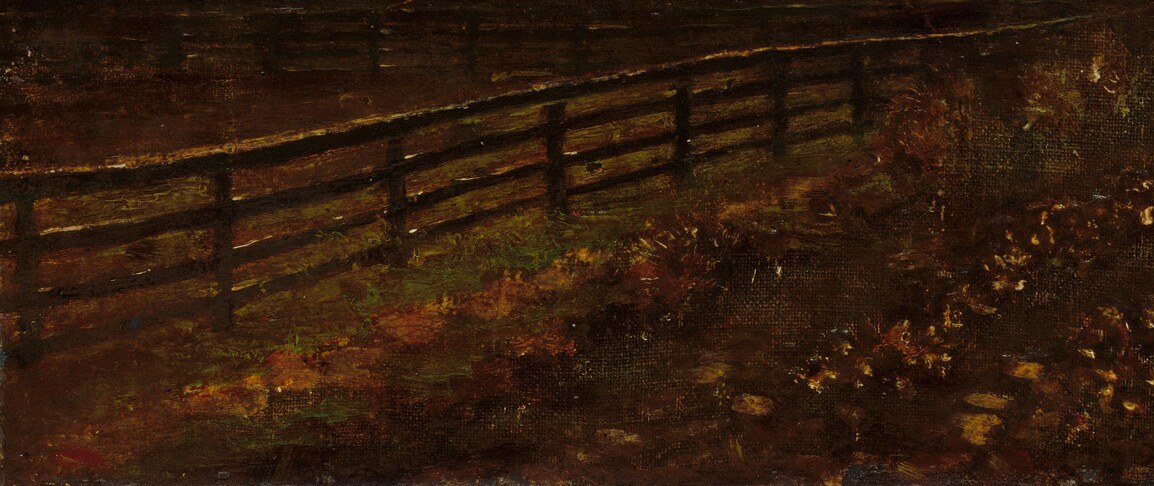
Notice the thick, textured brushstrokes, particularly in the dark green foliage. This method of applying paint thickly creates a palpable sense of depth and a tactile surface, making the painted landscape almost three-dimensional.
Blakelock increasingly explored these atmospheric effects in his landscapes during the later period of his career. The muted palette and the emphasis on light and shadow evoke a sense of quiet contemplation, reflecting nature's cycles.
His unique approach to paint application is what makes his work so recognizable and gives his tranquil scenes a profound sense of presence.
Details
Transcript
This painter used thick, textured brushstrokes in his landscapes. His impasto technique gave the foliage a palpable sense of depth. Look closely at the surface of the painting here. The paint itself is visible, creating a tactile surface. This style became characteristic of his later work, around 1884. It evokes a quiet contemplation of nature's cycles.