Sacrifice of Iphigenia by Arnold Houbraken
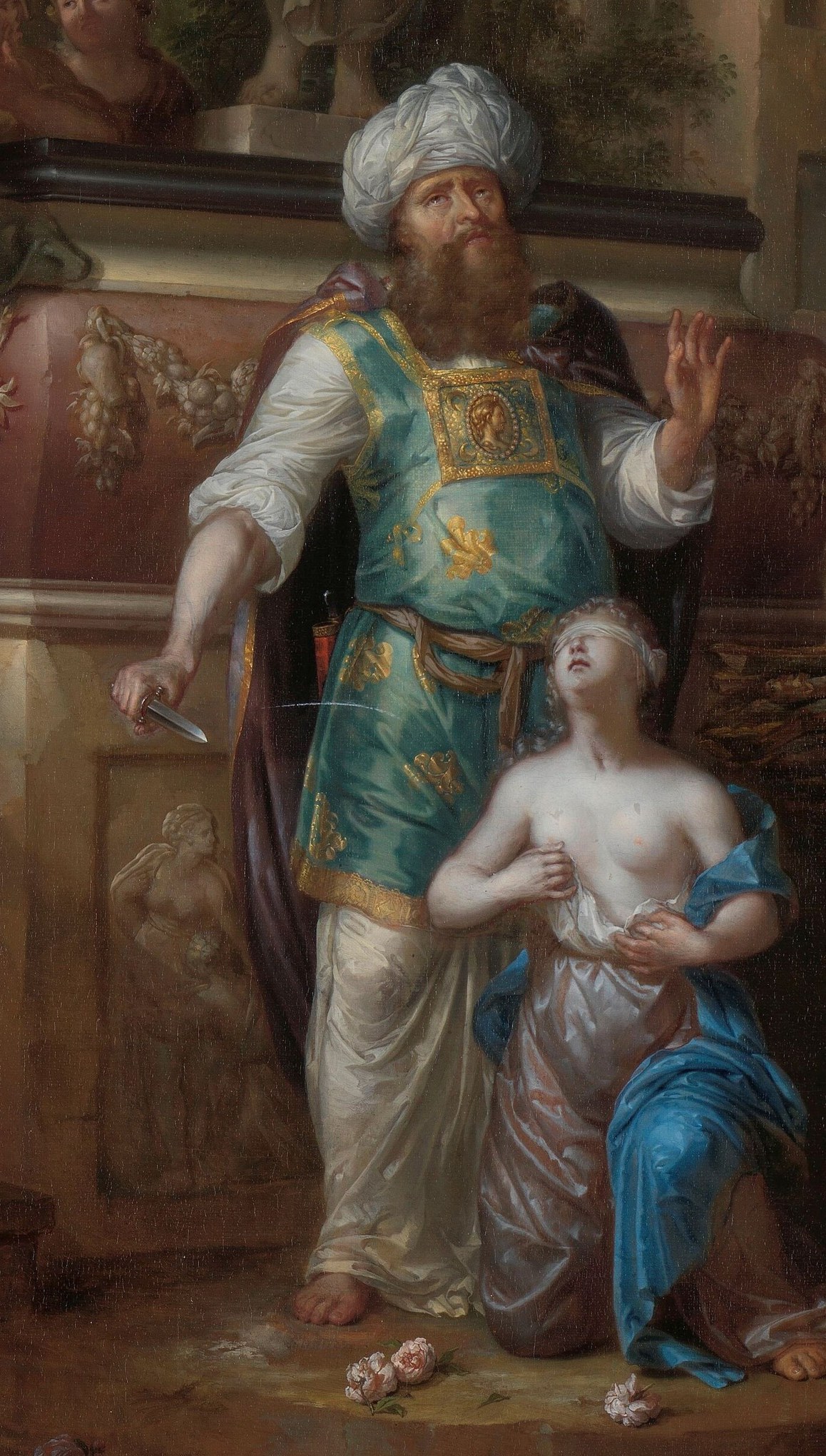
Arnold Houbraken’s *Sacrifice of Iphigenia* (1695) captures a pivotal, agonizing moment from Greek mythology. This oil painting, part of the Rijksmuseum's collection, depicts King Agamemnon’s terrible choice: sacrifice his daughter, Iphigenia, so his fleet can sail to the Trojan War.
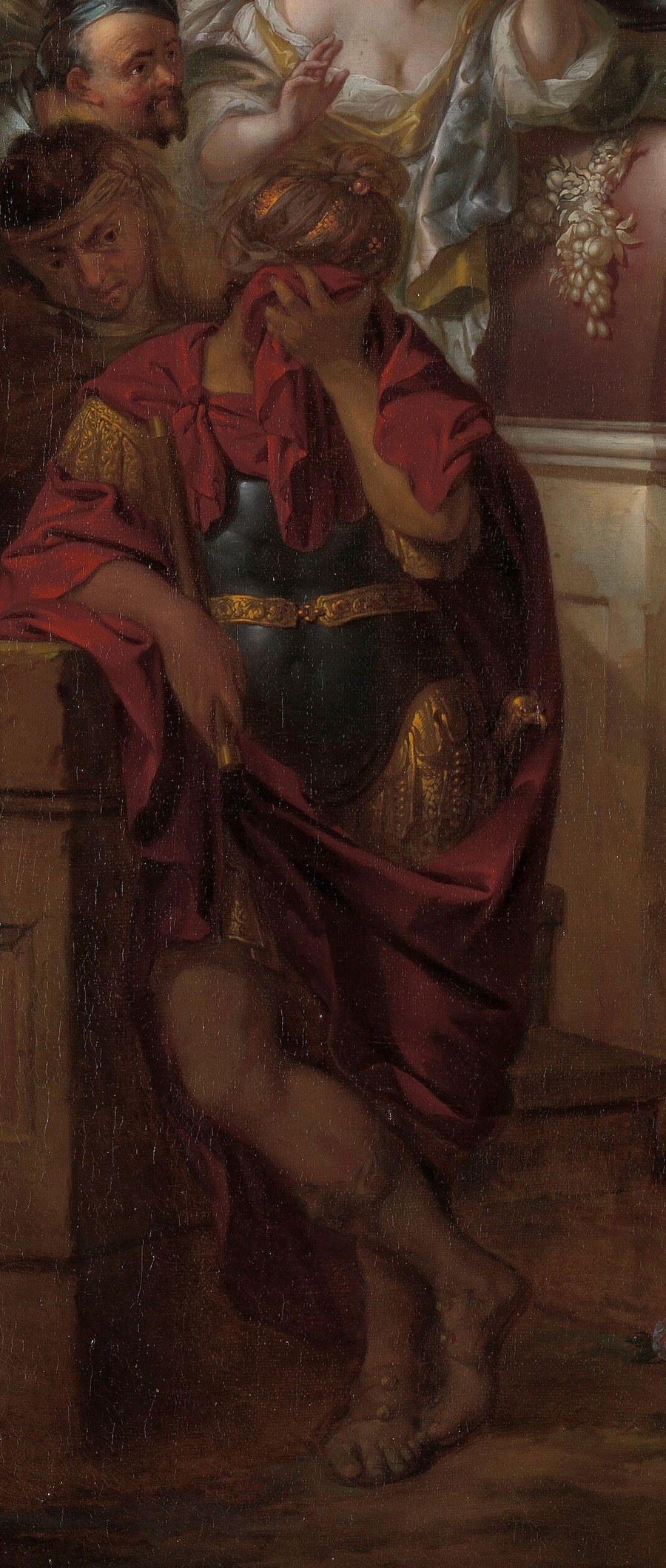
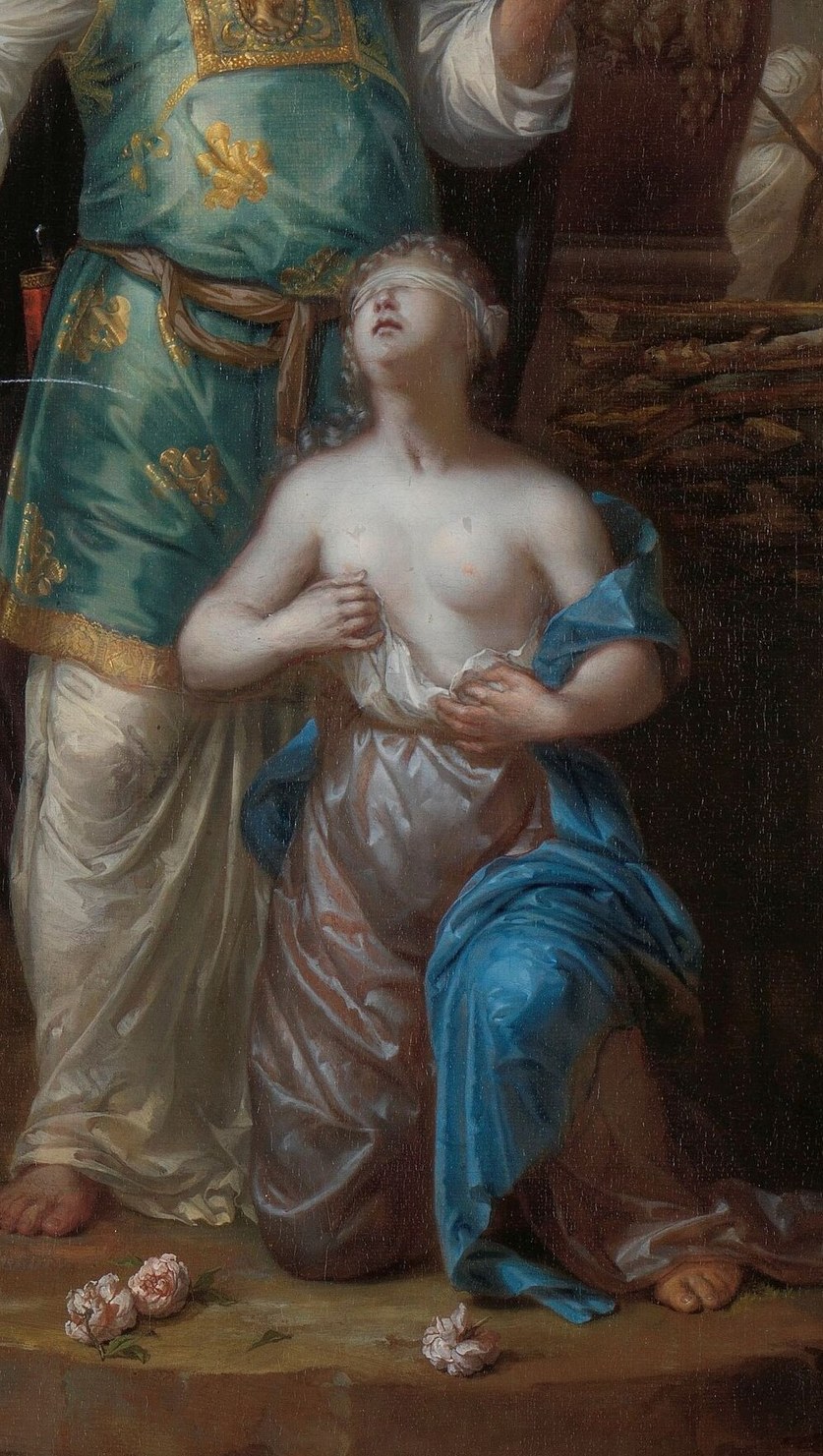
Look closely at the figures: the grief-stricken man covering his eyes, unable to bear witness; Agamemnon, the king, poised with the sacrificial knife; and Iphigenia, kneeling, resigned to her fate. Houbraken’s masterful use of chiaroscuro highlights their expressions against the dramatic backdrop.
Houbraken, a Dutch Golden Age painter and biographer, created this work during a period when classical subjects were popular for their moral instruction. The painting reflects the era's interest in antiquity, presenting an ancient story with detailed, dramatic flair.
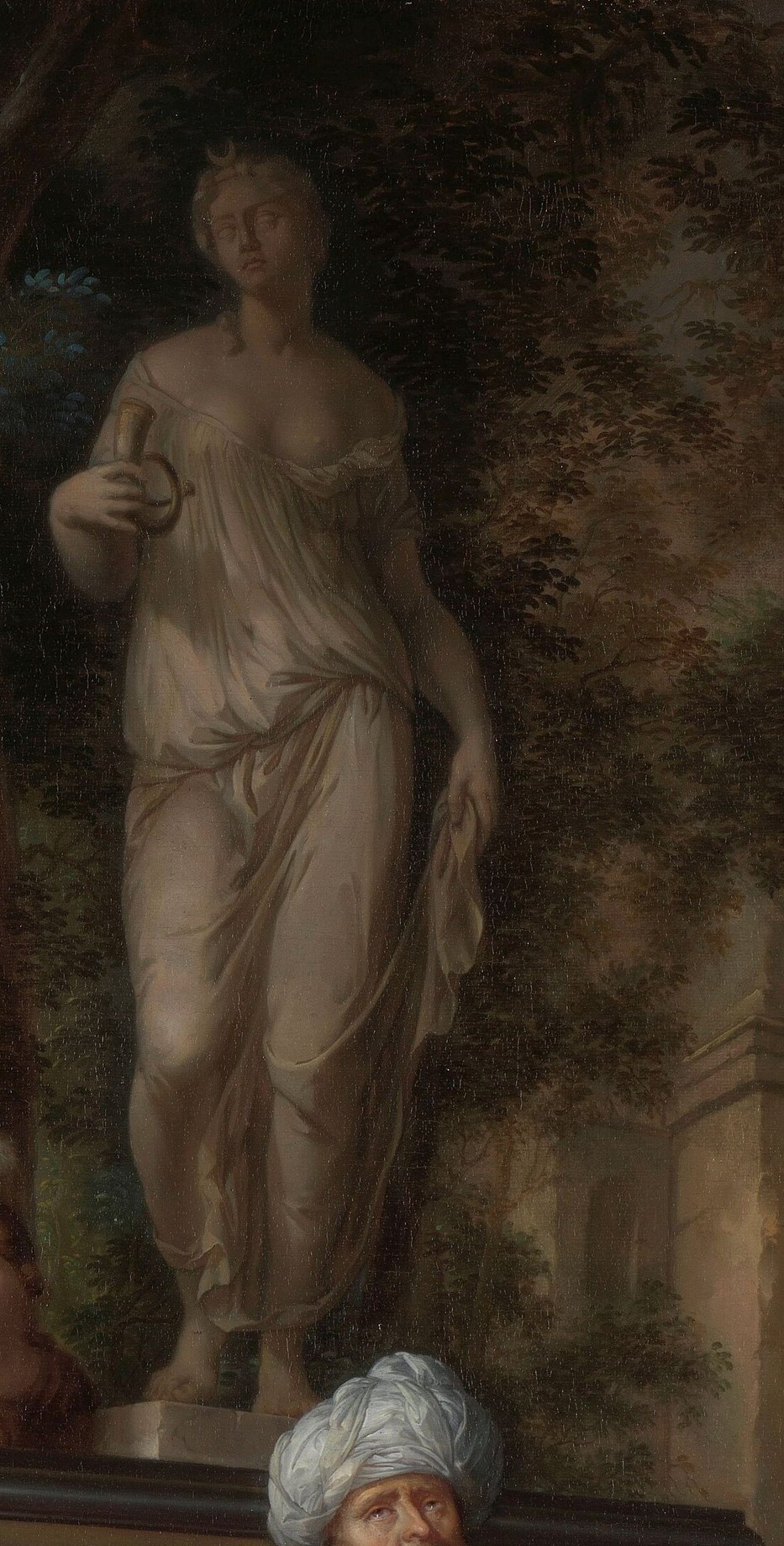
Though a scene of despair, the myth holds a quiet triumph: the goddess Artemis ultimately intervened, replacing Iphigenia with a deer at the last moment. Does knowing this twist change how you view the raw emotion in the painting?
Details
Transcript
A king must sacrifice his daughter for his fleet to sail. This painter shows the moment of ultimate despair. A man in red covers his eyes, unable to witness the horror. His king, Agamemnon, raises the knife for the goddess Artemis. Iphigenia, the daughter, kneels, facing her terrible fate. But the ancient myth says Artemis took pity. She replaced Iphigenia with a deer, sparing her life.