The Adoration of the Magi by Geertgen tot Sint Jans
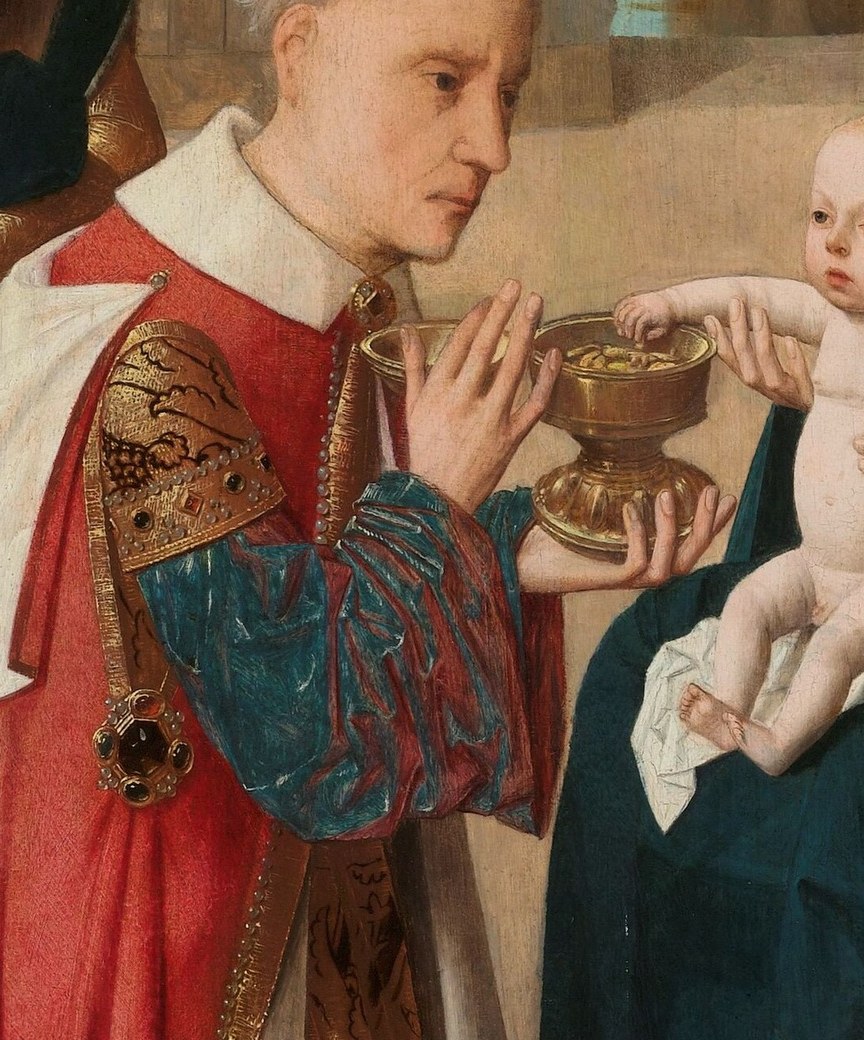
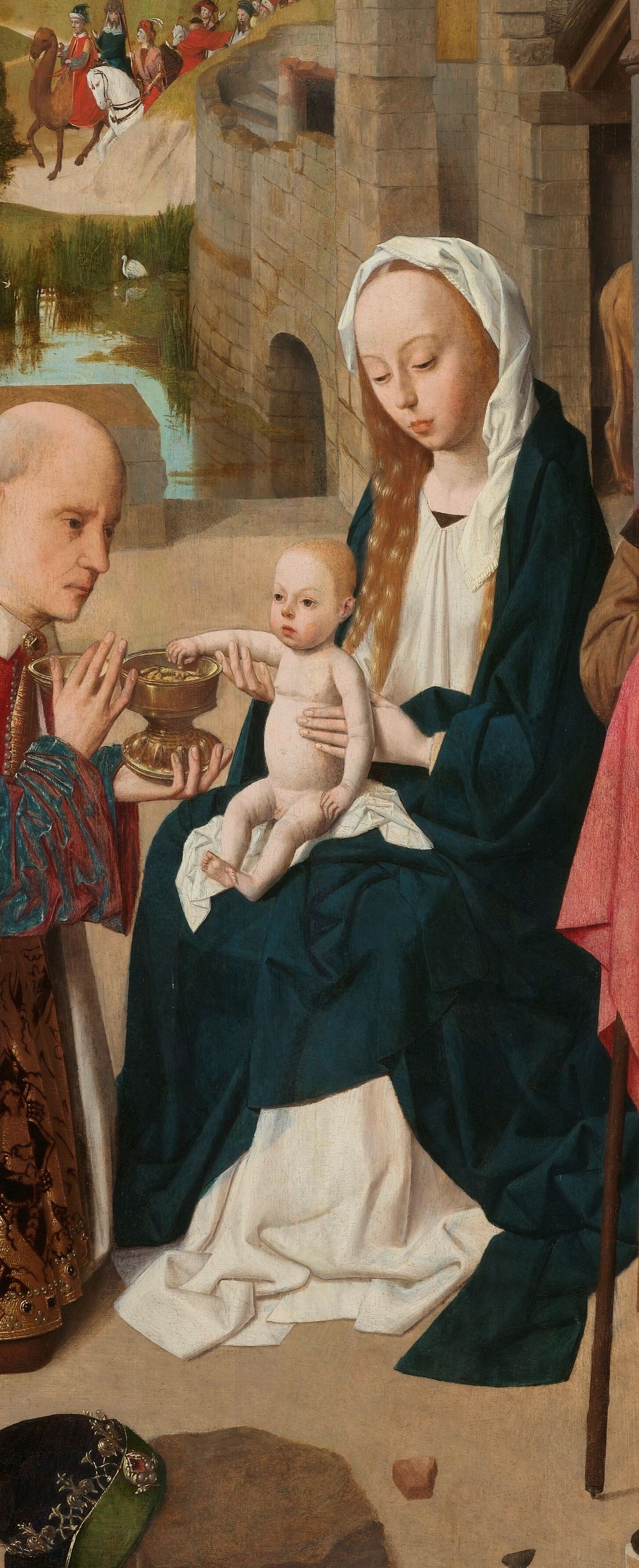
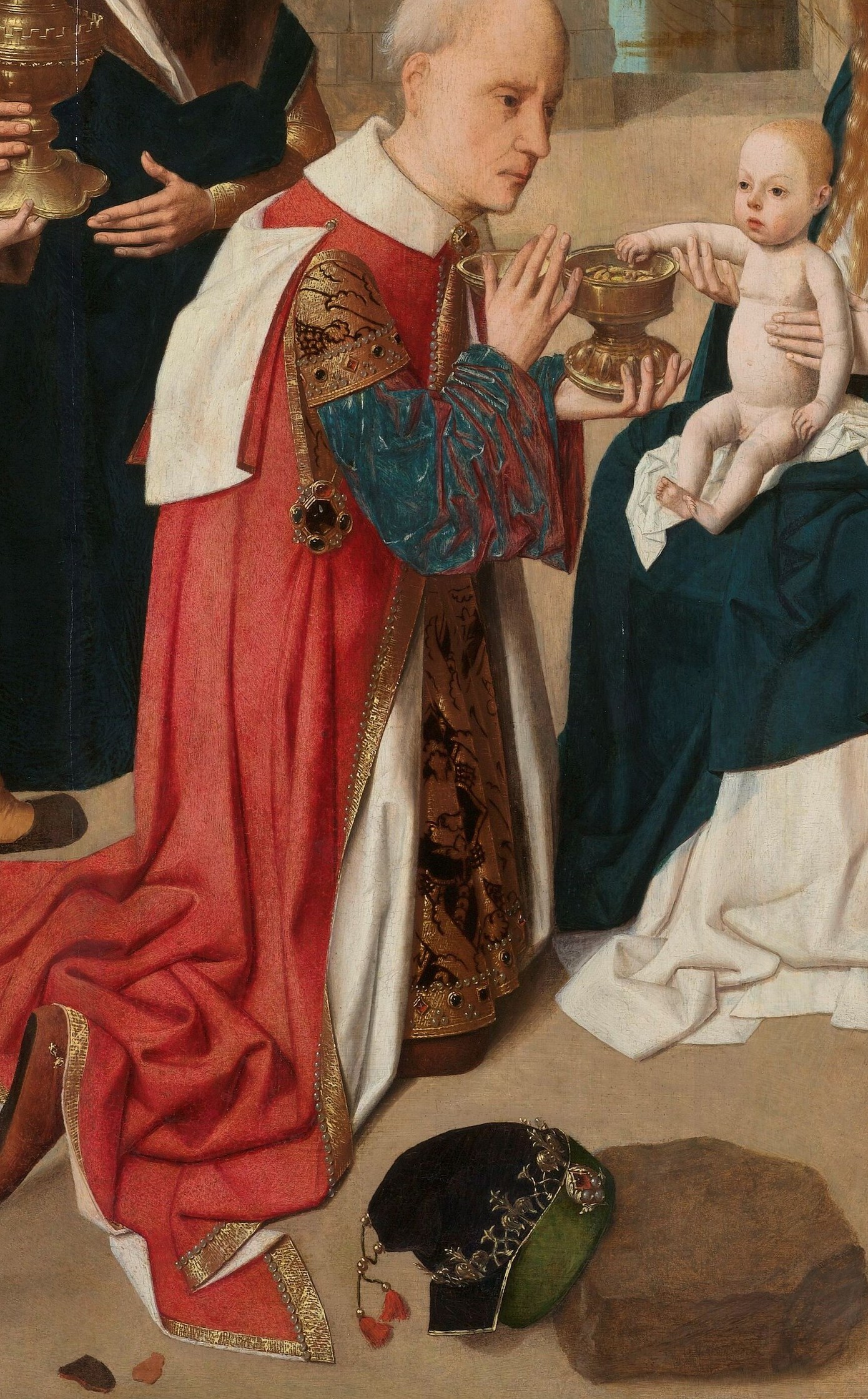
In "The Adoration of the Magi," painted around 1480-1485 by Geertgen tot Sint Jans and now at the Rijksmuseum, Amsterdam, the artist shows his incredible command of early oil painting techniques. Look closely at the golden vessel offered by the kneeling Magus; Geertgen used thin, translucent layers of oil paint to create an astonishing illusion of gleaming metal.
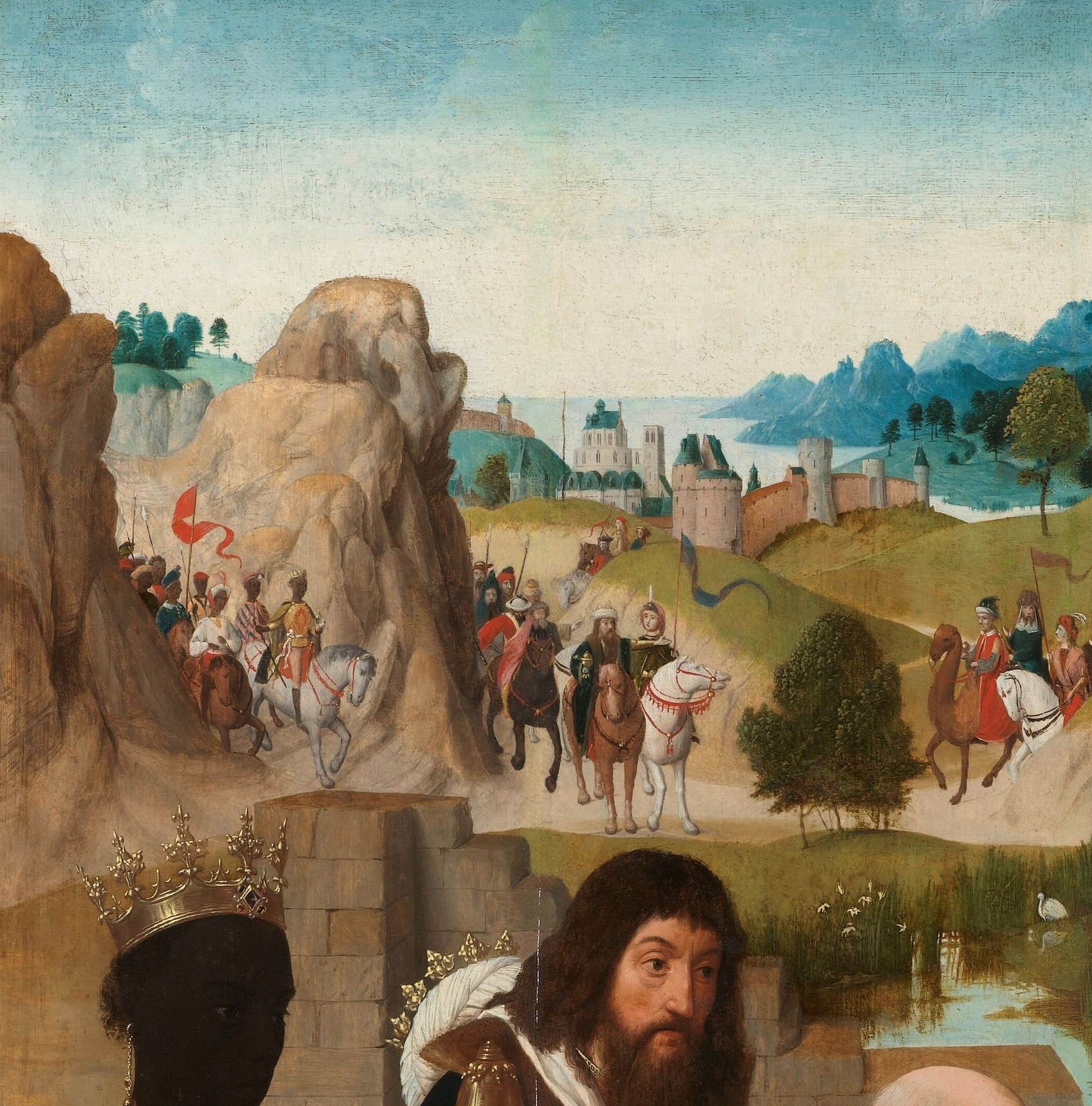
Then, turn your attention to the background, where an entire procession of horseback riders and attendants are rendered with remarkable detail. Even in miniature, each figure is distinct, demonstrating the artist's ability to maintain precision and depth across the entire panel.
Geertgen tot Sint Jans, an Early Netherlandish painter from Haarlem, was working during a period when oil paint was still a relatively new medium. His skillful application of glazes and meticulous detailing allowed him to achieve a luminous quality and textural richness that was groundbreaking for his time. Though little is known about his life, his works like this one speak volumes about his talent.
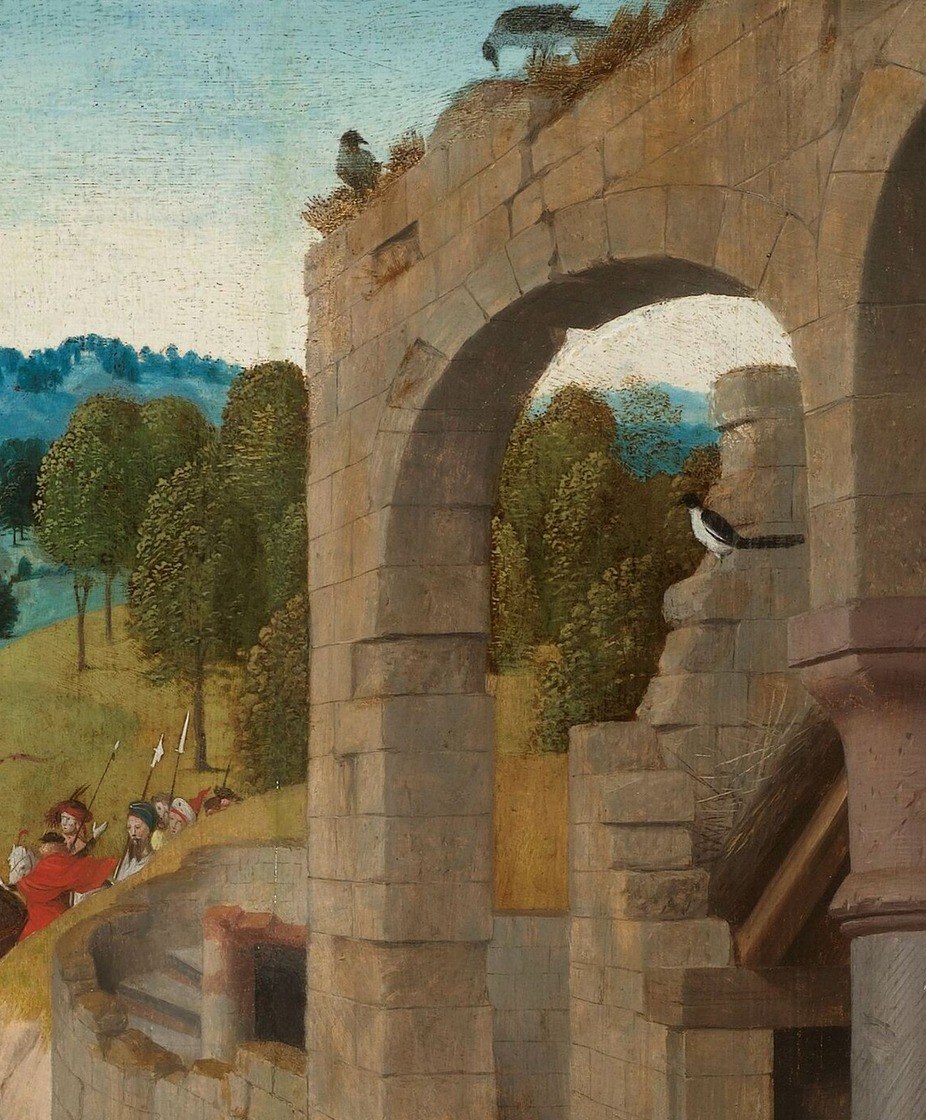
This painting truly highlights the transformative power of oil paint in the hands of a master. What other details can you spot in the distance?
Details
Transcript
This painter lived five centuries ago, when oil paint was still new. Notice the kneeling king's golden gift, catching every glint of light. He layered thin, translucent glazes to make metal truly gleam. But look at the small figures in the background. Tiny details, yet each rider is fully formed, even at a distance. That's the magic of early oil painting, from a master of the form.