A Small Lengua Village, Uruguay by Catlin, George
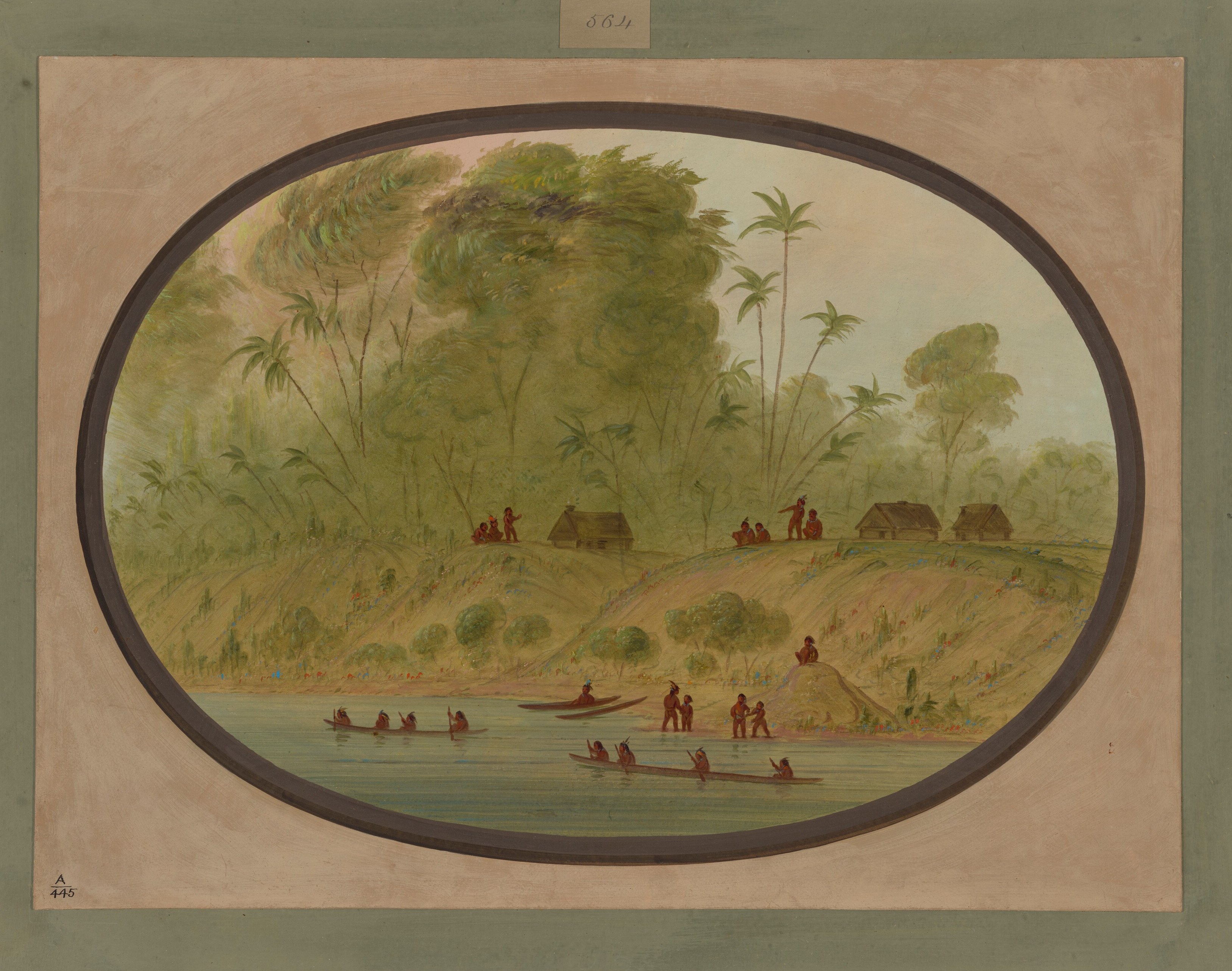
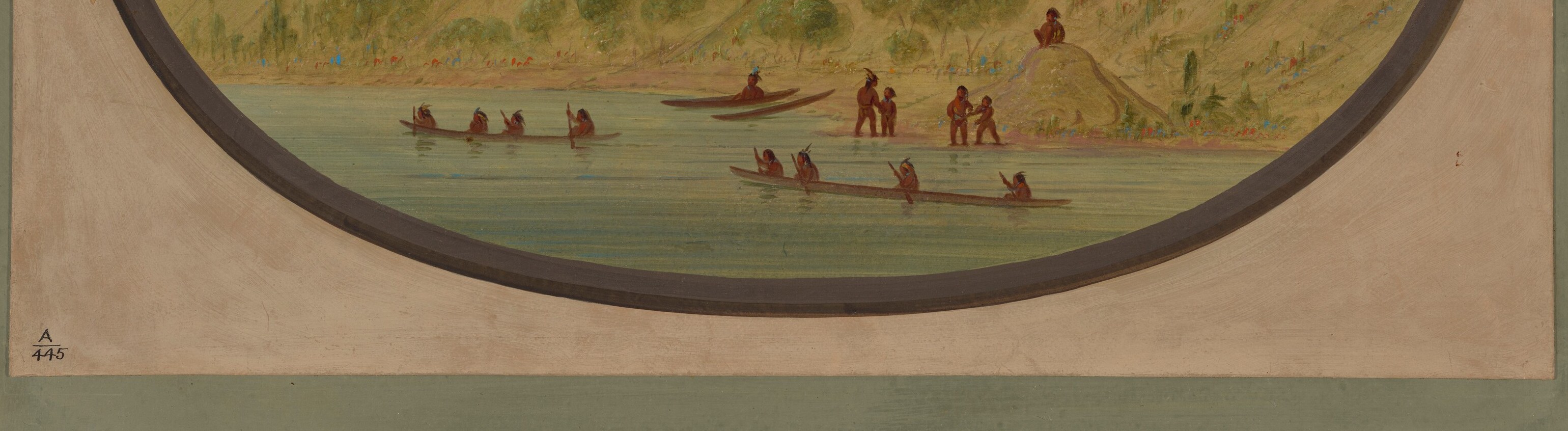
George Catlin, known for his extensive documentation of Native American life, created "A Small Lengua Village, Uruguay" between 1854 and 1869. This oil on card, mounted on paperboard, offers a rare glimpse into a Lengua community in South America.
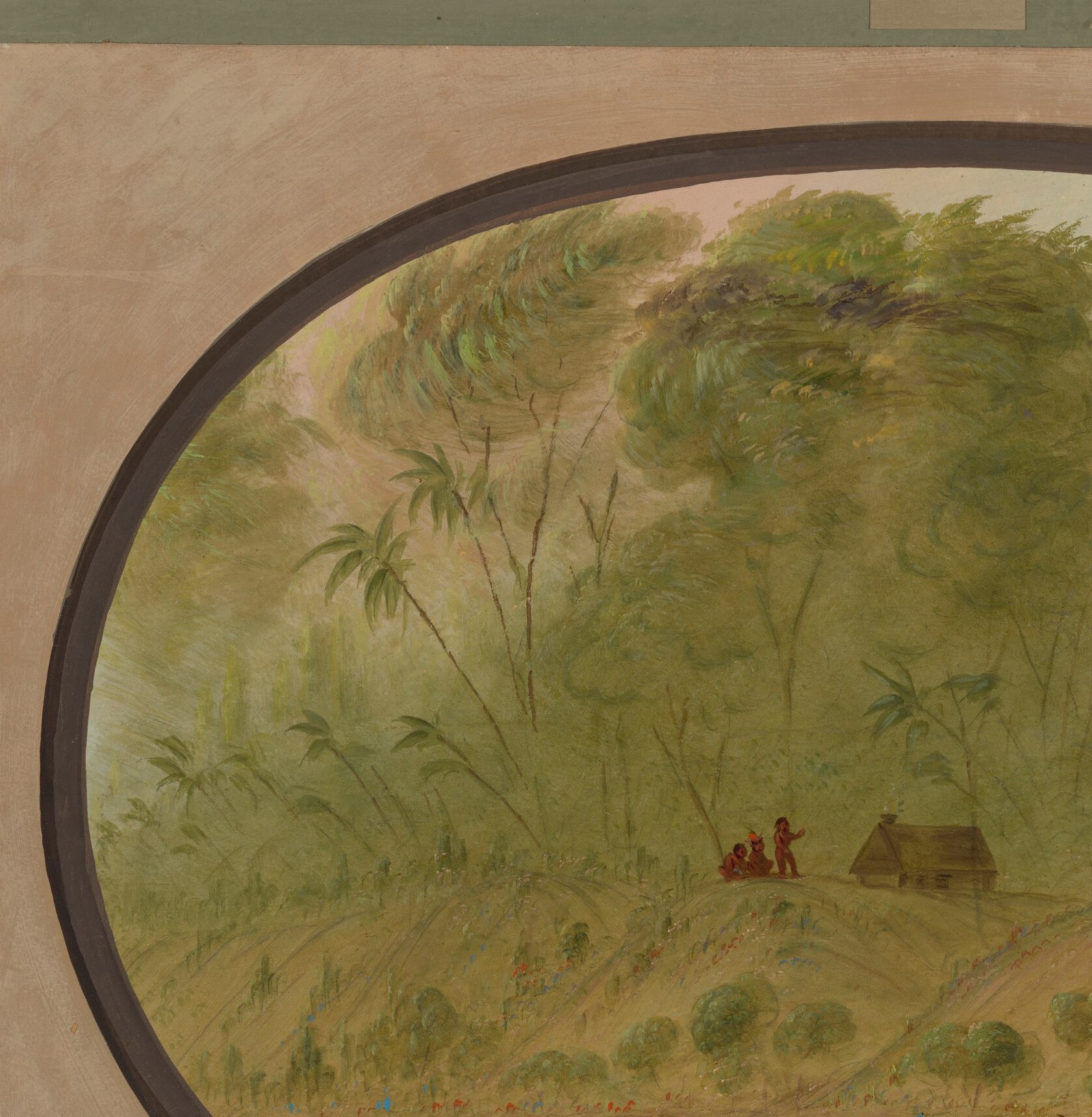
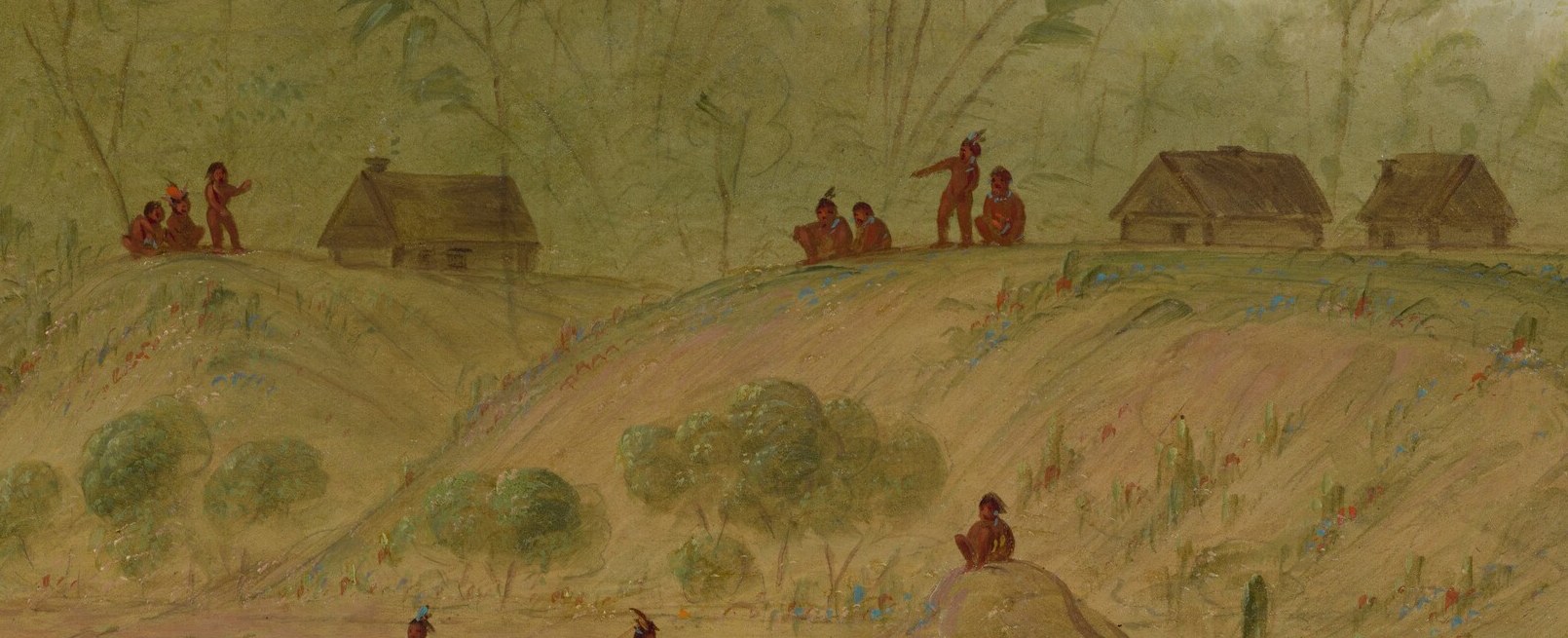
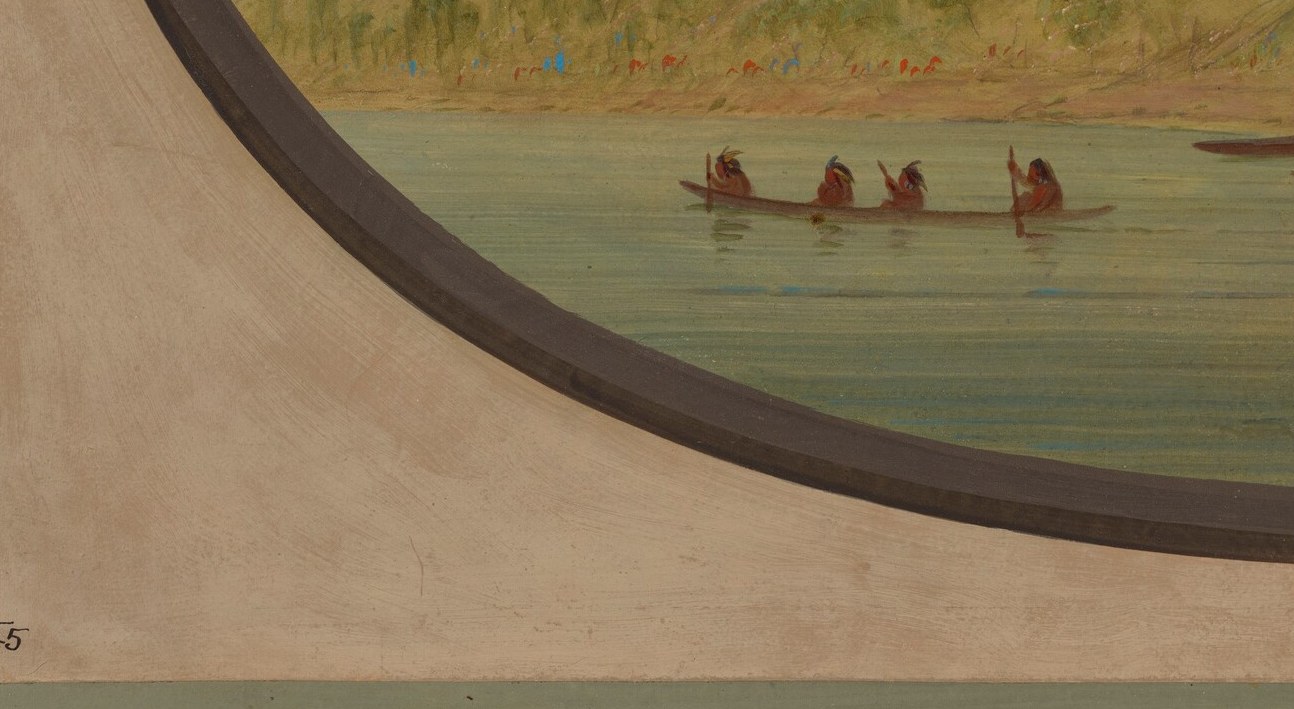
Observe the thatched huts, which are more than just dwellings; they are an ethnographic record of the Lengua people's settlement patterns. The canoe on the river highlights daily life and the importance of waterways for mobility in this region. The artwork's oval format suggests it was a field sketch, intended as a direct and intimate record of his observations.
Catlin, originally a lawyer, dedicated his career to capturing the cultures he encountered during his travels across the Americas. While his earlier works focused on the American West, this painting shows his continued interest in diverse human environments. It serves as a valuable historical document of a community rarely depicted by Western artists of the era.
What details in the painting surprise you most about life in a mid-19th-century Lengua village?
Details
Transcript
This American painter, George Catlin, captured a Lengua village in Uruguay. Catlin spent decades documenting Indigenous cultures across the Americas. Look closely at the low thatched huts of the village. These ephemeral structures show their settlement patterns, now lost to history. In the foreground, a canoe moves along the river. It captures the daily life and mobility Catlin was keen to record. The oval frame tells us this was a field sketch, a portable record.