Winter in Union Square by Childe Hassam
Childe Hassam painted "Winter in Union Square" in 1890, looking north from 14th Street in New York City. It hangs today at the Metropolitan Museum of Art, one of more than three thousand works he produced across a long, restless career. But this one does something his sunny New England summers never quite reach: it makes the cold feel like a presence, not just a temperature.
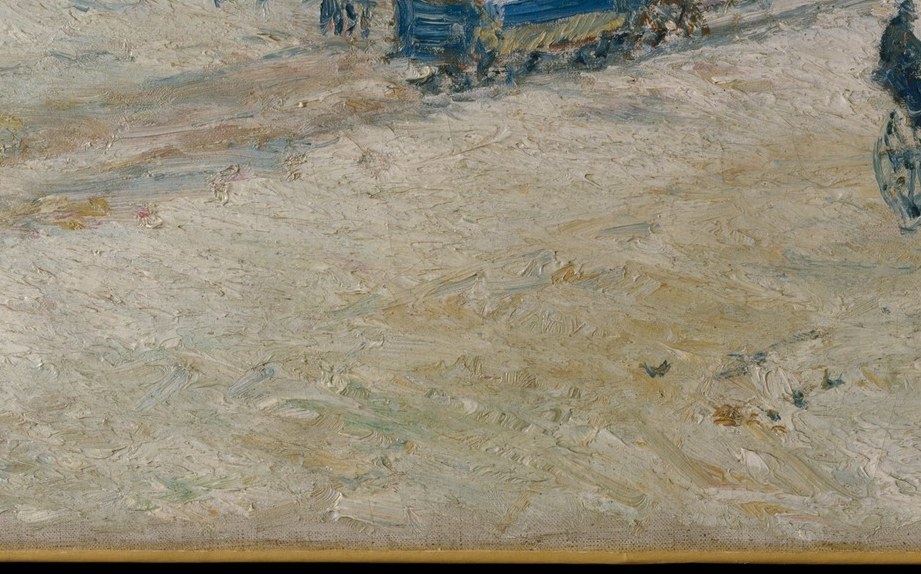
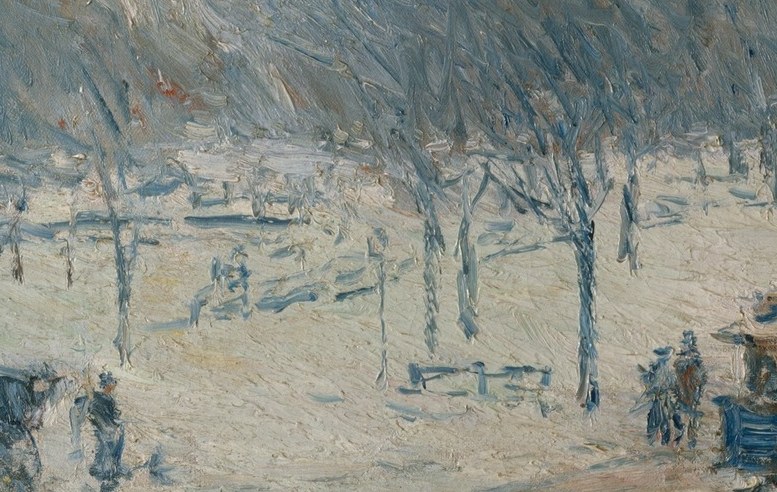
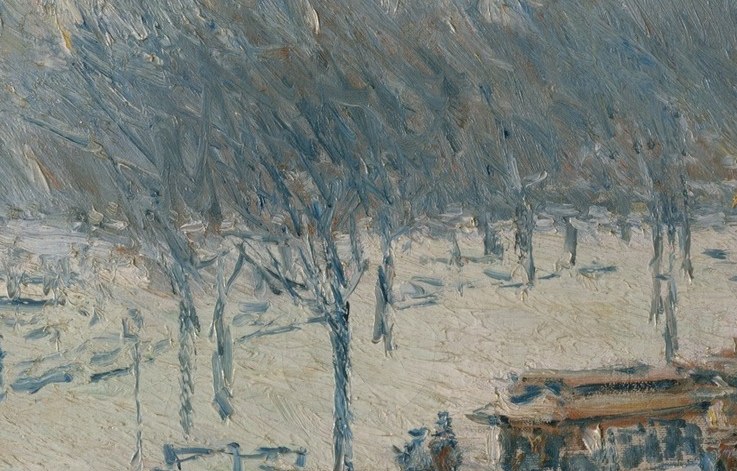
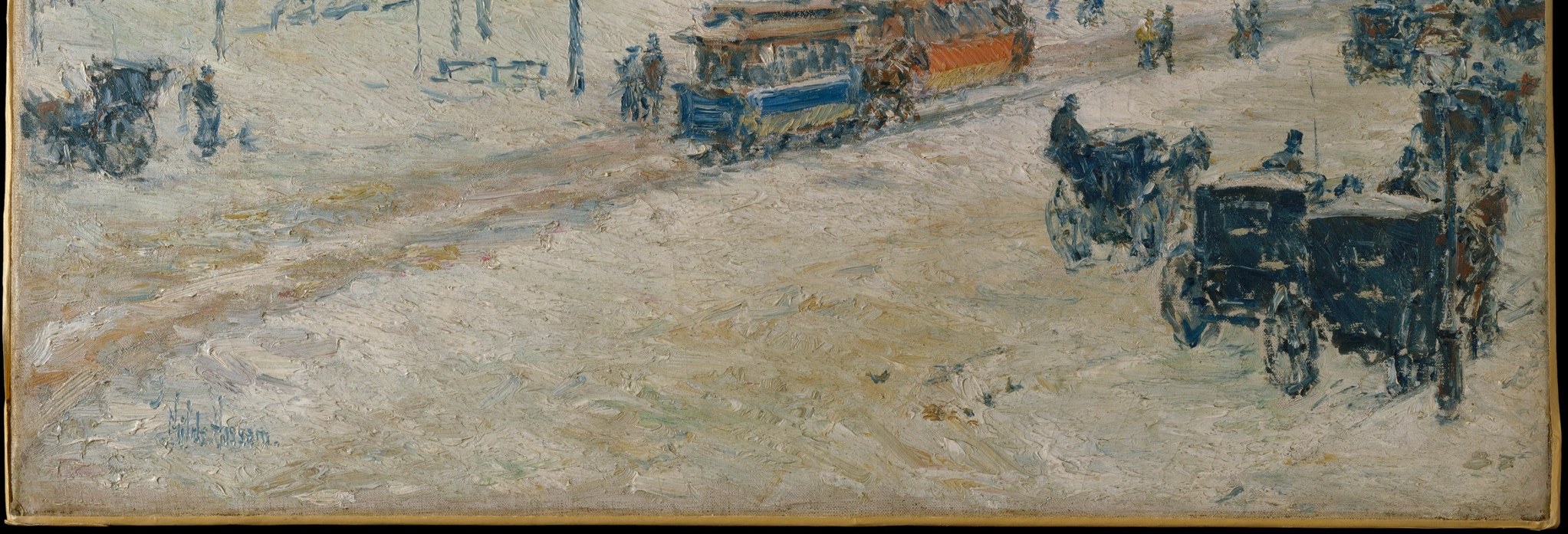
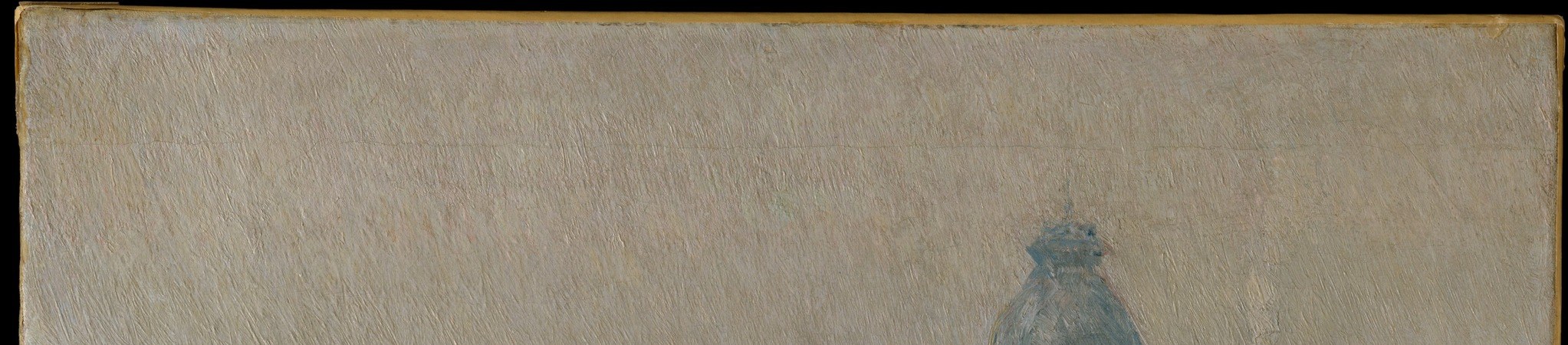
Let your eye go straight to the snow in the lower center. Hassam laid it on with a palette knife, building actual ridges of white and pale lavender. Those ridges catch the gallery light differently than the flat canvas, so the snow seems to change as you move. The distant spire rising through the bare trees is the old Tiffany building on Union Square, a landmark he returned to paint again and again.
Hassam was one of the Americans who carried Impressionism across the Atlantic. He studied in Paris, absorbed the broken brushwork, then brought it home to places those French painters would never see: Boston streets, Appledore Island, and this snow-covered square. By 1890, horse-drawn carriages still ruled the city, but if you look closely, an orange electric streetcar cuts through the middle distance. He was documenting a city in the middle of becoming something else.
He painted Union Square in spring, in rain, in fog. But winter pulled him back. Maybe it was the quiet. Maybe it was how snow could make a crowded city feel like a single held breath.
Details
Transcript
More than 3,000 paintings in one lifetime. Childe Hassam was obsessed with the city in winter. Look how he builds snow with a palette knife. Thick slabs of paint carry the weight of the weather. Hunched figures hurry past, dwarfed by the cold. One warm note: a new electric streetcar, cutting through. He painted this exact square in every season. But he kept returning to the snow.