Troops at Rest by Jean-Baptiste Pater
View the artwork: Troops at Rest →
Most military paintings sell you a battle. Jean-Baptiste Pater's 'Troops at Rest' (1725) sells you everything a battle painting leaves out.
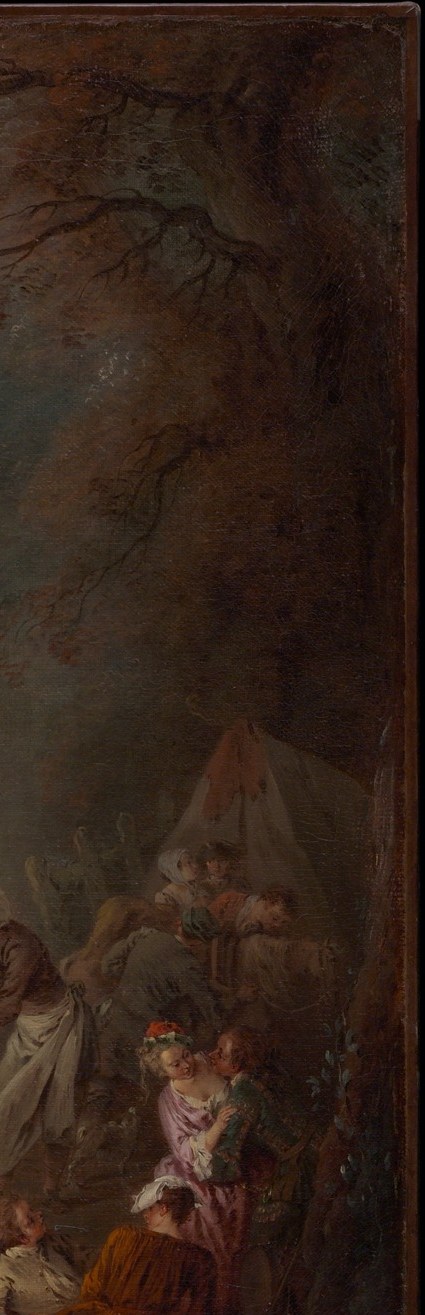
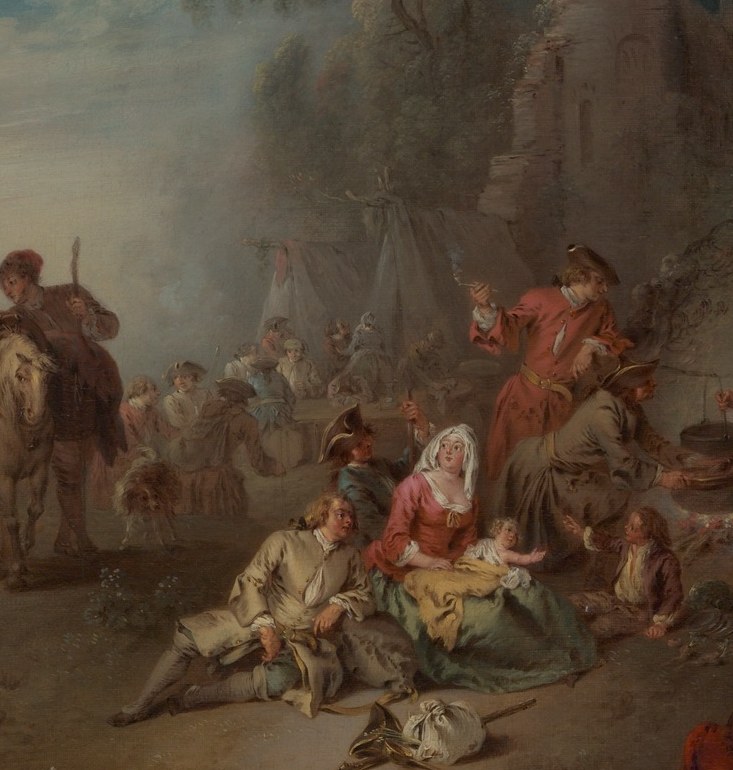
Look at the center: a cluster of red-coated soldiers gathered around a fire, deep in conversation. Nothing heroic is happening. To the left, a woman on horseback moves through the camp in civilian clothes, a status detail Pater plants right in the middle of the military frame. Nearby, a man rides a donkey: identical activity, but a different social world entirely. And in the lower-left corner, a soldier lies fully surrendered to exhaustion, too tired even to sit up.
Pater learned from Antoine Watteau, spending the final month of Watteau's life as his student. He took Watteau's fête galante, scenes of aristocrats at leisure in parks, and applied the same soft eye to soldiers. The result is a Rococo war painting where the palette stays warm, the sky stays luminous, and the subject is simply the long, unglamorous wait.
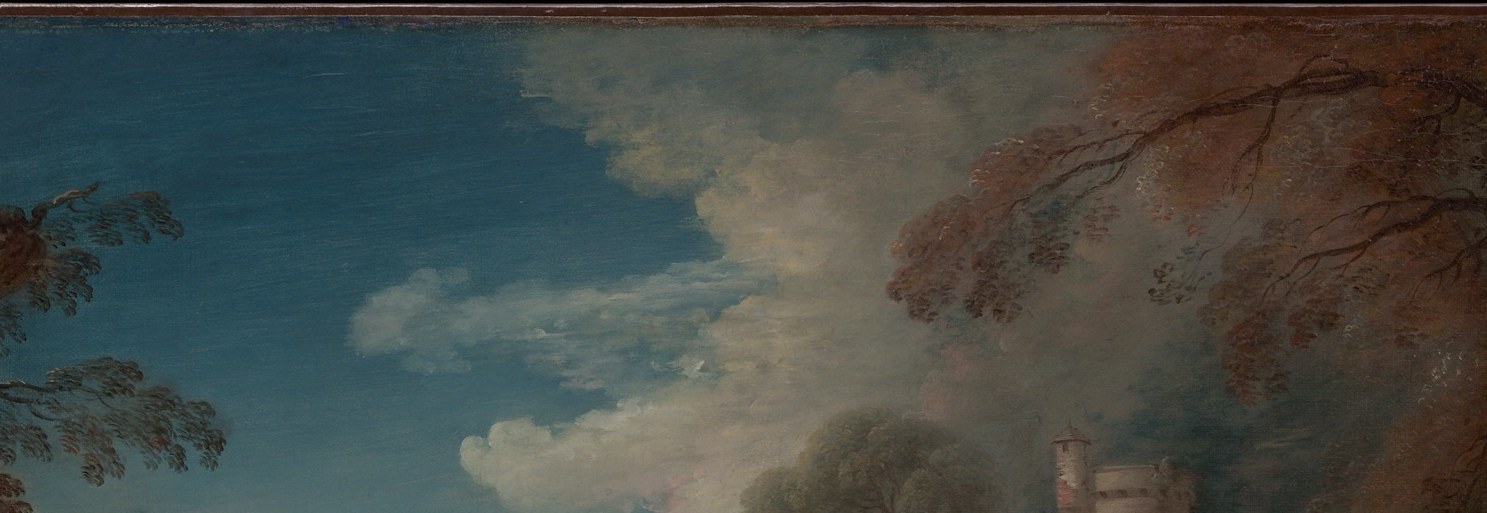
The painting was his reception piece for the Académie Royale de Peinture et de Sculpture, the institution that decided what mattered in French art. Pater chose not to submit a grand allegory. He submitted this: men resting beside a fire, a castle tower barely visible in the haze, the reason they are here, but not yet.
#arthistory #rococo #jeanbaptistepater
Details
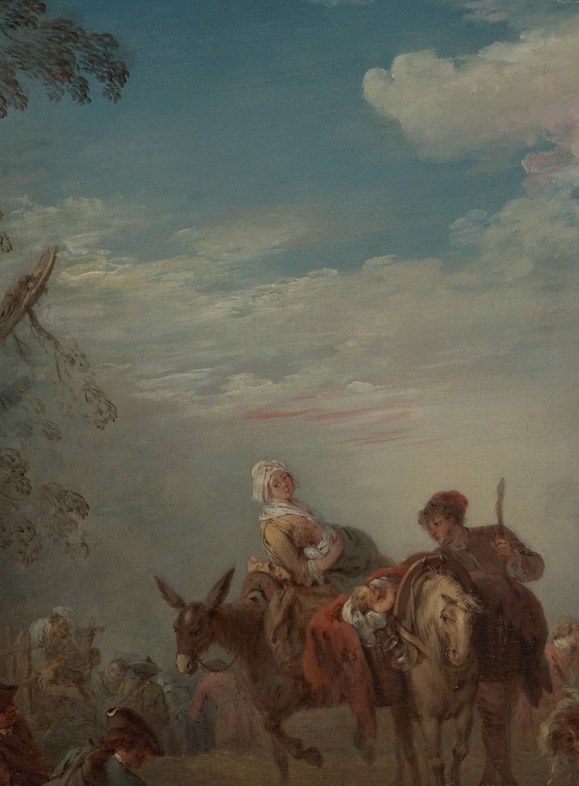
Transcript
No one is fighting. No one is marching. Instead, an army kills time around a campfire. Pater painted this in 1725, a year after he was admitted to the Royal Academy. A woman rides through the camp on a pale horse. She is not a soldier. And this man rides a donkey. Same journey, different rank. The real cost of a campaign is in the corners: a man too tired to stay awake.