Artwork
Troops at Rest
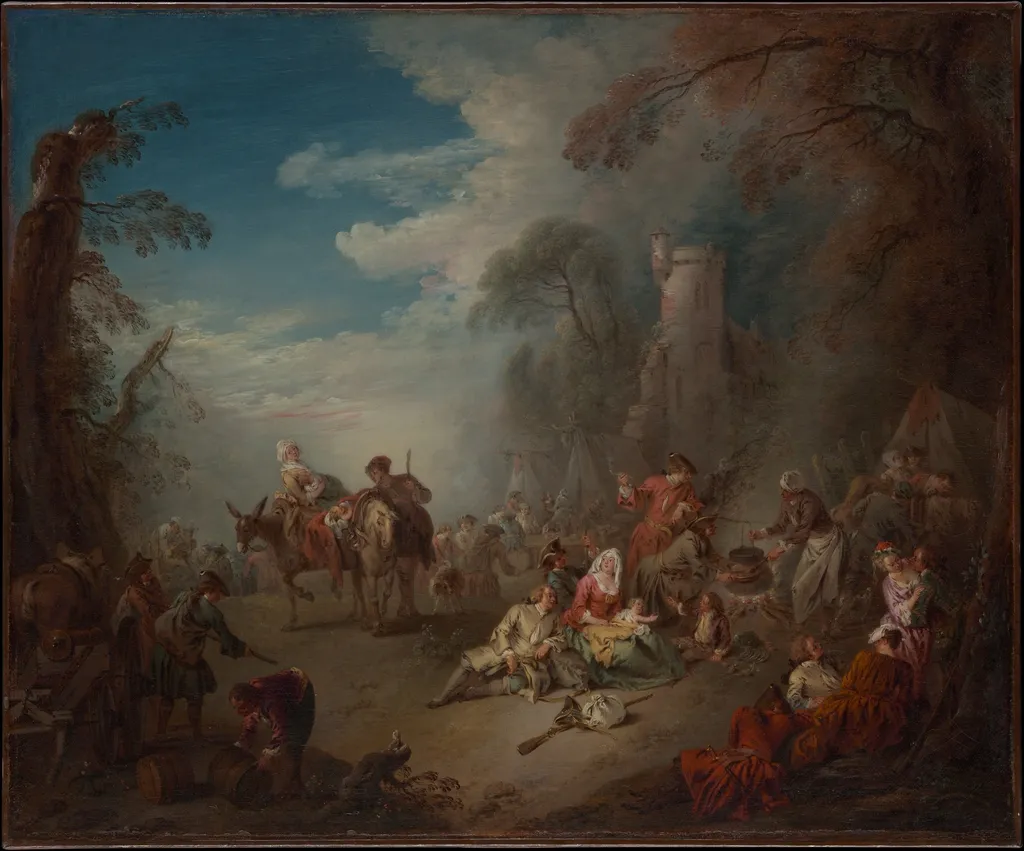
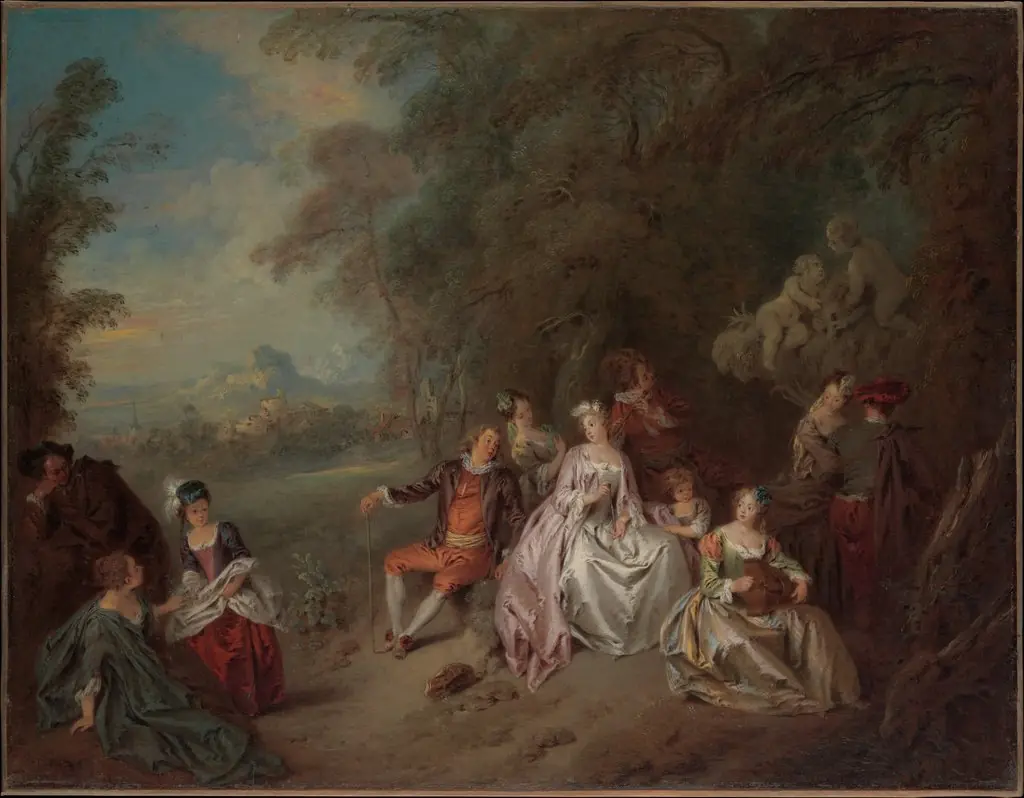
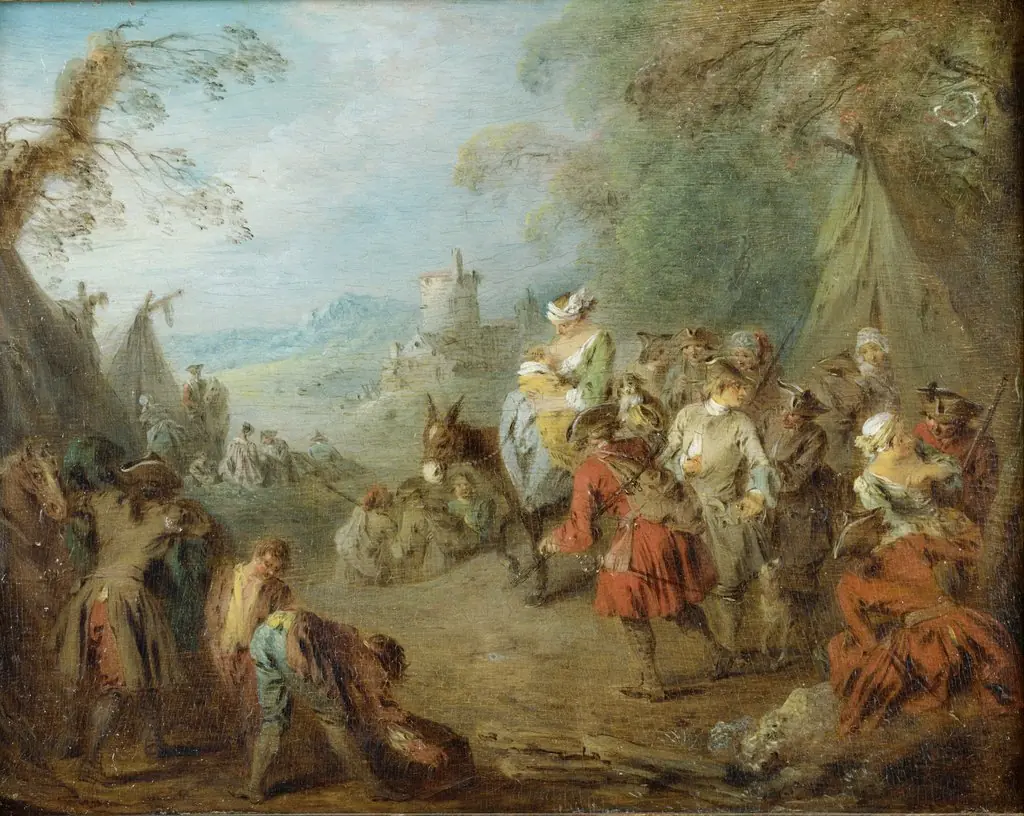
Troops at Rest is an oil painting by the Rococo painting artist Jean-Baptiste Pater. It dates from 1725 and is held in the collection of the Metropolitan Museum of Art.
About this work
Subject & Meaning
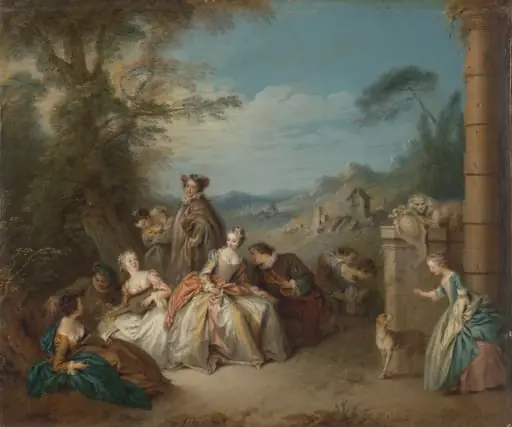
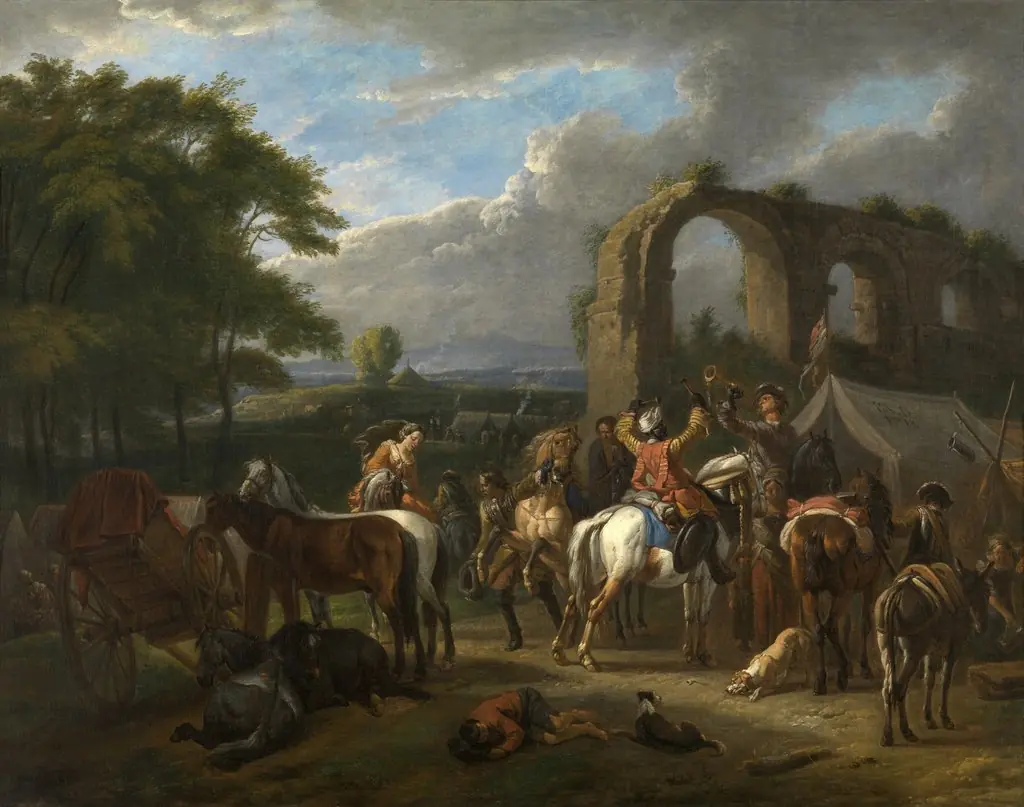
Troops at Rest presents a camp scene populated by soldiers, men, and women gathered around tents beneath trees, with horses and a donkey also present in the composition. The painting belongs to the category of military encampment subjects, a popular theme in French eighteenth-century painting that depicted the everyday life and leisure of soldiers away from the battlefield. By focusing on moments of rest rather than combat, Pater emphasizes the informal, pastoral side of military existence, with figures relaxing in a wooded encampment setting.
The combination of soldiers, camp followers (women), and pack animals conveys the social and logistical reality of an army on the move, while the surrounding trees and tents establish a transient, outdoor environment.
History & Provenance
The piece depicts a military encampment scene featuring soldiers, civilians, and animals, consistent with Pater's known subject matter from this era.
Jean-Baptiste Pater executed the oil painting Troops at Rest in 1725. Created on canvas, the work measures 54 by 65.4 centimeters. While specific details regarding the original commission or early ownership chain are not provided in the available records, the painting's inception is firmly established within the artist's mature period during the mid-1720s.
The work eventually entered the collection of the Metropolitan Museum of Art, where it remains housed. The piece depicts a military encampment scene featuring soldiers, civilians, and animals, consistent with Pater's known subject matter from this era.
Overview
Jean-Baptiste Pater's 'Troops at Rest' (1725) is an oil painting that captures a military encampment scene, reflecting the artist's specialization in fêtes galantes and genre subjects. The composition centers on a group of soldiers in red coats gathered around a campfire, engaging in conversation and rest. This central activity is framed by a diverse array of figures, including a woman in a light dress riding a horse and a man on a donkey observing from the periphery.
The setting features a landscape with trees and a castle tower rising in the background, establishing a sense of place that blends the rustic with the architectural. Created during the height of Pater's career, shortly after he became a member of the Académie Royale de Peinture et de Sculpture, the work demonstrates his skill in depicting informal social interactions and the transient nature of military life. The painting exemplifies the French Rococo style through its soft palette, delicate brushwork, and focus on leisurely moments rather than combat.
It stands as a significant example of Pater's ability to infuse genre scenes with a sense of narrative and atmospheric depth, distinguishing his work from the more formal historical paintings of his contemporaries.
Technique & Style
The artist utilized oil paint to achieve a rich textural quality and a nuanced portrayal of the scene. The work exhibits meticulous attention to specific details of everyday life, from the soldiers' boots to the woman's hat. A palette of warm, subdued colors defines the overall mood, while selective illumination emphasizes certain faces, guiding the viewer's gaze through the bustling arrangement.
Own this work as a print
Artist & collection
Artist
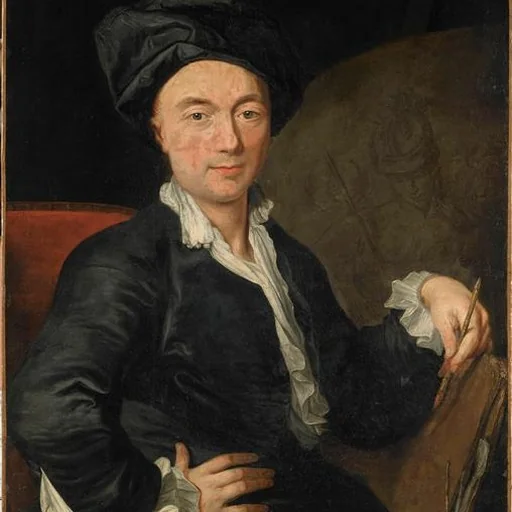
Jean-Baptiste Pater (December 29, 1695 – July 25, 1736) was a French rococo painter.