The Green Wave by Claude Monet
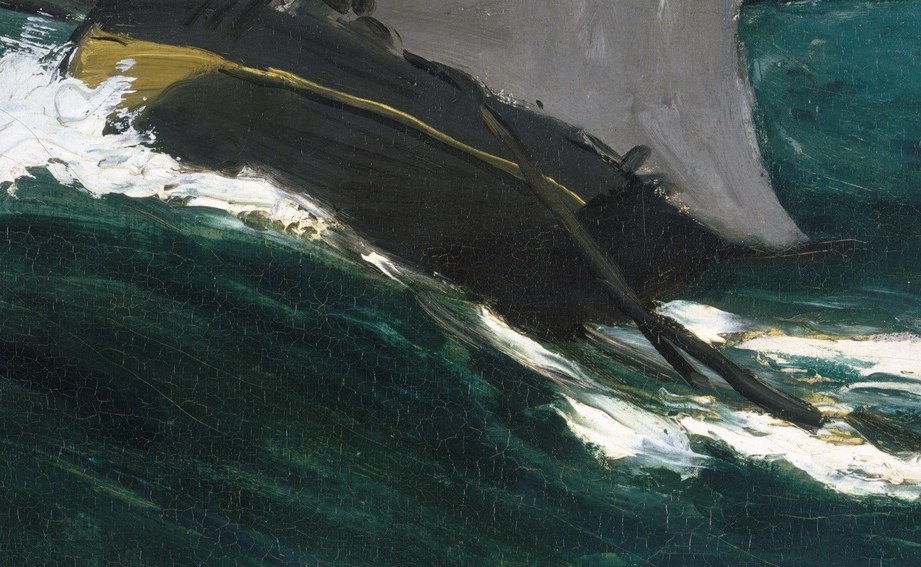
Claude Monet's "The Green Wave," painted in 1865 and held at The Metropolitan Museum of Art, captures the dramatic and raw power of the ocean. This early work by the master of Impressionism showcases his fascination with capturing the fleeting moments and immense forces of nature.
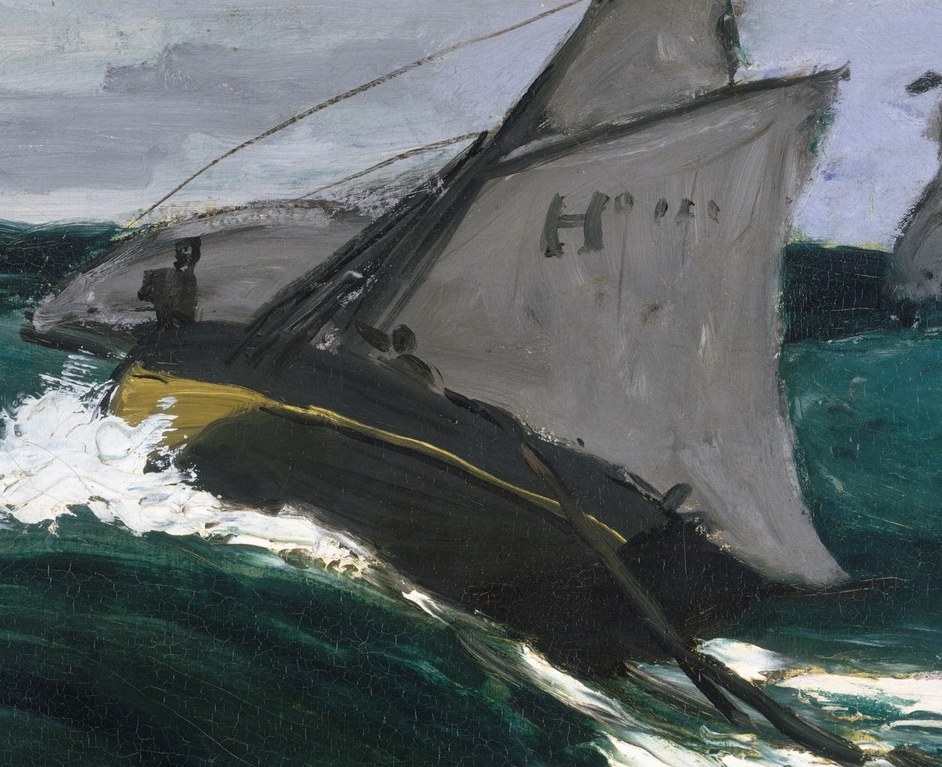
While the painting is dominated by its towering green swell, a closer look at the small sailboat battling the waves reveals a hidden detail: faint markings of an 'H' and numbers on its sail. This subtle addition grounds the dramatic scene in a touch of realism, suggesting a specific vessel rather than a generic one.
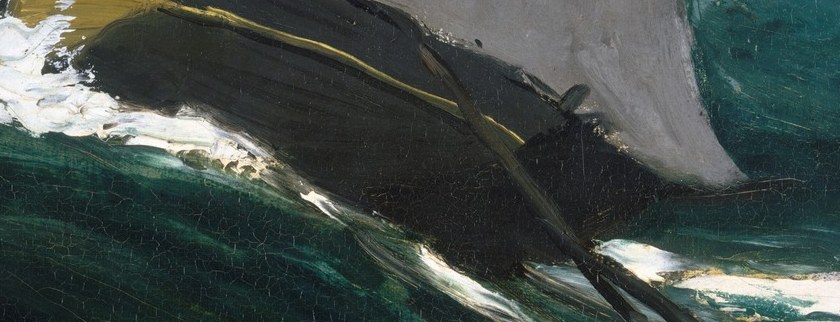
Monet employed bold brushstrokes and a vivid palette to convey the sea's tumultuous motion, an early exploration of the techniques that would define his later Impressionist style. He aimed to paint nature as he perceived it, capturing the sensory experience of the world around him.
What other small details do you notice in Monet's powerful marine scene?
Details
Transcript
Monet painted this dramatic green wave in 1865. It shows the raw power of the ocean in motion. A small sailboat struggles against the immense force. Look closely at the sail. The artist added a faint 'H' and numbers. A tiny detail, grounding this powerful scene in realism.